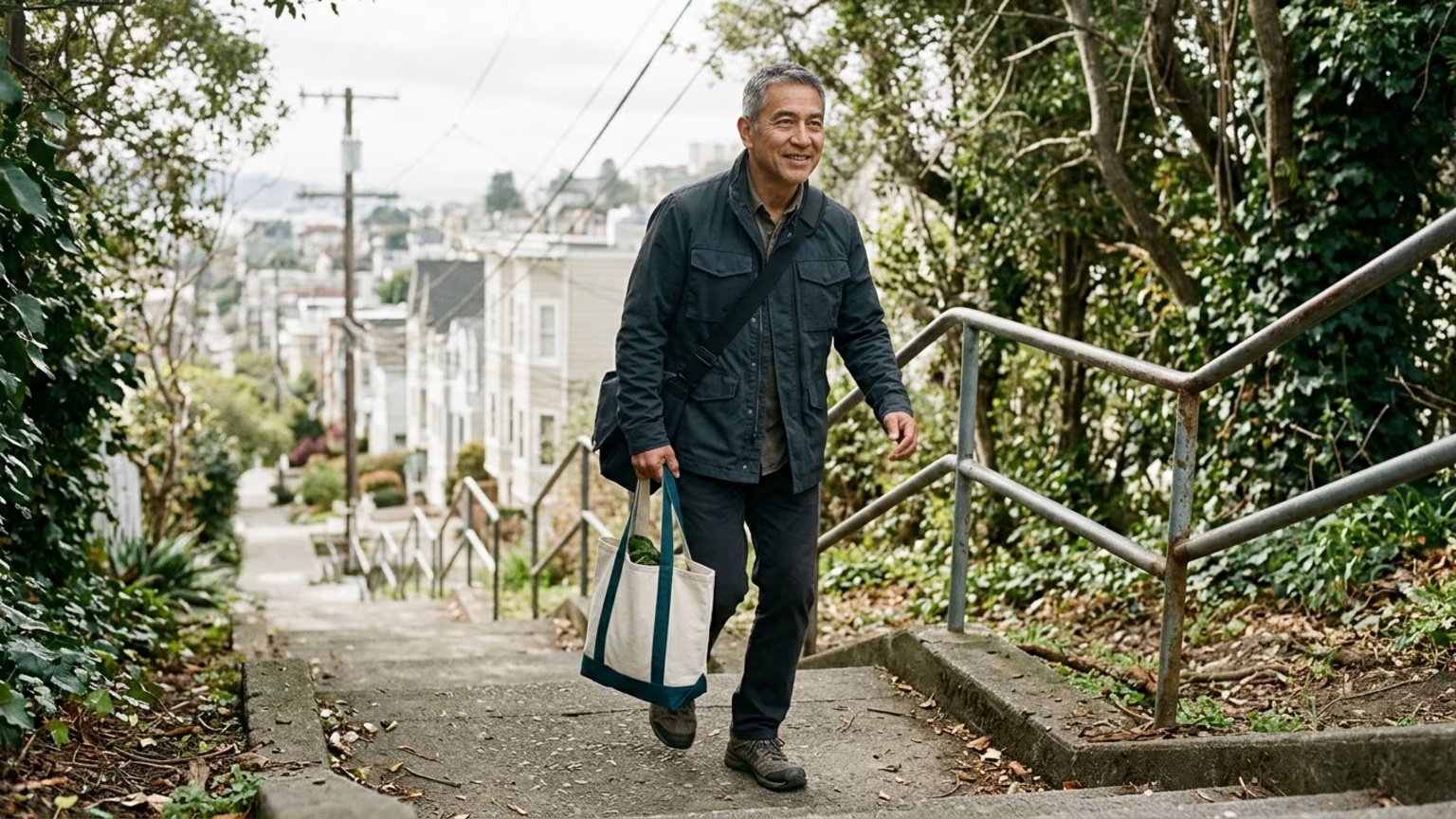

A large analysis links everyday movement with higher energy and positive feelings. Learn the limits and a low-pressure way to notice your own response.





On September 18, 2026, PsyPost reported on an analysis published in Nature Human Behaviour linking everyday physical activity with higher energy and more positive feelings.
The central finding concerns changes within a person's daily life. In the analysis reported by PsyPost, people tended to feel more energetic and positive when they were more active than usual. Feeling better was also associated with being more active afterward.
That makes this a two-way relationship rather than a simple story about movement producing better moods. Activity and well-being appeared to move together across daily life. For someone thinking about daytime energy, the useful focus is variation within their own routine rather than comparison with another person's activity level.
PsyPost identifies the study as “An Individual Participant Data Meta-analysis of How Physical Activity Relates to Affective Well-being in Daily Life.” This means researchers brought together participant-level information from multiple datasets rather than relying only on each study's overall result.
According to the report, the analysis combined 67 datasets from 14 countries. It included 8,223 participants whose average age was 36.33 years.
Participants wore accelerometers to measure movement for periods ranging from 1 to 100 days. Smartphone prompts asked them to report their current well-being. Across the datasets, researchers analyzed 321,345 well-being ratings linked to nearly 1 million hours of movement measurements.
The pairing of movement records with repeated reports matters to the article's practical focus. Researchers were examining activity alongside how people felt during everyday life. They also assessed the sequence in both directions: activity before well-being reports and well-being before later activity.
The researchers examined five dimensions: positive feelings, negative feelings, overall pleasantness, energy and calmness.
The strongest reported relationship involved energetic arousal. That term describes feeling awake, alert and energized. Here, energy refers to a person's reported experience rather than a direct measurement of physical recovery.
PsyPost reports that a sitting-to-walking comparison was associated with:
The distinction between these outcomes is useful. Feeling more awake is not exactly the same experience as feeling happier or finding the moment more pleasant. The study treated those dimensions separately rather than placing every positive experience under a single mood label.
The report says people who felt better and more energetic than usual tended to be more active afterward. Feeling calmer was associated with less subsequent activity.
That reverse-direction finding changes how the results should be read. Movement was not simply the starting point in every observed sequence. A person's current state was also associated with what they did next.
For midlife readers, this offers a less judgmental way to think about an active or inactive day. The association invites attention to how activity and feelings relate across the day rather than treating activity alone as a measure of effort or discipline.
The study was observational. As PsyPost explains, it cannot establish that activity caused better well-being or that positive feelings caused later movement. The sitting-to-walking figures are study associations rather than guaranteed individual changes.
The datasets also differed in their devices, the frequency of mood reports and their definitions of well-being. Bringing those observations together provides a broad daily-life picture. It does not make every measurement or participant interchangeable.
PsyPost reports variation between people, including stronger positive emotional associations among younger adults and people with lower body mass index. The average age of the sample does not establish a specific effect for adults over 35. Those findings also do not provide an age cutoff or a forecast for an individual reader.
The report found no consistent association between activity and negative feelings such as sadness or anxiety. The positive energy findings should therefore not be presented as evidence that everyday movement reliably relieves those feelings.
The analysis did not test whether activity improves sleep, stress recovery or chronic fatigue. It also supplied no tested activity prescription for duration, frequency or intensity. Those are different questions from whether activity and reported energy are associated in daily life.
A related health-news report gives June 8, 2026 as the study's publication date. That date is reported secondhand rather than independently confirmed against an official journal record.
Taken together, the evidence supports a modest practical interpretation: ordinary movement is worth noticing as part of the daytime energy picture. It is not a recovery formula.
For an adult aged 35 to 65, a reasonable adjustment is to give familiar movement a place in the daily energy conversation. Walking already fits many ordinary routines. It can serve as a low-stakes personal experiment without turning the day into an exercise project.
The aim is not to reproduce the study's numerical estimates. It is to notice whether routine movement and your own experience of energy seem connected.
A familiar walk offers a straightforward setting for this observation. Rather than building a complicated schedule, use walking that already belongs in your day or fits naturally into a break.
This is an invitation to observe ordinary activity, not an instruction to make every tired moment more active. The practical value lies in keeping the experiment small enough that it does not become another obligation.
There is no need to turn the question into a comparison with another person's routine. The within-person finding points toward a more relevant question: how do you feel during your own more-active and less-active moments?
Before and after routine movement, notice the experiences the study distinguished. A simple set of questions can keep the observation grounded:
These questions are observation prompts rather than a scoring system. A brief note can help describe the experience without assigning a target number or declaring the day a success or failure.
For language that separates different kinds of tiredness, Relaxopia's guide to describing fatigue and mental overload more clearly offers related context. The purpose is to describe what you are experiencing before deciding what question needs attention.
An unchanged mood after a walk is still useful information. So is feeling more alert without feeling calmer. Neither observation needs to become a verdict about motivation or personal discipline.
A personal experiment also does not need to copy the researchers' accelerometer and smartphone setup. Its purpose is to pay attention to everyday experience rather than produce a research dataset.
If tracking tends to turn rest into another task, a brief mental check-in is a simpler option. Relaxopia's discussion of keeping wearable information in perspective provides a related way to think about the role of measurement.
A brighter moment and a day that feels properly restored are different things to describe. When thinking about your experience, keep room for the broader questions that matter to you: sleep quality, mental load and how manageable the day feels.
That broader view does not require a detailed daily audit. It means allowing an observation about movement to sit alongside other concerns rather than letting it become the answer to all of them.
If low energy persists or interferes with everyday functioning, discuss it with a qualified health professional. Personal decisions involving health conditions or activity-related symptoms belong in that conversation rather than in a general routine based on this report.
The next useful research question is more specific than whether movement and mood are connected. It is which everyday activity patterns are associated with useful changes for different people, and whether testing those patterns produces lasting benefits.
For adults in midlife, studies focused on their age group would help separate a broad population finding from guidance that fits their circumstances. Intervention research could also examine sleep and recovery outcomes alongside reported energy.
Those questions belong beside the wider discussion of how daily timing fits into rest. A long-term approach to recovery needs room for both how a person feels now and how they function across ordinary days.
Could future studies show when everyday movement helps midlife adults feel more restored over time, rather than simply more energized in the moment?
Everyday movement deserves practical context rather than another demanding recovery target. For adults 35+ with low daytime energy and inconsistent recovery, Relaxopia translates sleep and recovery research into clear guidance that separates established evidence from early findings and keeps everyday habits in view without adding unnecessary complexity.
Stay connected for research-led guidance on sleep quality, stress, circadian rhythm, recovery, fatigue and everyday energy. Clear ideas for adults 35+ who want to sleep better, recover more fully and feel more capable through the day.





Explore practical guidance on sleep, stress and recovery without chasing every new hack, device or promise.
explore the blog