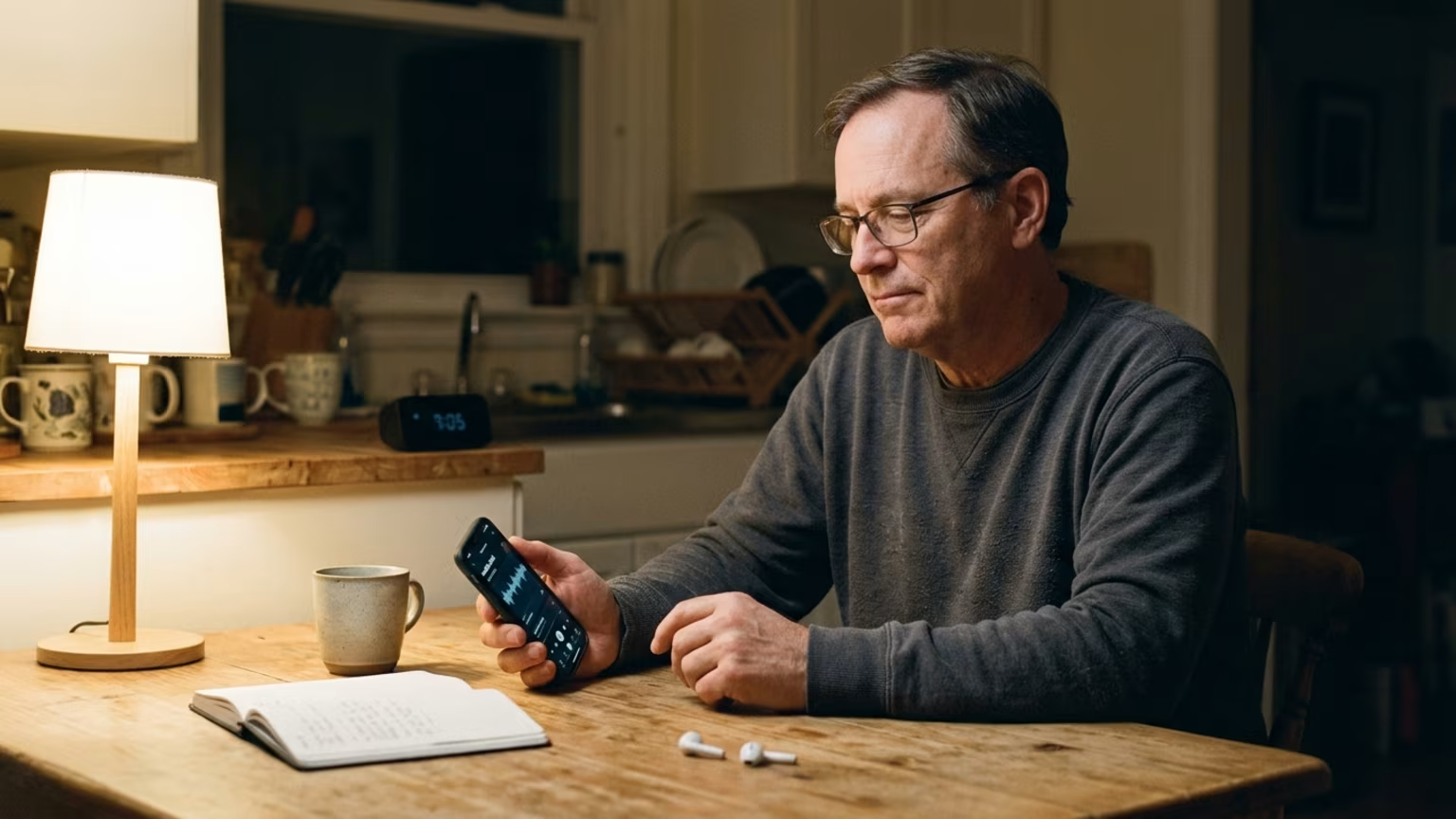

A randomized trial of 495 working adults found that app-based sleep audio tools added no statistically significant benefit over a matched digital control app.





In a large randomized controlled trial published in the journal Sleep in 2026, researchers reported that standalone app-based audio sleep tools did not produce superior improvements in self-reported sleep disturbance compared to a matched digital control. The multi-arm trial evaluated 495 working adults who were recruited online in late 2024 and followed over a four-week period.
The primary conclusion of the study is that sleep-specific audio content does not inherently outperform regular digital engagement. The trial evaluated interventions delivered through the Unmind mental-health app. Participants were assigned in equal proportions to one of three audio interventions or a digital control condition. The sleep tools featured 18 narrated stories lasting 15 to 43 minutes, 60 sound and music tracks lasting 5 to 60 minutes, or eight voice-led exercises.
These exercises covered topics like sleep hygiene, progressive muscle relaxation and breathing. To test whether the audio content was responsible for better rest, the researchers designed an active control group called Daily Boost. This control used the exact same app environment but provided daytime-oriented content instead of sleep-specific audio. It offered health education, reflection prompts and poetry.
The Daily Boost control condition was intended to match the intervention groups across several key variables. It mirrored the app access, user experience, frequency of engagement and total study duration. This careful matching made the comparison much more demanding than a standard no-treatment control group. The study was conducted under ethics approval from the University of Sussex Science and Technology Research Ethics Committee, and it was registered as ISRCTN13426045 to provide transparency.
The participants were recruited from the United Kingdom and the United States, with an average age of 32.7 years. While 55.8 percent of the group was female, the sample was relatively young compared to typical clinical insomnia samples. At baseline, the participants reported an average sleep duration of approximately 6 hours and 14 minutes. Furthermore, 59.2 percent said it took them more than 30 minutes to fall asleep.
Nearly 70 percent scored above the PHQ-4 threshold indicating at least mild anxiety or depression symptoms. Assessments were conducted at baseline and four weeks later. The primary outcome was measured using the PROMIS Sleep Disturbance Short Form, which covers perceived sleep quality and satisfaction over the preceding seven days. The trial retained 82.4 percent of its participants by the end of the four weeks, with 87 individuals lost to follow-up.
The results showed that all groups improved significantly over time. Because the digital control group also improved, the researchers could not attribute the positive changes specifically to the sleep audio. The between-group effects were very small and statistically nonsignificant. Comparing the narrated stories to the control produced a Hedges’ g of 0.12.
Sleep sounds produced a g of 0.14, and the voice-led skills produced a g of 0.07. When the three sleep tools were combined, the comparison produced a g of 0.11 with a p-value of .300. The confidence interval for this combined comparison ranged from minus 0.07 to 0.29. The differences were not large enough to establish that the sleep-specific tools outperformed the control app.
The study found no statistically significant superiority for the audio tools on mental-health symptoms or overall well-being. For example, the combined sleep tools effect on PHQ-4 mental-health symptoms was a g of 0.08 with a p-value of .423. The combined well-being comparison had a g of minus 0.07 with a p-value of .477. A single isolated result showed that stories were associated with a statistically significant difference in self-reported sleep duration compared to the control.
This single finding carried an effect size of minus 0.26. The authors noted that this specific result should not be generalized to audio sleep tools as a class. This caution stems from the fact that the combined sleep tools comparison for sleep duration was not significant. Overall objective engagement with the app was relatively modest throughout the study.
Approximately 75.8 percent of participants assigned to a sleep tool engaged with it at least once. However, only 30.5 percent of those users met the study’s per-protocol threshold of at least 12 engagements. Interestingly, the control group had higher engagement, with 52.4 percent meeting the same threshold. The researchers found no significant dose-response relationship between objective engagement and changes in sleep disturbance.
Participants largely rated the sleep tools positively and considered them safe and acceptable. However, 12 individuals reported negative effects. These problems included reliance on the app to fall asleep, increased stress, ear itching and waking up because of the content. The authors described the tools as well tolerated but stated the findings do not support using them as a standalone treatment.
The 12 individuals who reported negative effects represented 3.58 percent of those who downloaded the app. Some users also cited loud volume and simple boredom as drawbacks. The results highlight the distinction between an optional bedtime habit and a reliable medical intervention. The trial does not prove that audio can never help anyone sleep, as it simply shows that the tested categories did not provide statistically superior improvements over a matched digital control.
The researchers identified several possible explanations for the null result. These explanations included low engagement, limited personalization and the absence of active ingredients found in structured insomnia interventions. The study also required participants to stick to one audio category rather than choosing freely among stories and sounds. Another critical limitation is the reliance on subjective data.
The researchers did not use objective sleep measures like actigraphy or polysomnography. Because sleep duration and sleep-onset latency were assessed with single-item self-report questions, the trial cannot determine if audio affected actual sleep architecture. The trial was also not fully blinded, as participants knew which app feature they were assigned. The control condition itself was not beta-tested, meaning the researchers could not completely exclude the possibility that Daily Boost indirectly affected sleep outcomes.
Furthermore, the study had no follow-up beyond the initial four-week assessment. The authors recommended that future studies examine real-world effectiveness and allow users to select from a broader menu of content. For adults balancing professional responsibilities and household demands, these findings offer a practical perspective on bedtime habits. The actionable implication is to treat audio tools as an optional support rather than a primary treatment for sleep problems.
If a soundscape or relaxation exercise helps you settle, it is perfectly reasonable to keep using it as part of your evening routine. You should not rely on a standalone audio app as the main solution for persistent sleep disturbance. It is helpful to evaluate your tools based on your actual physical response rather than marketing claims. If a digital sleep aid makes you calmer and fits naturally into a wind-down routine, it serves a clear purpose.
If it keeps you alert or makes bedtime feel complicated, you should feel comfortable modifying or stopping it. Participating in a structured routine often provides benefits regardless of the specific audio content used. Building restorative nights without depending entirely on your phone makes it easier to manage digital boundaries around bedtime. Adults in their thirties and beyond frequently encounter conflicting advice regarding sleep optimization, which can complicate simple habit changes.
Learning how to track your sleep without obsessing over the metrics can prevent the technology itself from becoming a new source of stress. When evaluating any digital tool, remember that feeling relaxed is not the same as treating a chronic sleep disruption. An audio tool can be pleasant, easy to use and part of a calming routine without being an established standalone treatment. When poor sleep continues to affect daytime energy, it is often necessary to escalate the issue rather than endlessly changing apps.
The study authors explicitly advise people with significant or persistent sleep problems to seek professional care. A clinician can assess underlying contributors like sleep apnea, restless legs, medication effects or circadian disruption. These are physiological and medical challenges that an audio app simply cannot diagnose or treat. A clear medical assessment helps you address the root causes of exhaustion rather than masking them with background noise.
For structured behavioral treatment, the study identifies cognitive behavioral therapy for insomnia as a first-line treatment recommended by the National Institute for Health and Care Excellence. This aligns with a broader shift away from superficial fixes and toward proven behavioral interventions. The American Academy of Sleep Medicine advises adults to obtain at least seven hours of sleep per night, though individual sleep needs can vary. Current guidance highlights protecting a consistent sleep and wake schedule, creating a dedicated wind-down period and seeking professional help when normal pressures chronically disrupt your rest.
Relying on basic physiological signals is often more effective than turning to a screen. Maintaining a practical guide for sleep changes with age can also help you set realistic expectations for your recovery.
As digital health platforms continue to evolve, the distinction between general relaxation tools and clinical interventions will become increasingly critical. Will future digital sleep applications prioritize objective physiological markers over subjective user experience to truly validate their role in adult recovery?
Evaluating if an app-based audio tool genuinely supports your evening routine or simply adds unnecessary digital interaction is a common challenge, and Relaxopia provides the necessary clinical context to make that determination. Persistent mental load that makes it hard to switch off can complicate your approach to rest, so our editorial platform delivers clear sleep science to support steady daytime energy. Explore Resources
Stay connected for research-led guidance on sleep quality, stress, circadian rhythm, recovery, fatigue and everyday energy. Clear ideas for adults 35+ who want to sleep better, recover more fully and feel more capable through the day.




Explore practical guidance on sleep, stress and recovery without chasing every new hack, device or promise.
explore the blog