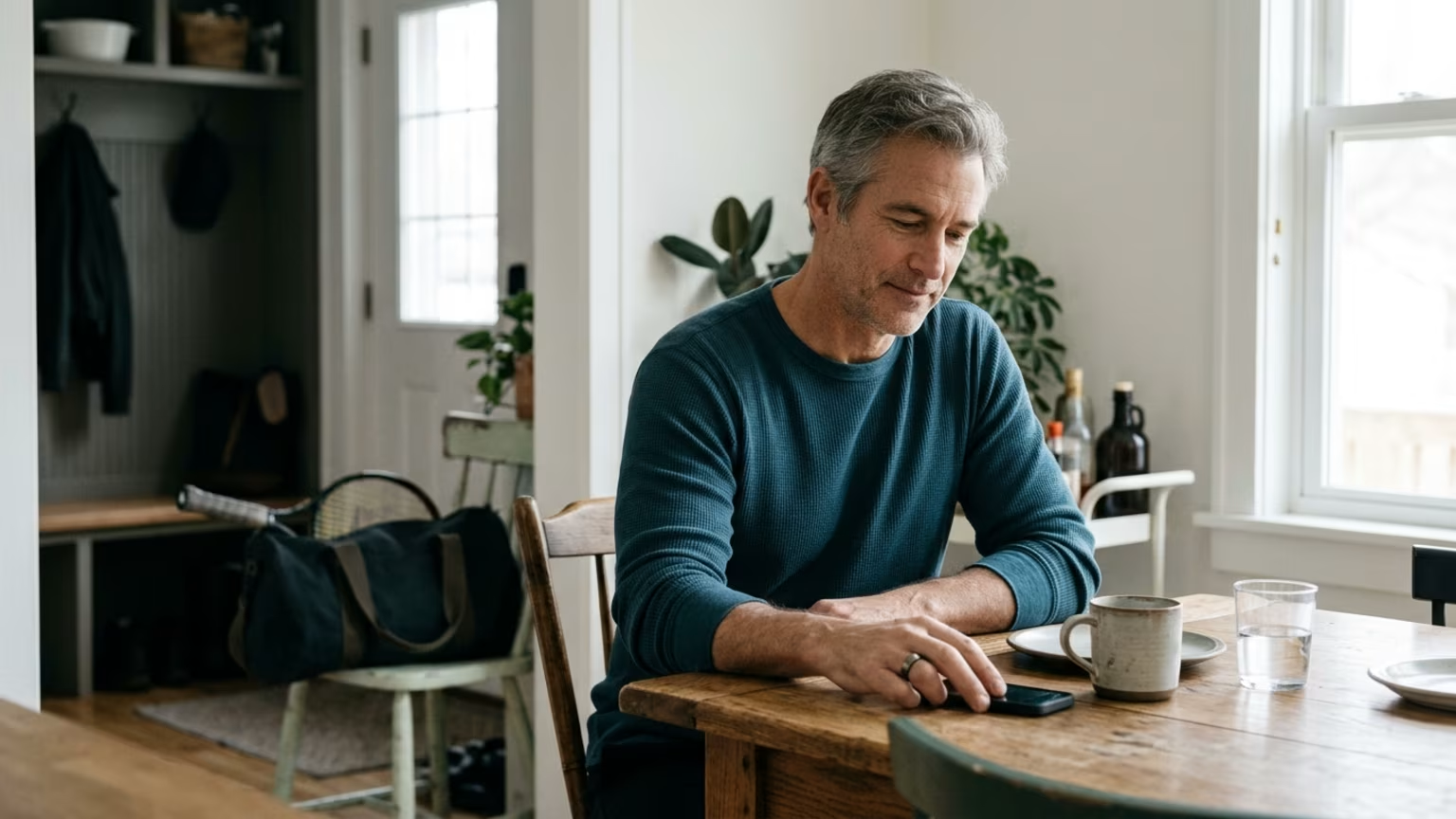

Oura reported lower overnight HRV and slightly higher resting heart rate after tennis. Read personal trends without making recovery a performance target.





On October 1, 2026, Stacker published an analysis from Oura (the wearable company) reporting lower overnight heart-rate variability and slightly higher resting heart rate after tennis than members’ personal baselines. The article was written by Locke Hughes for Oura and interpreted the pattern as ongoing recovery from sympathetic stress.
The core finding concerns what happened during sleep after tennis. Oura reported that overnight heart-rate variability, or HRV, was lower than usual. Resting heart rate was slightly higher than usual.
Those comparisons were personal. Oura compared each member’s post-tennis sleep measurements with that member’s individual 14-day pre-workout sleep baseline. It was not ranking one player’s overnight numbers against another player’s numbers.
In plain English, the reported pattern was a shift away from each person’s recent norm following tennis. Oura interpreted the lower HRV as a sign that the nervous system was still recovering from sympathetic stress. That interpretation describes recovery in progress rather than an immediate return to baseline when activity ends.
The company says its data science team used de-identified, aggregated member data collected from July 17 to August 17, 2026. The analysis covered 11 markets and members aged 18 to 69.
Oura also reported that the lowest overnight heart rate occurred approximately three to four hours after sleep onset across the markets analyzed. That finding adds a timing detail to the overnight picture: the account examined when the nightly low occurred alongside whether the overnight measures differed from baseline.
The useful distinction is between finishing a session and observing the night that follows. The analysis directs attention to that overnight period rather than treating on-court effort and later recovery as the same measurement.
Stacker’s publication note says Oura produced the article and Stacker reviewed and distributed it. This was a company-produced observational analysis, not a reported randomized or peer-reviewed clinical trial. Its interpretation of sympathetic stress was not an independent clinician’s assessment.
The published account gives no absolute size for the HRV or resting-heart-rate changes. It also omits the number of people in the recovery analysis, confidence intervals and a statistical significance test for those findings. Readers therefore cannot judge how large or consistent the reported shifts were.
The broad age range also matters. The article provides no separate result for adults 35 and older, so it does not establish a distinct midlife recovery pattern. The analysis cannot establish causality or supply a required rest period, a specific recovery routine or a threshold for changing exercise plans.
A clinical commentary in Medscape adds another boundary: HRV and resting heart rate are nonspecific indicators. Readings can reflect sleep, stress and recent activity. Temperature and respiration can also matter, alongside meals and hydration.
The commentary notes that devices and measurement conditions differ. Taken together, these limits mean the Oura results are best read as an observed wearable pattern with a company-attributed explanation. They are not a diagnosis or a universal timetable for recovery.
For an adult in midlife who already uses a wearable, the practical adjustment is to review the number alongside personal history and recent activity. This is a habit of interpretation rather than a new recovery protocol. Medscape’s commentary recommends looking at trends instead of relying on one measurement.
Start with the comparison being made. A result below your usual HRV pattern answers a different question from whether your HRV matches someone else’s. Oura’s analysis used the former approach: each member served as their own reference.
That makes a personal trend more relevant to this story than a teammate’s result or a number posted online. The question is whether the reading differs from your usual pattern and what else was happening around it. It is not whether another person recorded a more appealing number.
For readers sorting through personal sleep-tracking data, that distinction offers a manageable starting point. Use the history already available in the device rather than building a separate competition around the result. The aim is understanding the pattern, not earning a better-looking number each morning.
There is no need to recreate Oura’s research comparison as a personal experiment. Its 14-day baseline explains how the company made its comparison. For everyday interpretation, the supported principle is to stay anchored to your own usual readings.
The next part of that review is context. After a tennis session, recent activity belongs beside the overnight result. So do sleep and stress, which the Medscape commentary identifies among the factors that can influence HRV.
A practical review can stay brief:
These are ways of reading information, not instructions to change training or create a detailed recovery log. A reader who plays tennis around work or caregiving can use the same basic questions without turning the next morning into another task to complete perfectly.
How you feel belongs in the same conversation as what the device records. Medscape’s commentary advises interpreting wearable measures alongside symptoms and clinical context. That gives subjective experience a place rather than making the wearable the sole judge of recovery.
When changes persist alongside notable fatigue, symptoms or reduced performance, appropriate clinical guidance can help put the broader picture together. Decisions about an individual’s health or exercise plan belong with qualified care rather than a generic wearable rule.
For adults already managing a full day, the most useful change may be removing a judgment rather than adding a habit. Instead of reading the next morning’s result as a pass or fail, describe what happened: the reading differed from usual after tennis. Then bring in the trend and the context.
That language matters because it separates an observation from an instruction. “Lower than my usual reading” describes a comparison. “I recovered badly” makes a broader judgment about the person and the night.
Relaxopia’s approach to keeping rest separate from performance goals fits this distinction. Useful recovery information should help a person understand their experience rather than create another standard to meet.
The everyday adjustment is modest: keep the wearable in an advisory role. Review personal patterns together with recent demands and how you feel. Let those pieces inform the question you bring to a clinician when needed, rather than asking a single metric to settle it.
A useful next step for research would be to publish the size and consistency of these overnight shifts. Separate midlife results would also help readers understand whether the reported pattern differs across adult age groups. Those details would make the observation easier to assess for everyday relevance.
Longer-term research could then ask whether following these trends leads to better recovery decisions. That is a different question from whether a wearable detects a change after activity.
The opportunity is not simply to collect more numbers. It is to learn which patterns deserve attention and how those patterns fit with symptoms and daily functioning. Could future research make post-exercise wearable trends useful for long-term midlife recovery without turning rest into another performance target?
The adult checking a wearable after tennis handles the daily judgment; Relaxopia supplies research-led reporting rather than a score to achieve. For readers facing wellness content that makes recovery feel like another obligation, its coverage connects sleep and stress with everyday rest through practical explanations that avoid complicated optimization routines.
Stay connected for research-led guidance on sleep quality, stress, circadian rhythm, recovery, fatigue and everyday energy. Clear ideas for adults 35+ who want to sleep better, recover more fully and feel more capable through the day.





Explore practical guidance on sleep, stress and recovery without chasing every new hack, device or promise.
explore the blog