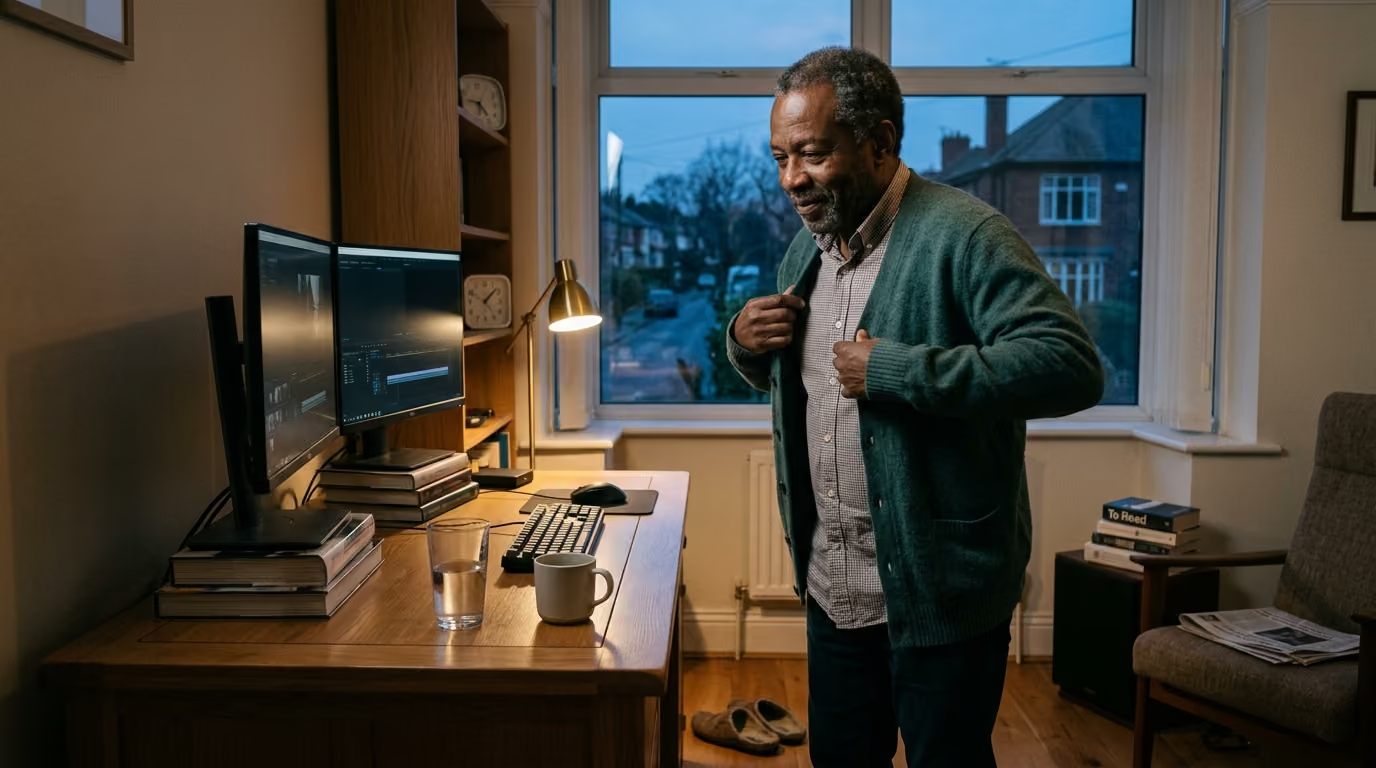

Remote work promises effortless rest, but irregular light exposure shifts your circadian rhythm and requires a deliberate daily schedule for truly restorative sleep.





Eliminating the daily commute seems like an obvious victory for rest. When people stop traveling to an office, they expect deeper sleep, reduced fatigue, and more control over their daily schedule.
Yet remote workers frequently report the opposite experience. They find themselves lying awake late at night, struggling to wake up in the morning, and feeling a persistent fog throughout the afternoon. Removing the commute removes friction, but it also strips away the automatic biological cues that govern the human body clock.
Understanding how working from home alters internal timing requires a close look at how circadian biology operates. When the physical walls between professional tasks and personal rest disappear, the environmental markers that tell the brain when to be alert and when to sleep can quickly fade. Rebuilding those markers within a home environment provides a clear path to deeper, more dependable rest.
Scientific research comparing office workers to home workers reveals subtle but meaningful differences in daily rest patterns. Data indicates that working from home does not automatically ruin sleep duration. Instead, it changes sleep timing and weakens the strength of daytime environmental cues.
In controlled observational studies comparing onsite workdays to telework days, researchers observed measurable shifts in the daily schedule. Sleep onset on home-work days occurred roughly six minutes later on average. The midpoint of sleep drifted approximately nine minutes later, and morning wake time shifted about 16 minutes later. Total sleep duration was about five minutes longer on home days, while sleep efficiency remained virtually identical.
These findings show that working from home tends to push the entire sleep-wake schedule later rather than destroying sleep outright. Removing the morning commute gives people a wider sleep window. At the same time, it delays the start of the biological day.
Research tracking light exposure highlights why this delay happens. Studies show that home workers frequently experience lower light exposure during the afternoon compared to days spent in standard commercial offices. In office settings, higher morning light exposure correlates with earlier awakening, while higher afternoon light exposure links to later sleep onset. When people stay inside their homes all day, their overall daily light exposure flattens.
A systematic review examining ambient illumination found that daytime light levels above 1,000 lux associate with superior objective sleep outcomes compared to dim environments below 100 lux. Most home interiors provide only 100 to 300 lux of indirect light. Without intentional exposure to brighter daylight, the internal clock lacks the strong stimulus needed to keep timing stable.
Recent telework research confirms that daily habits make a substantial difference. A 2026 study evaluating remote workers showed that individuals who made a point to obtain morning daylight and kept screens out of bed maintained stable sleep patterns. These workers also experienced fewer stress reactions and maintained better daytime output.
The evidence suggests that remote work is neither inherently harmful nor automatically beneficial for sleep. It alters the structure of daily life. Improving rest requires understanding the physiological forces that shape our 24-hour cycles.
The human body coordinates hundreds of cellular processes through an internal timekeeping network known as the circadian system. This biological clock does not run on an exact 24-hour schedule by itself. It requires regular input from the outside world to stay synchronized with the solar day.
Circadian scientists refer to these external environmental cues as zeitgebers, a term meaning time-givers. The primary zeitgeber for humans is light. Non-light cues such as physical movement, meal timing, and social interactions serve as secondary signals that support the system.
In a traditional office routine, zeitgebers occur automatically. You walk outside to your vehicle or train station, exposing your eyes to outdoor daylight. You walk across parking lots, climb stairs, and move between meeting rooms. You eat lunch at a scheduled hour with colleagues. You leave the building when the workday ends, creating a definitive physical boundary between work and domestic life.
When you work from home, these automatic signals often disappear. A home worker might wake up, walk ten steps to a desk in a dimly lit spare room, and remain seated in the same chair until evening. Food intake becomes irregular. Outdoor daylight exposure drops significantly. The boundary between professional duty and evening relaxation blurs.
To understand why this causes sleep difficulties, it is helpful to separate four distinct aspects of sleep physiology:
Circadian timing refers to the internal biological clock that dictates when your brain promotes alertness and when it opens the window for sleep. This process is driven primarily by the suprachiasmatic nucleus, a tiny region in the hypothalamus. The suprachiasmatic nucleus responds directly to light signals captured by specialized cells in your eyes.
Sleep pressure is the homeostatic drive to sleep that accumulates continuously while you are awake. As your brain consumes energy throughout the day, a chemical byproduct called adenosine builds up in the central nervous system. The longer you remain awake and active, the heavier your sleep pressure becomes.
Sleep opportunity describes the total time you allocate for resting in bed. When you work from home, your sleep opportunity often expands because you do not have to spend an hour commuting.
Sleep ability represents your physiological capacity to fall asleep and remain asleep during your designated rest window. A mismatch occurs when your sleep pressure is high, but your circadian clock is running on a delayed schedule. You may feel physically exhausted from a demanding day, yet your brain remains alert because dim daytime lighting failed to set your biological rhythm.
This mismatch is frequently aggravated by the way central and peripheral clocks interact. While the central clock in the brain responds to light, peripheral clocks located in the liver, gut, and skeletal muscle respond strongly to feeding schedules and physical activity. When you eat late at night or work from your sofa without moving, your peripheral clocks receive conflicting messages. Synchronizing your circadian rhythm and sleep timing requires aligning both central light cues and peripheral metabolic cues.
Individual responses to working from home vary considerably. Several biological and environmental variables influence how resilient your body clock remains when your daily routine changes.
Your underlying chronotype influences your natural preference for earlier or later sleep timing. Morning types naturally wake early and perform best in the first half of the day. Evening types experience their peak alertness later in the afternoon or evening.
Remote work often allows evening types to align their schedule with their biological tendencies. However, if an evening type lacks morning light and consistent daily anchors, their sleep midpoint can drift later each week. This creates severe social jet lag when they must attend early morning meetings. Understanding natural shifts in your body clock after 35 can help you adjust your daily expectations as your recovery patterns evolve.
The physical setup of a home office significantly impacts light exposure. Research examining office environments shows that workers seated near windows receive far more daylight, engage in more spontaneous movement, and achieve longer sleep durations than those in windowless spaces.
In home environments, the orientation of windows, the presence of window blinds, and the distance between your desk and the glass all determine light intensity. Sitting two meters away from a window reduces light exposure by more than half compared to sitting directly beside it.
Daylight availability changes depending on latitude and season. In winter months, remote workers in northern regions may wake up in the dark, complete their workday indoors, and finish after the sun has set. This total absence of natural outdoor daylight can delay the circadian phase and suppress daytime alertness.
As adults pass the age of 35, sleep architecture naturally alters. Deep slow-wave sleep decreases, nighttime awakenings become more frequent, and the circadian system becomes more sensitive to irregular schedules. A routine that worked well in your twenties may produce noticeable fatigue in midlife if environmental cues are missing.
Restoring biological harmony while working from home does not require rigid protocols or expensive equipment. It requires establishing a consistent sequence of behavioral anchors throughout the day. Below is an evidence-supported daily structure designed to reinforce your natural rhythms.
Maintain a steady wake-up time seven days a week. Keeping a regular wake time anchors your central circadian clock and sets the timer for nighttime sleep pressure accumulation. When you wake up, open your blinds immediately to let ambient light fill the room.
Step outside for 10 to 20 minutes shortly after rising. Outdoor light on an overcast day provides between 1,000 and 10,000 lux, which is significantly more powerful than standard indoor lighting. Combine this exposure with a brief walk or light physical movement to stimulate circulation and signal to your peripheral clocks that the active phase has begun.
Consume your first meal at a consistent time each morning. Regular feeding windows reinforce the synchronization of metabolic clocks in the digestive tract and liver. If you prefer a delayed breakfast, keep that timing steady rather than shifting it back and forth by several hours.
Position your primary work station as close to a daylight source as possible. Schedule your most cognitively challenging tasks for this morning block. Morning daylight exposure reinforces alertness and helps protect against afternoon energy dips.
Break up extended periods of sitting by standing, stretching, or walking around your home for five minutes. Frequent, brief physical interruptions prevent muscular stiffness and maintain a clear boundary between daytime activity and nighttime rest.
Eat your midday meal away from your work desk. Eating in front of a computer screen prolongs cognitive engagement and blurs the lines between work and restorative breaks. After eating, consider a short five-minute stroll outdoors to collect a secondary dose of natural daylight.
Afternoon light exposure often declines sharply in home settings. Keep your work area well-lit. If you start to feel sluggish, step outside into the natural air for two minutes or switch to a standing posture rather than reaching for late-day caffeine.
Conclude your professional responsibilities with a definitive shutdown process. Document incomplete tasks, write down the primary priority for tomorrow morning, and close work software completely. Using a structured mental offload exercise to clear evening thoughts prevents unfinished professional tasks from keeping your nervous system activated.
Replace the physical transition of traveling home from an office. Step outside for a 15-minute walk, change out of your work attire into casual clothes, or complete a household task. This physical shift signals the brain that the work phase is complete and the personal recovery phase has begun.
Keep your dinner timing regular and finish eating at least two to three hours before going to bed. Digesting a large, heavy meal raises core body temperature and activates metabolic processes, which can interfere with the physical cooldown necessary for deep sleep.
Turn off overhead ceiling lights and switch to low-level, warm lamps positioned below eye level. Research indicates that keeping evening illumination low for three hours before sleep prevents the suppression of natural melatonin production. Turn off work notifications on all devices.
Spend the final hour before bed engaging in calming, screen-free activities. Reading printed material, stretching gently, or conversing with family members allows autonomic arousal to drop. Engaging in a structured recovery transition after a demanding day prepares the brain for restorative rest.
Go to bed only when you feel genuinely drowsy. Ensure your bedroom is quiet, dark, and comfortably cool. Reserve the bed strictly for sleep and intimacy, keeping work materials completely outside the sleeping area.
To maintain consistency, organize your home routine around five foundational anchors. These pillars act together to support both central and peripheral biological clocks.
Light is the master regulator of human circadian biology. Early morning light exposure between 06:00 and 09:00 advances your sleep timing, making it easier to fall asleep earlier at night. Light exposure late in the evening delays your rhythm, pushing your natural sleep window into the early morning hours.
To optimize your light environment at home:
Physical activity acts as a potent non-light time cue. Regular movement helps regulate skeletal muscle clock genes and accelerates the clearance of daytime stress neurochemicals.
Extended sedentary periods weaken the contrast between daytime activity and nighttime sleep. You do not need exhaustive exercise sessions to achieve circadian benefits. Brief walking breaks, bodyweight stretches, and moving during phone calls provide sufficient mechanical input to support metabolic rhythms.
The timing of your food intake provides a direct synchronizing signal to peripheral organs like the pancreas and liver. When meal timing varies wildly, peripheral metabolic clocks drift out of alignment with the central clock in the brain.
Establishing consistent meal windows:
When you live and work in the same physical space, your brain can develop conditioned arousal to your surroundings. If you answer stressful emails while sitting in bed, your brain begins to associate the bed with vigilance, cognitive effort, and problem-solving.
Maintain clear physical boundaries:
Offices create mandatory transitions through the physical acts of arriving, departing, and commuting. Working from home removes these natural psychological buffers.
Creating intentional daily rituals helps bridge the gap between active focus and evening relaxation. A short walk around the block, changing your clothes at 17:00, or washing your hands and face at the end of the workday provides a clear sensory transition that closes the work chapter.
Practical obstacles often complicate the execution of daily routines. Below are common remote-work patterns and structured approaches to resolve them.
Consider an illustrative model of a remote professional who wakes up, opens a laptop while still under the covers, answers emails from bed, eats meals at the desk, and works late into the night. This person frequently experiences severe sleep-onset latency, lying awake for hours despite feeling mentally exhausted.
This pattern breaks down because the individual receives no morning daylight, engages in minimal physical movement, maintains continuous cognitive arousal, and eliminates the boundary between rest and labor.
The remedy begins with stabilizing your body clock with a wake-time first reset. The worker must establish a firm rule: no electronics in bed. Waking up, dressing, stepping outside for ten minutes of daylight, and working only from a designated table recreates the missing biological cues.
Another common scenario involves the remote worker who wakes at 07:00 from Monday through Friday but sleeps in until 10:00 on Saturday and Sunday. By Sunday night, this individual cannot fall asleep until well past midnight, leading to severe morning fatigue on Monday.
This pattern represents social jet lag. Shifting your sleep midpoint by several hours on non-work days forces your body clock to adapt to a new time zone every weekend.
To correct this pattern:
Many remote professionals collaborate with colleagues across distant time zones, requiring occasional meetings at 21:00 or later. Late-night cognitive demands and screen brightness can disrupt the normal wind-down sequence.
To mitigate this impact:
Parents and caregivers often face unpredictable schedules due to family demands. When children wake up during the night or require early morning attention, maintaining a rigid schedule may feel impossible.
In these situations, focus on the anchors you can control. Even if wake times fluctuate, obtaining outdoor daylight during the first available break helps stabilize your rhythm. Keeping meal times steady and establishing a predictable personal shutdown routine at night provides stability despite fragmented sleep.
During winter in northern latitudes, natural morning daylight may not be available when you wake up. In these environments, consider using an artificial bright light device that delivers 10,000 lux of indirect illumination for 20 to 30 minutes in the morning. Position the light source at an angle rather than looking directly into the glare, and turn it off by midday.
While circadian biology provides clear principles for human health, current scientific literature includes important nuances and limitations that warrant careful consideration.
Much of our foundational knowledge regarding circadian phase-shifting originates from tightly controlled laboratory environments. In clinical laboratory settings, participants are exposed to precise light wavelengths, strict schedules, and isolated environments.
Real-world observational studies on personal light exposure paint a more complex picture. A comprehensive systematic review examining daily light exposure in free-living adults found mixed associations between measured ambient light and self-reported sleep parameters. In real life, human behavior is messy. Differences in individual chronotypes, occupational stress, caffeine metabolism, physical health, and family obligations all interact with environmental light cues.
Furthermore, authoritative bodies such as the American Academy of Sleep Medicine highlight that while morning light therapy is effective for circadian phase disorders, the exact optimal timing, intensity, and duration for every demographic remain active areas of research. No single, universal light prescription works identically for every individual.
It is also vital to distinguish between circadian misalignment and chronic clinical insomnia. Circadian misalignment occurs when your internal clock is out of step with your social obligations. Insomnia involves persistent difficulty initiating or maintaining sleep despite adequate opportunity, often driven by conditioned anxiety, hyperarousal, or medical factors. Circadian habits support sleep health, but they are not a guaranteed cure for complex clinical sleep disorders.
Environmental adjustments resolve many common sleep complaints among remote workers. However, behavioral modifications cannot correct underlying medical or psychological sleep disorders.
Consulting a qualified physician or board-certified sleep specialist is appropriate if you experience any of the following symptoms:
Medical evaluation can identify conditions such as obstructive sleep apnea, restless legs syndrome, or delayed sleep-wake phase disorder, ensuring you receive evidence-based clinical treatments alongside healthy daily habits.
Building a supportive home-work rhythm is an ongoing process of aligning your environment with your natural biology. Focus on small, sustainable adjustments rather than attempting an overwhelming lifestyle overhaul.
Review this practical checklist to evaluate your current setup:
Working from home offers flexibility, but your biological clock still relies on clear, consistent signals to distinguish day from night.
Stay connected for research and practical guidance on sleep, stress, circadian rhythm and recovery. Clear ideas for adults 35+ who want better rest, steadier energy and more resilient days.



Explore practical guidance on sleep, stress and recovery without chasing every new hack, device or promise.
explore the blog