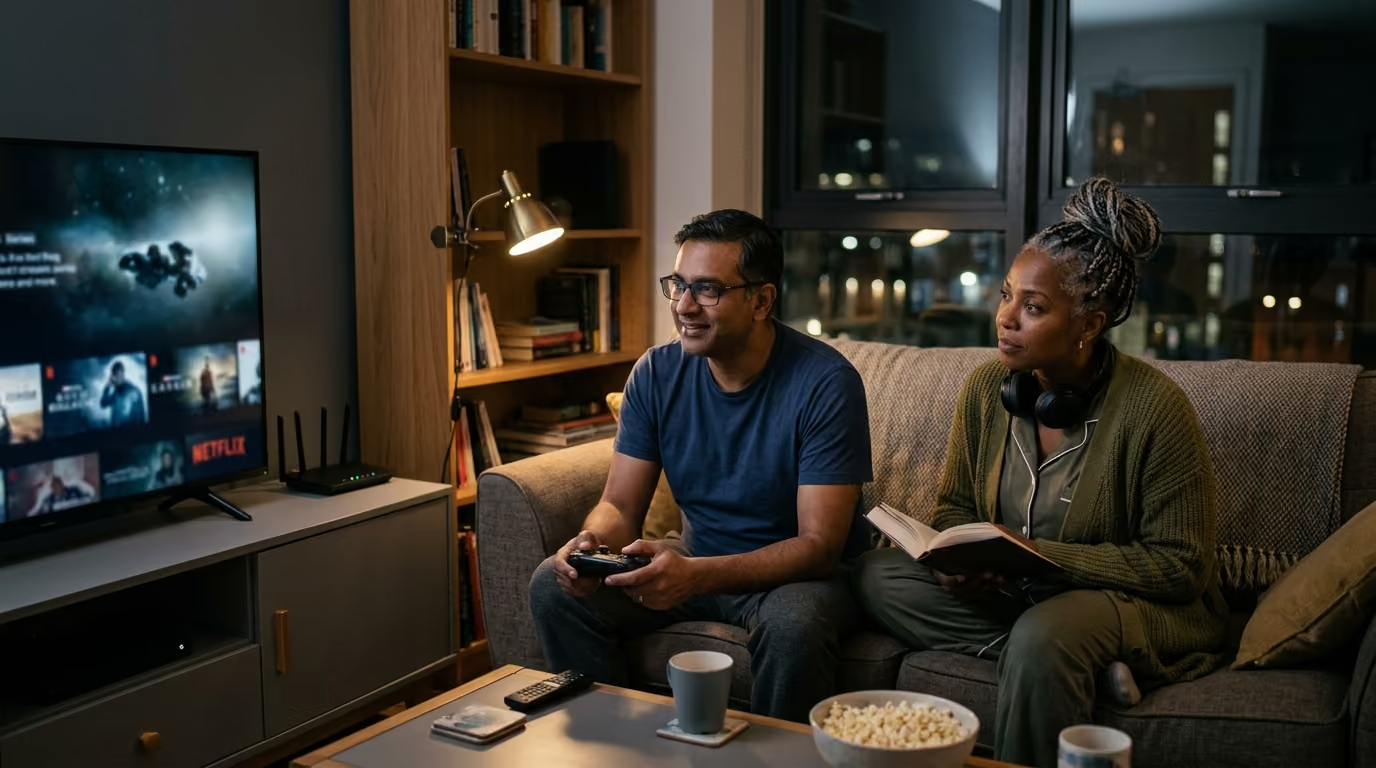

Nighttime entertainment impacts sleep through light exposure, emotional arousal, and time displacement, but targeted behavioral changes let you enjoy digital media without sacrificing rest.





You finish dinner, clear the kitchen, answer the last work message, and finally sit down at nine in the evening. The house is quiet, and for the first time all day, nobody demands your attention. You turn on the television to watch an episode of a drama, or pick up a controller to play a match with friends. Before you realize it, the clock shows midnight, your eyes feel dry, and your alarm is set for six in the morning.
Many adults over 35 recognize this pattern. Standard sleep advice often tells you to ban all screens from your life after dark. That advice ignores why people watch shows or play games in the first place. Digital media provides relaxation, narrative escape, social connection, and an accessible way to unwind from daily pressure.
Giving up evening entertainment completely is neither realistic nor strictly necessary. The goal is learning how different media formats interact with your nervous system and your body clock. When you understand what causes the disruption, you can keep the activities you enjoy while protecting the rest you need.
Scientific research on evening screen use has evolved beyond broad warnings. Early discussions treated every minute in front of a screen as an identical physiological disruption. Modern studies show a far more nuanced picture, separating screen type, viewing distance, content intensity, and timing.
A 2025 systematic review of 21 cohort studies involving over 548,000 participants found that each additional daily hour of screen time was associated with roughly three to five minutes less total sleep. The same review noted higher odds of short sleep durations across broad populations. Large population datasets from the Centers for Disease Control and Prevention show that more than a third of adults sleep fewer than the recommended seven hours per night. Evening screen habits contribute to this shortfall, but they do so in specific, measurable ways rather than through a single mechanism.
Recent investigations also highlight the difference between general screen use and use that happens directly in bed. A 2026 within-person meta-analysis evaluated how day-to-day fluctuations in screen habits affected sleep. The researchers found a small association between heavier daily screen use and later sleep onset. However, they found no significant short-term associations with sleep efficiency, total sleep duration, or sleep-onset latency.
The strongest negative link appeared when screen use continued after a person got into bed. Using devices after intended lights-out was tied to lower subjective sleep quality and delayed rest. The overall body of evidence shows that screens do not automatically ruin sleep. The harm depends on whether entertainment cuts into your sleep window, spikes your nervous system, or keeps you awake long after you planned to rest.
To manage nighttime media effectively, it helps to understand the difference between sleep opportunity and sleep quality. Sleep opportunity is the total time between your decision to sleep and your morning wake time. Sleep quality reflects how deeply you rest, how consolidated your sleep cycles are, and how refreshed you feel the next day. Late-night entertainment can compromise both variables across five distinct pathways.
Light-emitting devices produce short-wavelength light that signals daylight to specialized cells in your eyes. Landmark research conducted in controlled laboratory settings demonstrated that reading on a light-emitting screen before bed delayed melatonin release, lengthened the time needed to fall asleep, and reduced next-morning alertness compared to reading a printed book.
This light exposure shifts your internal circadian timing later. When your circadian phase shifts, your body delays its natural drop in core temperature and heart rate. The effect is most pronounced with screens held close to the face at high brightness settings.
Time displacement occurs when entertainment simply replaces hours meant for sleep. If you need seven hours of rest to function well and must wake at six, you need to be asleep by eleven. Watching an extra 45-minute episode pushes your bedtime to midnight, instantly cutting your sleep opportunity by more than ten percent. Even if the show is gentle and leaves you relaxed, the lost time cannot be recovered during the workweek.
Your brain does not switch off the moment a screen turns black. Intense, suspenseful, or emotionally challenging content triggers the sympathetic nervous system. Your heart rate rises, cortisol increases, and your mind remains engaged in processing narrative tension or competitive stakes. When you lie down immediately after an intense session, your body remains in an alert state, prolonging the time it takes to drift into deeper sleep stages.
Modern entertainment platforms use sophisticated design choices to keep you watching or playing. Streaming services feature countdown timers that launch subsequent episodes automatically. Social platforms and online forums use infinite scrolling without natural stopping points. Video games employ match structures that encourage playing one more round to correct a loss or claim a reward. These design patterns bypass conscious decision-making and promote bedtime procrastination.
Your brain builds strong environmental associations over time. When you consistently watch television, stream movies, or play games while lying in bed, your brain starts viewing the mattress as a workstation or entertainment hub. Behavioral sleep specialists call this conditioned arousal. Preserving the bed exclusively for sleep and intimacy helps your brain associate lying down with physiological relaxation.
Understanding these mechanisms allows you to diagnose your specific sleep obstacles. If you want to explore the underlying principles of circadian rhythm and sleep timing, separating light exposure from psychological arousal is the foundation of long-term recovery.
Different media formats create distinct physiological responses. Treating a half-hour television sitcom the same as an intense multiplayer shooter creates confusing advice. Evaluating each medium independently reveals clear solutions for common evening habits.
Traditional television viewed from a sofa several feet away represents one of the lowest-risk forms of evening media. The distance from the screen reduces the total light intensity reaching your retina compared to a phone held inches away. Sitting in a living room also keeps entertainment out of the bedroom, protecting the psychological association between your bed and rest.
The primary risk with standard television is passive duration creep. It is easy to remain on the couch watching whatever program airs next, ignoring early physical cues of sleepiness like heavy eyelids or yawning.
Streaming services present specific behavioral hurdles. A study published in the Journal of Clinical Sleep Medicine evaluated binge-watching habits and sleep outcomes in adults. The researchers found that higher binge-viewing frequency was strongly linked with poorer sleep quality, greater daytime fatigue, and higher rates of insomnia symptoms. Regular, non-binge television viewing did not show the same negative associations.
The study revealed that pre-sleep cognitive arousal was the key factor connecting binge viewing to disrupted rest. Viewers were not just staying up later; their minds remained active, analyzing cliffhangers and story arcs long after the screen turned off. Autoplay features compound this issue by removing the natural pause where a person would otherwise choose to go to bed.
Video games vary widely in their impact on the nervous system. A comprehensive systematic review on adult video gaming and sleep showed that gaming is not a uniform exposure. Fast-paced, competitive multiplayer games require rapid decision-making, vocal communication, and intense focus. These elements raise heart rate and sustain sympathetic nervous system activation, delaying sleep onset and altering sleep architecture.
The same review noted that non-arousing, cognitively challenging games such as calm puzzles or slow strategy titles did not produce the same sleep disruptions. In some experimental settings, low-stress cognitive play was associated with stable sleep continuity. The problem is rarely gaming as a medium; the issue lies in high emotional stakes, social pressure to finish matches, and fast-paced visual stimulation right before bed.
Late-night news consumption combines light exposure with unpredictable emotional triggers. News feeds are designed around urgency and threat detection. Reading breaking news, political commentary, or community disputes triggers vigilance and anxiety.
The American Academy of Sleep Medicine notes that many adults routinely sacrifice sleep to check alerts and consume news feeds late at night. Consuming distressing news in bed keeps the brain scanning for safety, which directly opposes the mental surrender required to fall asleep.
Not everyone reacts to evening entertainment in the exact same manner. Several biological, environmental, and behavioral variables determine how vulnerable your sleep is to late-night media.
As adults pass age 35, sleep architecture naturally changes. Deep slow-wave sleep gradually declines, making sleep lighter and more prone to awakenings from noise or temperature shifts. The body also becomes less resilient to irregular schedules and late-night stimulation. An evening habit that caused minimal fatigue at age 22 can leave a 45-year-old feeling exhausted, foggy, and irritable the following morning.
Your chronotype, or your natural genetic preference for earlier or later sleep timing, alters your vulnerability to evening media. Research evaluating adult screen use and sleep timing found that evening chronotypes with high daily screen use went to bed an average of 15.6 minutes later and lost more sleep than morning types.
Night owls often use media to fill late hours when they do not yet feel sleepy. This exposure delays their circadian clock even further, making waking up for work the next morning increasingly difficult.
The physical setup of your room plays a substantial role in light absorption. A small smartphone held ten inches from your eyes delivers more direct light to your retinas than a television screen ten feet away. Ambient lighting in the room also matters. Watching a bright screen in total darkness creates high visual contrast that strains the eyes and keeps the visual cortex alert, while watching in a softly lit room softens that impact.
If you carry high work stress or family responsibilities, your nervous system is already operating near capacity. Under these conditions, high-intensity entertainment can tip your body into prolonged arousal. A person who is well-rested and calm might recover quickly from a horror movie or an action game, while a chronically stressed adult may experience rapid heart rates and intrusive thoughts that prevent sleep for hours. If you find that stress makes it hard to unwind, learning more about recovery and nervous system balance can provide helpful context.
Public discussions around sleep and technology contain several persistent oversimplifications. Correcting these myths makes it easier to build sustainable evening routines.
Display features that warm screen colors, along with amber-tinted glasses, reduce short-wavelength light exposure. While these tools lessen melatonin suppression, they do nothing to address time displacement, narrative suspense, competitive adrenaline, or automatic playback. Relying solely on a screen filter while playing a high-stakes competitive game in bed will not prevent sleep disruption.
Many people leave the television on as background noise to drown out racing thoughts. While the familiar sound may help them drift off, background media compromises sleep quality later in the night. Changes in volume, flashing screen brightness, and ongoing audio can pull you out of deep sleep stages without your awareness. You may wake up tired despite spending eight hours in bed.
Treating entertainment as purely harmful overlooks its psychological value. Meaningful leisure, shared gaming with friends, and engaging stories provide genuine pleasure and emotional relief after demanding days. The objective is never total elimination. The goal is managing boundaries so leisure supports your life rather than stealing your recovery.
Controlled trials comparing e-readers with printed books demonstrate clear physiological differences. Participants using light-emitting tablets took longer to fall asleep, produced less melatonin, had delayed REM sleep, and reported feeling less alert the following morning. If you enjoy reading before bed, a physical book or a dedicated front-lit e-ink reader with warm light offers a superior physiological environment.
Protecting your sleep does not require rigid digital detoxes or joyless evenings. A structured, progressive approach allows you to enjoy your favorite media while securing consistent, restorative rest.
Before making drastic adjustments, collect honest data about your current evening habits. For one week, keep a simple bedside notepad and record these details each morning:
Reviewing this log after seven days will reveal your primary vulnerability. You will quickly see whether your main hurdle is time displacement, emotional activation, or late-night scrolling in bed.
Calculate your target bedtime based on when you must wake up. The National Institutes of Health and the Centers for Disease Control and Prevention recommend at least seven hours of sleep per night for adults aged 18 to 60. If your alarm sounds at 6:30 in the morning, your lights-out cutoff must be 11:30 at the latest. Treat this cutoff as a fixed biological boundary rather than a flexible suggestion.
The American Academy of Sleep Medicine recommends powering down electronic devices 30 to 60 minutes before bedtime. This transition period gives your heart rate time to settle and allows your brain to produce melatonin naturally. If an hour feels too restrictive at first, start with a 20-minute buffer and expand it gradually over several weeks.
Take ten minutes to adjust settings across your devices:
Removing automatic playback forces you to make an active decision before starting another episode or match.
Establish a physical boundary between leisure and rest. Watch television in the living room and play console or PC games at a desk or in a common area. When you finish your entertainment for the night, power down the devices and walk into the bedroom solely to sleep. For those setting up a restorative environment, our guide on sleep environment, habits and technology covers practical adjustments for bedroom spaces.
Schedule high-stakes activities earlier in the evening. If you enjoy competitive gaming, intense thrillers, or breaking news, consume them between seven and nine. Use the final hour of your screen time for predictable comedies, gentle documentaries, or casual gaming titles that do not spike your heart rate.
Replacing screen time with an empty void often leads to boredom and relapse. Fill your transition buffer with low-friction, relaxing activities:
For a deeper look into building consistent evening habits that support restorative rest, explore our resources on better sleep and sleep quality.
While the connection between late-night screen use and sleep parameters is supported by research, the scientific literature has several distinct limitations that warrant honest appraisal.
First, a large portion of screen time literature relies on observational, self-reported survey data. Self-reported logs often suffer from recall bias, as people frequently underestimate how long they spent on a device or misjudge how long it took them to fall asleep. Observational associations cannot definitively prove that screen use caused poor sleep. In many cases, people who already struggle with sleep turn to screens to pass the time when they cannot rest.
Second, laboratory studies on light exposure often use artificial conditions that do not reflect everyday life. Many landmark circadian trials exposed participants to bright, uncalibrated screens at close range for several consecutive hours in total darkness. Everyday screen use in a softly lit room with modern adaptive displays may produce smaller biological shifts than those documented in rigorous lab protocols.
Third, individual sensitivity to evening light and psychological arousal varies widely. Genetics, age, previous light exposure throughout the day, and underlying nervous system tone all shape how a person responds to a late-night show or game. What keeps one person awake for hours may cause zero perceptible disturbance for someone else. Personal experimentation remains necessary to discover your own biological tolerance.
Adjusting evening entertainment habits can resolve sleep onset delays and daytime fatigue for many people. However, lifestyle and habit changes have clear limits. Chronic sleep disorders cannot be cured simply by turning off the television an hour earlier.
If you struggle with persistent insomnia, taking more than 30 minutes to fall asleep or waking frequently during the night for three months or longer, basic sleep hygiene is rarely sufficient. Cognitive Behavioral Therapy for Insomnia, known as CBT-I, is the clinical gold standard for chronic sleep difficulties. It addresses the conditioned arousal, anxiety, and behavioral patterns that keep insomnia alive. For those navigating long-term sleep struggles, our breakdown on practical habits beyond standard sleep hygiene outlines how clinical strategies differ from basic lifestyle advice.
You should consult a physician or a sleep specialist if you notice symptoms such as:
These symptoms often point to underlying medical conditions like obstructive sleep apnea, restless legs syndrome, or mood disorders that require formal diagnosis and evidence-based clinical treatment.
Revisit this guide whenever your daily schedule changes, your daytime fatigue begins creeping upward, or you notice that your evening entertainment is once again cutting into your sleep opportunity. Life transitions, increased work stress, or new media releases can easily disrupt established boundaries, making a periodic reset helpful.
You do not need to choose between modern entertainment and restorative sleep. By identifying whether your primary hurdle is light, duration, emotional arousal, or automatic playback, you can protect your sleep opportunity while keeping the evening pastimes that help you unwind.
Stay connected for research and practical guidance on sleep, stress, circadian rhythm and recovery. Clear ideas for adults 35+ who want better rest, steadier energy and more resilient days.



Explore practical guidance on sleep, stress and recovery without chasing every new hack, device or promise.
explore the blog