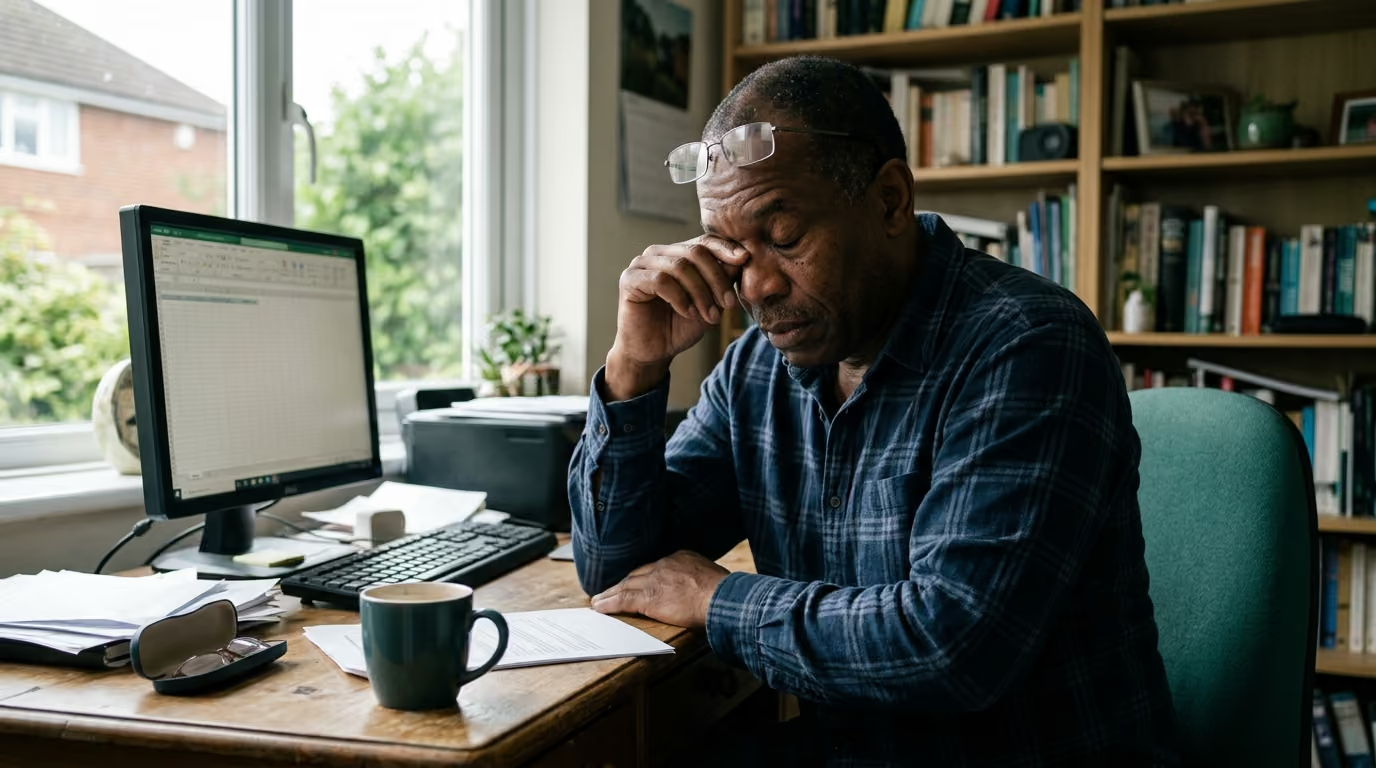

Feeling drained all afternoon only to become wide awake at bedtime stems from misaligned circadian rhythms that you can reset using proven behavioral and environmental strategies.





When exhaustion drags you down all afternoon, the most logical response seems to be heading to bed early. Yet climbing into bed before your body is ready often leads to sudden alertness, racing thoughts, and hours of staring at the ceiling.
Exhaustion during the day does not guarantee sleepiness at night. Human rest is not governed by a simple battery that depletes and recharges in a straight line. It is controlled by biological timing systems, learned behavioral triggers, and chemical pressures that can easily fall out of alignment.
Understanding why this split occurs requires looking past generic advice. When you examine the exact mechanics of sleep regulation, you can untangle the daytime fatigue loop and rebuild a predictable, restful rhythm.
Sleep medicine relies on a foundational concept known as the two-process model of sleep regulation. First proposed by Alexander Borbély, this framework explains that our daily rest is governed by two distinct forces: Process S and Process C.
Process S represents homeostatic sleep pressure. The longer you stay awake, the more adenosine and other metabolic byproducts accumulate in the brain. This accumulation creates an increasing biological drive to sleep. When you finally sleep, this pressure dissipates.
Process C represents the circadian rhythm, an internal biological clock coordinated by the suprachiasmatic nucleus in the brain. This system operates on an approximately 24-hour cycle. It sends alerting signals that fluctuate throughout the day, independent of how long you have been awake.
Under ideal conditions, these two systems work in harmony. Process S builds steadily throughout your waking hours. Process C releases a strong alerting signal during the late afternoon and early evening to counteract that rising fatigue. As bedtime approaches, Process C reduces its alerting drive and permits core body temperature to drop, allowing Process S to take over and initiate deep rest.
When these systems become misaligned, you experience the frustrating sensation of feeling drained at 2:00 p.m. but wide awake at 11:00 p.m. Research indicates that sleep debt is not a simple ledger where lost hours can be swapped at will. According to data from the Centers for Disease Control and Prevention, roughly 35% of adults in the United States report sleeping fewer than seven hours per night. This widespread shortfall leads to chronic daytime fatigue, but it does not automatically reset an unaligned internal clock.
Evidence published in clinical sleep literature demonstrates that high homeostatic sleep pressure can actually blunt the circadian system's responsiveness to morning light cues. When you carry substantial sleep debt, your brain's biological clock can become sluggish in its adjustments. Clinical trials show that behavioral interventions, particularly stimulus control and targeted light exposure, provide the most reliable long-term improvements for this timing mismatch.
To understand why your energy feels inverted, you must separate physical exhaustion from biological sleepiness. They are not the same physiological state.
Global fatigue is a state of low physical energy, mental fog, and reduced motivation. It can stem from fragmented rest, chronic stress, or illness. Sleep propensity, by contrast, is your immediate physiological readiness to fall asleep right now.
You can be profoundly fatigued while having low sleep propensity. If your circadian phase is shifted late, your internal clock continues to pump alerting signals through your nervous system long after your muscles feel exhausted.
This mismatch directly impairs daytime cognitive performance and emotional resilience. When Process C keeps you awake past midnight, you still face fixed morning alarms for work or caregiving. The resulting short sleep increases daytime adenosine levels, leading to severe morning brain fog and afternoon slumps.
Over time, this dynamic affects how you interpret your own body cues. Adults dealing with midlife responsibilities often find that their natural rhythms shift. You can read more about how midlife shifts alter daily circadian rhythms to see why recovery resilience changes after age 35. When persistent fatigue sets in, people often attempt to compensate with extra caffeine, irregular naps, or sedentary behavior, all of which inadvertently lock the inverted cycle into place.
Several distinct behavioral and environmental factors feed the cycle of daytime exhaustion and nighttime arousal. When these influences converge, they create a persistent feedback loop.
When afternoon fatigue peaks, taking a nap seems like a healthy recovery strategy. The biological consequence, however, depends heavily on nap duration and timing.
Sleeping for 60 to 90 minutes in the late afternoon clears out a large portion of your accumulated Process S sleep pressure. You wake up with temporarily lower adenosine, which makes it far harder to generate sufficient sleep drive at your target bedtime. Furthermore, waking from deep slow-wave sleep during an afternoon nap can trigger severe sleep inertia, leaving you groggy for hours before a sudden surge of evening alertness.
Light is the primary environmental cue that sets your circadian pacemaker. Photoreceptors in the retina detect light and send signals directly to the suprachiasmatic nucleus, suppressing the production of melatonin.
When you expose yourself to bright overhead lighting, computer screens, or mobile devices late in the evening, you signal to your internal clock that it is still daytime. The problem is not merely optical wavelengths. Digital devices combine bright light with interactive emotional stimulation. Reading work emails, scanning news headlines, or engaging in online discussions activates your sympathetic nervous system, increasing heart rate and mental vigilance just as your body needs to wind down.
Conditioned arousal is a learned psychological and physiological association between your bed and active wakefulness. It develops gradually when you spend extensive time lying in bed while working, worrying, watching television, or trying desperately to sleep.
When a person repeatedly spends hours awake in bed, the brain begins to treat the mattress as a cue for alertness rather than rest. You might feel heavy-eyed while relaxing on the living room sofa, yet the moment your head touches your pillow, your nervous system surges with sudden wakefulness. The bed has become an environment associated with effort, frustration, and monitoring the clock.
Stress operates through multiple pathways to disrupt sleep timing. During the day, constant work and family demands keep your attention focused outward, masking underlying worries.
When you finally lie down in a dark, silent room, all external distractions disappear. Your brain suddenly has the space to process unresolved concerns, plan for tomorrow, and catalog bodily sensations. This cognitive activation stimulates the hypothalamic-pituitary-adrenal axis, elevating cortisol and triggering muscle tension. For a deeper look at this process, review our guide on why you cannot sleep even when you are tired to understand how internal tension overrides physical exhaustion.
Before attempting to fix a day-night reversal, you must identify what type of pattern you are dealing with. Different physiological issues require distinct approaches.
Delayed Sleep-Wake Phase Disorder, or DSWPD, is an intrinsic circadian rhythm disorder. People with this condition have an internal biological clock that is stable but shifted significantly later than conventional societal norms.
An individual with DSWPD may naturally fall asleep at 3:00 a.m. and wake up refreshed at 11:00 a.m. without any difficulty if their schedule permits. The problem arises when work or family commitments force a 7:00 a.m. wake-up, resulting in severe sleep deprivation during the work week. This differs from classic insomnia, where a person cannot sleep well regardless of the time they choose to go to bed.
Obstructive sleep apnea involves repeated upper airway collapses during sleep, causing brief micro-arousals that shatter sleep architecture. People with sleep apnea often spend eight hours in bed and believe they were asleep, yet they wake up exhausted and fight debilitating daytime sleepiness.
Because their sleep is highly fragmented, they lack daytime vitality, yet their circadian alerting system still keeps them awake in the evening. If you snore heavily, wake up gasping, or experience unrefreshing sleep despite ample time in bed, a medical sleep evaluation is essential.
Restless Legs Syndrome causes uncomfortable sensations in the legs accompanied by an irresistible urge to move them. These symptoms characteristically worsen during evening rest and inactivity.
This condition creates a direct barrier to falling asleep, keeping individuals awake well into the night while producing deep exhaustion the following afternoon. It requires clinical assessment rather than simple behavioral habit adjustments.
Social jetlag occurs when your sleep schedule varies drastically between workdays and days off. Sleeping in for three hours on Saturday and Sunday shifts your circadian clock later, making Sunday night insomnia almost inevitable.
Night-shift workers face an even steeper challenge, as they must sleep when the external world is filled with light and noise while staying alert when their biological clock promotes deep rest. Managing shift work requires careful, deliberate control over artificial light and dark environments rather than standard morning-light routines.
Reversing an entrenched pattern of daytime fatigue and nighttime alertness takes patience and consistency. You cannot force sleep to arrive on command, but you can build the physiological conditions that make it inevitable.
Before changing your habits, track your actual sleep and wake patterns for 7 to 14 days using a written log. Record the following variables each day:
This log separates total time spent in bed from actual time spent asleep. Many people discover they are spending nine hours in bed while only sleeping for six, a habit that severely dilutes sleep efficiency.
The single most effective action you can take is setting a fixed wake-up time and maintaining it seven days a week. Your wake time anchors your entire circadian cycle.
When you wake at the exact same time every day, you set a consistent start point for accumulating Process S sleep pressure. You also establish a predictable baseline for your body temperature curve and hormone production. Resisting the urge to sleep in on weekends is crucial during the realignment phase.
Within 30 to 60 minutes of waking, expose your eyes to bright light. Natural outdoor sunlight is the most potent tool available for setting your circadian clock.
Spend 15 to 30 minutes outside walking, having breakfast, or sitting on a porch. Outdoor daylight provides thousands of lux, far exceeding standard indoor home lighting. This light activates retinal ganglion cells, suppresses residual melatonin, boosts morning alertness, and sets an internal timer for evening melatonin release roughly 14 to 16 hours later. If you wake before dawn, consider using a certified 10,000-lux light box after consulting your doctor.
To fall asleep easily at night, you must protect your homeostatic sleep drive throughout the day. If you must nap due to safety concerns or heavy fatigue, limit the rest to 20 minutes and schedule it before 2:00 p.m.
A brief 20-minute nap provides cognitive relief without allowing your brain to enter deep slow-wave sleep. This prevents post-nap grogginess and leaves your nighttime sleep pressure intact. If your goal is full circadian realignment, eliminating daytime naps entirely for two weeks is the fastest way to consolidate nighttime rest.
Do not jump from a 1:00 a.m. bedtime directly to 10:00 p.m. Going to bed hours before your internal clock is ready will only produce frustrating wakefulness and reinforce conditioned bedroom anxiety.
Instead, keep your wake time fixed and wait to go to bed until you feel genuine, heavy sleepiness. As your morning anchor builds up daytime sleep pressure, your natural sleepiness will move earlier. Once you consistently fall asleep within 20 minutes of hitting the pillow, you can shift your bedtime earlier in 15-minute increments every few days.
Begin dimming household lights 60 to 90 minutes before your planned sleep time. Switch off overhead fixtures and rely on low-placed, warm lamps to signal the onset of biological night.
Power down computers, tablets, and phones at least 30 to 60 minutes before bed. Replace screen time with low-arousal activities such as light reading, gentle stretching, or listening to calm music. For specific routines to quiet racing thoughts, explore our resource on how to reduce bedtime mental overload.
If you find yourself lying awake in bed for roughly 20 minutes without feeling drowsy, get out of bed. Do not stay under the covers trying to force sleep to happen.
Move to another dimly lit room and engage in a quiet, non-stimulating activity. Read a physical book or listen to an audio track until your eyelids feel heavy again, then return to bed. By consistently following this rule, you extinguish the mental link between your bed and frustrating wakefulness. To learn more about behavioral techniques, read our practical overview of habits that go beyond basic sleep hygiene.
When people struggle with poor sleep timing, they frequently adopt well-meaning habits that actually prolong their difficulties. Recognizing these pitfalls saves time and prevents unnecessary frustration.
Believing that going to bed early cures daytime exhaustion is one of the most common mistakes. When you enter bed at 9:00 p.m. out of pure fatigue, your circadian alerting system is often still running.
You end up tossing and turning for two hours, watching the clock and worrying about tomorrow. This turns the bedroom into a place of stress. Always wait for physical sleepiness, characterized by heavy eyelids and nodding off, rather than simple tiredness before getting into bed.
Reaching for multiple cups of coffee across the afternoon creates a persistent physiological barrier to sleep. Caffeine has an average half-life of roughly five to seven hours in healthy adults.
A large latte consumed at 3:00 p.m. can leave significant amounts of caffeine blocking your brain's adenosine receptors at 10:00 p.m. This prevents you from feeling the true depth of your homeostatic sleep pressure. Establish a firm caffeine cutoff time, ideally by 12:00 p.m. or at least eight hours before your intended bedtime.
Melatonin is frequently misunderstood and misused as a fast-acting sedative. Melatonin is fundamentally a circadian phase-shifting signal, not a traditional sleeping pill.
Taking high doses of over-the-counter melatonin right before getting into bed can cause vivid dreams, middle-of-the-night awakenings, and morning grogginess. Clinical guidelines from the American Academy of Sleep Medicine recommend using small, appropriately timed doses primarily for circadian timing adjustments under professional direction rather than general insomnia.
Alcohol acts as a central nervous system depressant that can help you relax and fall asleep faster. However, as your liver metabolizes the alcohol during the night, it creates a severe rebound effect.
Alcohol destroys rapid eye movement sleep, causes frequent micro-awakenings, and worsens nighttime breathing obstructions. You wake up dehydrated and unrefreshed, starting another cycle of daytime exhaustion.
While the foundations of circadian biology and sleep homeostasis are well established, several areas of sleep science continue to evolve. Being aware of these scientific limitations helps you maintain realistic expectations.
First, optimal light therapy protocols are still being refined. While research clearly confirms that morning light shifts the circadian rhythm earlier, the exact lux intensity, spectral composition, and exposure duration needed varies significantly between individuals. What works well for one person may cause eye strain or headaches in another.
Second, research on commercial blue-light blocking glasses shows mixed results. While amber lenses can filter out specific wavelengths of artificial light, they do not neutralize the cognitive arousal caused by working late on interactive screens. Managing mental engagement and overall room brightness remains far more important than relying on protective eyewear alone.
Third, consumer wearable sleep trackers provide valuable general trends, but their raw stage data should be interpreted with caution. Wearables estimate sleep stages based on movement and heart rate variability rather than direct brainwave monitoring. Becoming overly fixated on tracker scores can generate orthosomnia, a state of anxiety about sleep metrics that actually worsens nighttime wakefulness.
Self-directed behavioral adjustments can resolve many day-night rhythm mismatches. However, persistent sleep disruption warrants evaluation by a qualified physician or board-certified sleep specialist.
You should seek professional medical care if:
A sleep specialist can perform diagnostic evaluations such as overnight polysomnography or home sleep apnea testing. They can also connect you with Cognitive Behavioral Therapy for Insomnia, the gold-standard psychological treatment for persistent sleep problems.
Reversing an inverted sleep pattern is not about forcing sleep through sheer willpower, but about establishing steady biological anchors that allow your body clock to restore its natural rhythm.
Stay connected for research and practical guidance on sleep, stress, circadian rhythm and recovery. Clear ideas for adults 35+ who want better rest, steadier energy and more resilient days.



Explore practical guidance on sleep, stress and recovery without chasing every new hack, device or promise.
explore the blog