
Better rest and restored melatonin production are possible by auditing bedroom electronics, managing ambient light, and establishing a structured evening wind-down routine.





You lie in bed exhausted, yet your eyes stay fixed on a glowing screen. You check one last message, scroll through news updates, or watch a video clip. An hour passes, your mind feels wired, and sleep feels out of reach. This problem affects millions of adults who wonder why their bedroom no longer feels resting.
Many people search for answers online after spending late hours on their devices. They want to know why screen time disrupts their rest and how to fix it without giving up emergency contact. This guide provides an explanation of digital sleep disruption based on scientific research. It outlines a practical plan to build a lower-stimulation sleeping environment while keeping necessary access.
Scientific research shows a clear relationship between evening electronic technology and altered sleep patterns. A meta-analysis examining 55 studies and over 41,000 participants across 20 countries found that electronic media use was consistently associated with poorer sleep quality and higher rates of sleep problems. The researchers identified several mechanisms, including sleep displacement, delayed bedtime, alert interruptions, and light-induced suppression of melatonin.
A 2025 study on adult screen habits revealed that daily pre-bed screen use was associated with a 33% higher prevalence of poor sleep quality compared to no screen use. The same investigation found that adults using screens before bed slept an average of 7.64 fewer minutes per night on workdays. While these population studies show strong associations rather than direct single-cause proof, controlled laboratory experiments support these findings.
Controlled laboratory trials demonstrate that display light directly alters human circadian biology. In a benchmark study, participants who read from a light-emitting e-reader in the evening took longer to fall asleep compared to those reading a printed book. The e-reader group experienced suppressed melatonin levels, delayed circadian timing, reduced REM sleep, and lower alertness the following morning. These measurements prove that visual displays alter internal biology beyond simple psychological distraction.
Research on adolescents and preteens reveals similar patterns. Studies cite a multi-fold increased risk of short sleep duration and daytime sleepiness when screens are used near bedtime. The physical presence of a device beside the bed increases sleep disruption risks even when the device is not actively touched. Expectation and physical proximity alter sleep readiness before a screen turns on.
Digital sleep disruption occurs through multiple sensory and psychological channels at once. Many people blame short-wavelength blue light for late-night wakefulness. Spectral output matters, but light is only one part of a larger system of arousal. Understanding how technology alters rest requires examining five distinct dimensions of bedroom stimulation.
The nature of device interaction alters how the brain responds. Interactive media like messaging, mobile gaming, and web scrolling demands continuous decisions and motor responses. This high engagement increases heart rate and cognitive processing. Passive media like familiar music or low-intensity television programs demands fewer active choices, making it less activating for some individuals.
The bedroom serves as a powerful behavioral cue for the brain. Under principles of stimulus control, the brain associates physical spaces with specific mental states. Using the bed for work, intense entertainment, or stressful communication breaks the connection between bed and sleep. When this separation weakens, individuals experience feeling exhausted yet unable to sleep because the body expects activity rather than rest.
Notifications create a state of anticipatory arousal. Knowing a device might chime or vibrate keeps the nervous system on alert. Studies on young adults show that awareness of potential nighttime notifications correlates with fragmented sleep and morning fatigue. A silent phone can still disrupt sleep if your brain remains braced for an incoming signal.
Several environmental and personal variables alter how technology impacts sleep. Individual sensitivity to light vary widely across populations. Spectral composition, duration of exposure, and overall brightness determine how light affects the central clock in the brain. Light exposure late in the biological night causes greater circadian delay than light exposure early in the evening.
Age alters circadian timing and sleep structure. As adults pass age 35, deep sleep naturally decreases, and night awakenings become more frequent. These natural circadian shifts after age 35 make sleep more vulnerable to light and sound disruptions. A night alert that an 18-year-old sleeps through may fully awaken a 45-year-old.
Warmer screen display settings, often called Night Shift or eye-comfort modes, reduce short-wavelength light. Research demonstrates that display dimming and warm color filters reduce visual strain. However, laboratory trials show that warm-filtered screens at high brightness still suppress melatonin during biological night exposure. Color filters help as a fallback measure, but they do not eliminate the effects of late-night screen engagement.
Work demands and caregiving duties change what changes are realistic. A shift worker, on-call physician, or parent of a young child cannot turn off all communication channels. The goal is not to eliminate all technology, but to filter non-essential signals while preserving critical communication pathways.
Creating a low-stimulation bedroom works best when implemented in practical steps. Replacing every device at once often creates stress and leads to abandoned efforts. This staged plan allows you to make sustainable changes over time while maintaining daily convenience.
Start by identifying the main technology challenge in your night routine. Focus on one specific issue, such as late bedtimes, middle-of-the-night checking, or wakeful morning fatigue. Avoid treating your bedroom setup as a health optimization competition. Simple, targeted changes yield better long-term rest than strict, complicated routines.
Track basic rest indicators over a two-week period. Note your approximate lights-out time, estimated sleep delay, night awakenings, and morning alertness. Use these baseline observations to evaluate whether your bedroom modifications make a practical difference.
Spend two evenings reviewing every electronic input in your sleeping space. List all devices present, including phones, tablets, televisions, laptops, smart watches, digital clocks, and indicator lights. Record when each item is used and what inputs it creates.
Categorize each item as essential support or non-essential stimulation. Essential items include medical monitors, emergency communication channels, and necessary alarms. Non-essential items include social media feeds, work emails, streaming applications, and status lights.
Configure your primary communication device to block casual interruptions while allowing urgent calls. Modern smartphone operating systems include customizable focus modes and Do Not Disturb settings. Set these systems to engage automatically one hour before your target sleep time.
Establish an emergency contact list that bypasses silent modes. Include immediate family, child care providers, or work supervisors who may need you in an urgent situation. Enable repeat caller settings so that secondary urgent calls break through the filter. Test these exceptions with a family member to ensure the system works as intended.
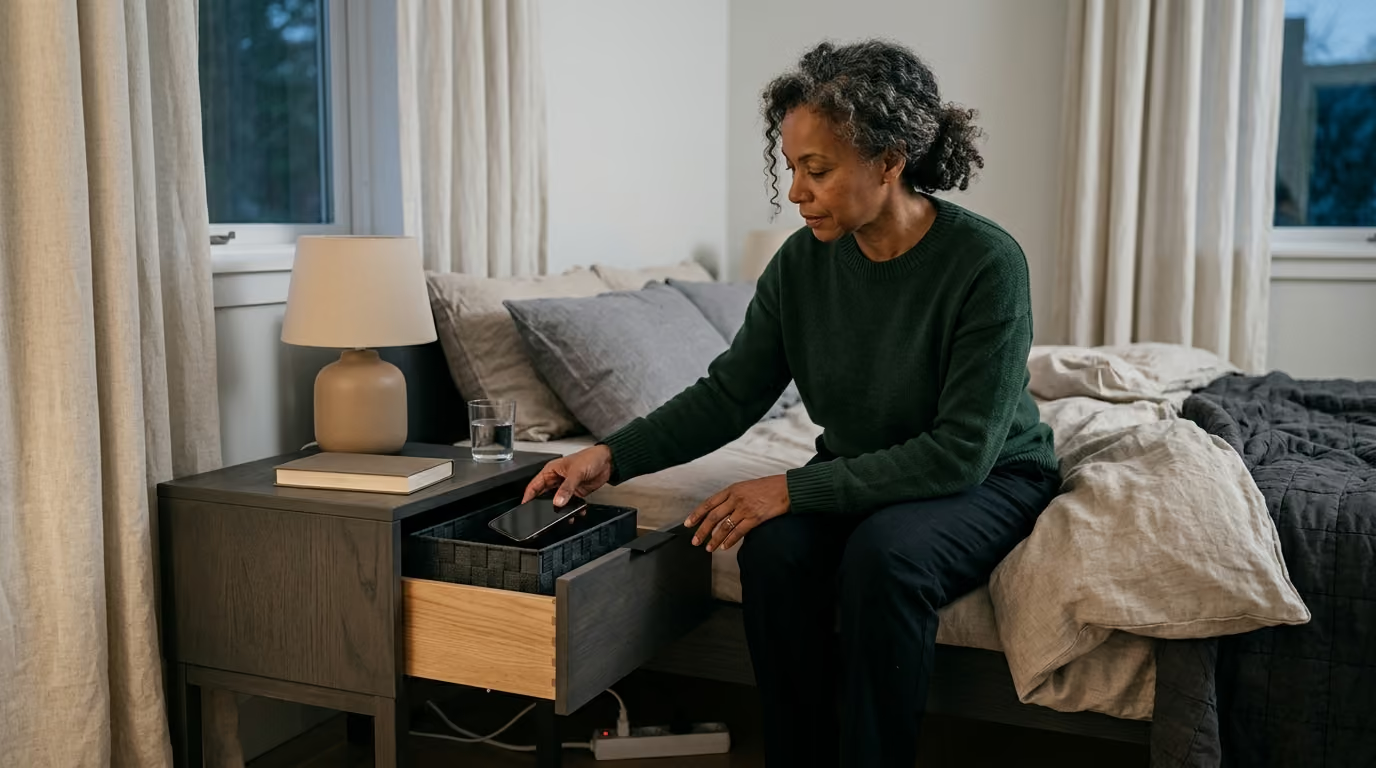
Remove the single device that causes the most distraction from your bedside table. For most adults, this item is a smartphone or tablet used for late-night scrolling. Charge this primary device outside arm's reach across the room or in an adjacent hallway.
If you rely on your phone for a morning alarm, moving it across the room serves two purposes. It prevents late-night checking while forcing you to get out of bed to silence the alarm in the morning. If this setup causes anxiety, replace the phone alarm with a standalone digital alarm clock.
Establish a transitional wind-down period before entering the bedroom. Public health guidance from the National Heart, Lung, and Blood Institute recommends using the final hour before bed for quiet activities. If a full hour seems unmanageable, start with a 30-minute period free from high-engagement devices.
Use a bedtime reminder alarm to signal the start of your wind-down period. Stop work tasks, close communication apps, and resolve pending decision-making during this window. Transition to low-stimulation activities such as reading printed material, stretching, or preparing clothes for the next day. This routine helps manage bedtime mental overload before your head hits the pillow.
Reduce ambient artificial light throughout the bedroom environment. Darken or cover bright LED indicators on televisions, air purifiers, and power strips using dimming stickers. Place active phones face down if they must remain in the room.
If you need lighting for nighttime navigation, install a low-wattage night-light with a warm amber or red hue. Position the light low to the floor near pathways rather than at eye level. This approach provides safe navigation for older adults or parents without filling the bedroom with circadian-disrupting light. For broader ideas on physical rest spaces, consider optimizing your bedroom environment.
If you use background media to unwind, apply structured limits to prevent prolonged exposure. Turn off automatic replay and next-episode playback options on streaming applications and media players. Set sleep timers on televisions or audio apps to shut off media after 30 to 45 minutes.
Select predictable, low-intensity content rather than novel or suspenseful shows. Choose familiar audiobooks, quiet music, or nature sounds over breaking news and competitive games. Position media screens farther from your eyes to lower direct light intensity.
Remove work tools from the physical sleeping space. Laptops, work documents, and professional mail should remain outside the bedroom whenever possible. Seeing work items from bed triggers mental planning and stress responses that interfere with rest readiness.
If space constraints force you to work in your bedroom, build a visual barrier for the night. Shut down work laptops completely rather than leaving them in standby mode. Cover work desks with a sheet or place materials inside a closed cabinet before starting your wind-down routine.
Strengthen your daily clock by pairing evening low-stimulation habits with strong morning light cues. Open curtains or go outside within 30 minutes of waking. Natural sunlight exposure reinforces internal circadian rhythms and supports evening melatonin production.
Avoid starting your day with prolonged media scrolling in bed. Rise promptly at your scheduled wake time to maintain consistent rest patterns across the week. For step-by-step advice on timing adjustments, see our guide on resetting your wake timing.
Review your bedroom modifications after two weeks of consistent implementation. Assess whether your sleep latency, night wakefulness, and morning energy levels have improved. Identify any friction points, such as missed calls or partner disagreements over device rules.
Adjust your configurations based on practical experience rather than rigid ideals. Retain modifications that improve your rest, simplify rules that feel difficult to maintain, and test minor variations. Continual refinement leads to a setup that fits your lifestyle.
Every household faces distinct logistical needs. The following scenario models demonstrate how low-stimulation principles apply to common real-world living situations.
An individual routinely enters bed at 10:30 p.m. with the intention of sleeping. They pick up their smartphone to check a single message, become absorbed in social video feeds, and stay awake past midnight. They wake during the night and immediately check the screen.
The low-stimulation modification shifts the phone charging station to a dresser six feet away from the bed. Do Not Disturb engages automatically at 10:00 p.m. allowing calls only from designated family contacts. A physical book and a dedicated reading light rest on the nightstand to replace open-ended scrolling. Moving the device breaks the impulse loop, reducing bedtime delay and eliminating nighttime checking.
An adult working remotely keeps a office laptop on their nightstand. They answer late-night client emails from bed and wake up to review incoming messages before getting out of bed.
The low-stimulation intervention moves all work hardware out of the bedroom into a living area. The user writes a paper task list for the next day at 7:00 p.m. to clear active work thoughts. Laptop notifications shut down completely at night. Separating work materials from the bed restores the room's role as a space for rest.
A person reports that they cannot fall asleep without background television dialogue. However, the television plays continuously across the night, waking them during light sleep phases as audio levels change.
The low-stimulation approach pre-selects a low-intensity, familiar program or spoken audio track. The user enables a 30-minute auto-shutoff sleep timer and turns off display video when using audio-only options. Volume levels are set to a low, fixed output. This setup provides calming background audio during sleep onset without disrupting sleep architecture throughout the night.
A parent or caregiver must remain reachable overnight for family emergencies or medical needs. They keep their phone on high volume under their pillow, waking frequently at minor screen flashes and app alerts.
The low-stimulation adaptation docks the phone on a solid surface near the bed rather than on the mattress. A custom Focus profile silences all social, news, and promotional alerts while allowing high-priority calls from specific contacts. A distinct ringtone is set for emergency lines to eliminate uncertainty. The user remains accessible for caregiving without being disturbed by non-urgent alerts.
An individual wears a connected smartwatch to track sleep metrics. Every morning, they review sleep scores, becoming anxious over minor drops in deep sleep percentages and altering their schedule to chase higher scores.
The low-stimulation intervention disables morning sleep score notifications on the watch display. The user commits to checking sleep trends weekly on a computer dashboard rather than daily on their wrist. They focus on how refreshed they feel during the day rather than relying on wearable scores. Removing daily metric feedback reduces sleep-related anxiety.
An older adult wakes twice per night to use the bathroom. They leave overhead hall lights on to avoid tripping, but the sudden bright light makes it difficult to fall back asleep.
The low-stimulation solution installs low-level amber LED lights along the baseboards between the bed and bathroom. The lights point down toward the floor and activate via motion, providing clear guidance without casting bright light at eye level. This provides safe navigation while preserving night melatonin levels.
While research links late-night screen use to sleep disruption, understanding the limits of current evidence prevents unhelpful fixes. Many popular sleep claims oversimplify complex biological processes.
Much of the population data on digital media and sleep comes from observational studies. These studies show strong correlations between heavy screen use and poor rest, but they cannot prove direct causation in every individual. A person experiencing high stress or chronic insomnia may scroll on screens because they cannot sleep, rather than sleeping poorly solely due to the screen itself.
Consumer wearables and sleep-tracking apps have clear measurement limits. Systematic reviews show that consumer wearables have high sensitivity for detecting sleep, often matching medical devices above 90%. However, their sensitivity for detecting quiet wakefulness is significantly lower. Trackers frequently mistake still wakefulness for light sleep, overestimating total sleep time by 6 to 39 minutes depending on the device.
Commercial marketing often claims that blue-light blocking glasses or warm display modes completely prevent sleep disruption. Controlled lighting research shows that while warm spectrums reduce visual strain, screen brightness and duration still suppress melatonin during the night. Relying entirely on optical filters while maintaining high-stress device use late at night offers limited protection.
Over-optimizing your sleep environment can create its own risks. Excessive monitoring of sleep metrics and rigid bedroom rules can trigger sleep-related anxiety, a pattern researchers call orthosomnia. When low-stimulation setups become a strict rule set, environmental worry can disrupt sleep more than the devices themselves.
Environmental modifications and low-stimulation habits support healthy rest patterns. However, lifestyle changes cannot fix underlying medical sleep disorders. Recognizing when bedroom adjustments are insufficient ensures timely access to appropriate healthcare.
Consult a healthcare professional or accredited sleep specialist if you experience any of the following persistent symptoms:
Clinical evaluations can identify underlying conditions like obstructive sleep apnea, restless legs syndrome, or clinical insomnia. Treating these issues requires comprehensive medical care, targeted behavioral therapy, or medical devices. For additional context on health evaluations, review our overview on overall sleep quality.
A low-stimulation bedroom does not require banning all technology. It means organizing your devices so they support safety, accessibility, and communication without capturing your attention. By reducing non-essential light, sound, and mental stimulation, you create a space that supports genuine rest.
Use this practical checklist to update your sleeping space over the coming week:
Stay connected for research and practical guidance on sleep, stress, circadian rhythm and recovery. Clear ideas for adults 35+ who want better rest, steadier energy and more resilient days.



Explore practical guidance on sleep, stress and recovery without chasing every new hack, device or promise.
explore the blog