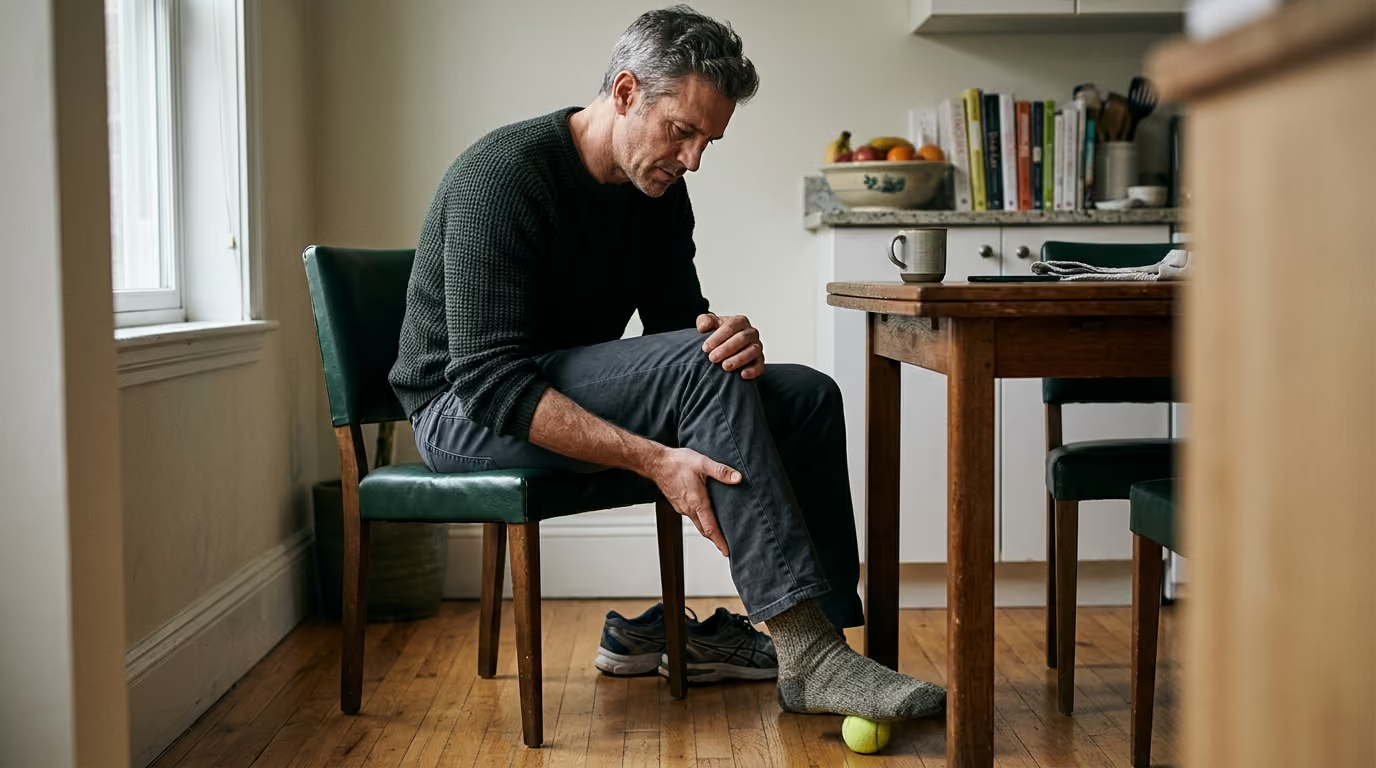

Everyday stress feels like a personal flaw, but it represents a measurable physiological response with identifiable patterns and practical recovery methods.





Eliminating all stress is neither possible nor biologically desirable. The human nervous system requires challenge to adapt, maintain physical capacity, and solve complex problems. Tension becomes harmful when demands run continuously without adequate rest.
The World Health Organization defines stress as a state of worry or mental tension caused by a difficult situation. It notes that stress is a natural human response that helps people address challenges. When activation never settles, physical and emotional strain begin to compound.
Understanding stress requires more than asking how intense a feeling seems in the moment. You must examine how long it lasts, how often it returns, and whether your body returns to baseline.
Viewing stress through distinct descriptive patterns clarifies what is happening. It separates short-lived friction from persistent pressure and occupational overload without turning ordinary strain into a medical disorder.
The body reacts to demands through a coordinated physiological shift. Heart rate increases, respiration shifts, and attention narrows toward immediate tasks. The World Health Organization points out that a small amount of stress helps people carry out daily activities.
Evidence shows that this response is an interaction between external conditions and personal resources. A stressor is the outside condition, such as a deadline, a family illness, or a commute. The stress response is the internal reaction, including muscular tension and racing thoughts.
The final outcome depends heavily on whether you have the opportunity to recover. When the demand ends and the nervous system settles, the body repairs tissue and consolidates memories. If the activation continues without interruption, tissues experience sustained wear.
The American Psychological Association notes that short-lived stress causes minor temporary discomfort, like an upset stomach before speaking publicly. Longer-lasting activation can disrupt digestive, cardiovascular, and immune function over time. Research shows strong links between sustained stress and elevated risks of headaches, muscle pain, and metabolic changes.
These categories describe behavioral and physiological patterns rather than formal psychiatric diagnoses. Feeling overwhelmed during a chaotic week does not mean you have an anxiety disorder. It means your immediate demands exceed your current recovery capacity.
Differentiating normal strain from clinical conditions protects you from two equal mistakes. The first mistake is ignoring severe symptoms that require medical assessment. The second mistake is pathologizing normal human responses to demanding life circumstances.
Stress directly alters how the brain allocates attention and processes information. When high arousal persists, the prefrontal cortex loses some ability to regulate working memory. You may notice misplaced keys, forgotten tasks, or difficulty shifting between complex assignments.
Mood changes follow a similar physiological trajectory. Irritability, apprehension, and emotional numbness often emerge when the nervous system remains on alert. The World Health Organization lists difficulty relaxing, persistent anxiety, and sudden anger among the common effects of ongoing stress.
Sleep is frequently the first major system to show strain. A 2024 study on sleep reactivity demonstrated that stress impairs sleep quality, which subsequently damages daytime cognitive function. High alertness makes falling asleep difficult, while fragmented sleep lowers your tolerance for daily friction.
This interaction can develop into a difficult cycle:
Recovery involves more than simply stopping physical work. It requires physiological downshifting, mental detachment from problems, and adequate nourishment. Understanding how bedtime mental overload develops helps break this self-reinforcing pattern.
When people lack recovery time, they often turn to quick behavioral coping mechanisms. Heavy caffeine intake masks fatigue during the day, while alcohol or digital scrolling is used to unwind at night. These habits disrupt sleep architecture, creating deeper deficits across the week.
Resilience changes across adulthood due to shifting biological rhythms and cumulative responsibilities. Midlife often brings simultaneous career demands, parenting obligations, and elder care duties. The total volume of responsibilities reduces the discretionary time available for rest.
Circadian biology also shifts naturally as the body ages. Deep sleep stages decrease, making sleep more vulnerable to evening light, late meals, and mental strain. Understanding midlife circadian shifts clarifies why late nights carry a heavier physical cost than they once did.
Appraisal plays a major role in determining the intensity of a stress response. Two individuals facing the same professional restructuring may experience completely different physiological reactions. One person may possess financial savings and strong professional networks, keeping perceived threat low. Another person facing financial obligations may experience high physiological alarm.
Your physical environment strongly influences your baseline tension. Constant background noise, digital notifications, and poor lighting keep the nervous system moderately activated. Over weeks, this low-grade stimulation depletes energy reserves without producing obvious distress.
Health status, regular movement, and nutritional consistency set the foundation for recovery. When meals are skipped and physical movement is absent, physiological reserves drop. A minor schedule delay can feel overwhelming simply because your body lacks the metabolic stability to handle disruption.
Social support alters stress outcomes significantly. Having trusted colleagues or friends with whom you can speak openly reduces perceived threat. Isolation magnifies demands, forcing the nervous system to remain vigilant.
Classifying stress into practical categories helps you choose appropriate responses. Each pattern has distinct timelines, physical markers, and recovery requirements.
Acute stress is a short-term response to an immediate, identifiable challenge. Examples include preparing for a difficult presentation, receiving an alarming email, or navigating sudden traffic. The response is sharp, focused, and temporary.
Common signs include:
Acute stress is not inherently harmful. It helps mobilize energy, focus attention, and prompt action. Once the situation resolves, the body returns to baseline, appetite returns, and normal sleep resumes.
Recurring daily strain happens when minor stressors occur repeatedly throughout the day. It involves email alerts, interruptions, household chores, traffic, and frequent task switching. While no single event is catastrophic, the volume of demands prevents the body from settling.
Typical signs include:
This pattern creates recovery debt. Recovery debt is the accumulating strain caused by postponing restorative rest. You never fully downshift because each new demand arrives before the previous activation has cleared.
Chronic pressure involves demands, uncertainty, or conflict that persist for weeks or months. Examples include long-term financial hardship, caregiving for a chronically ill relative, or working under unstable management. The defining feature is sustained demand paired with low personal control.
Common effects include:
The American Psychological Association notes that prolonged activation of the stress system raises risks of cardiovascular and metabolic issues. Managing chronic pressure requires practical adjustments to workload, social support, and boundaries, rather than relying solely on relaxation techniques.
Stress-related exhaustion occurs when prolonged demands completely outstrip your capacity to recover. It represents a state of depleted physiological and cognitive capacity. This is a descriptive term for severe wear, not a formal medical diagnosis.
Indicators include:
Exhaustion requires systematic lifestyle adjustments and medical review. You must rule out underlying issues like thyroid abnormalities, anemia, or depressive disorders before assuming stress is the sole cause.
The term burnout is often used casually to describe everyday tiredness, but clinical frameworks define it carefully. The World Health Organization classifies burn-out in the ICD-11 as an occupational phenomenon. It is not classified as a medical condition or an illness.
The World Health Organization defines burnout as a syndrome resulting from chronic workplace stress that has not been successfully managed. It consists of three specific dimensions:
The World Health Organization states that burnout applies strictly to the occupational context. It should not be used to describe stress in relationships, parenting, or general life management.
Conflating burnout with ordinary fatigue causes several problems:
A stressful week at work is not burnout. Deep caregiving fatigue is challenging, but it is best described as chronic family strain. Reserving burnout for its intended definition helps identify whether the solution requires career restructuring, clinical care, or personal boundary adjustments.
Evaluating your stress pattern systematically prevents guesswork. Use these five parameters to analyze your state over the past month.
Measure the peak strength of your stress response during a normal week:
Track how long your stress response persists after a trigger occurs:
Count how often stress episodes disrupt your routine:
Examine what happens when you have an opportunity to rest:
Identify which areas of your daily life show measurable strain:
Learning how to read your energy accurately helps you separate transient mental fatigue from true physiological depletion. If your scan shows high intensity, continuous duration, and blocked recovery, basic self-care habits are no longer enough.
Matching your response to your specific stress pattern prevents wasted effort. Breathing exercises alone cannot fix systemic workplace overload, and restructuring your career is unnecessary for a brief acute deadline.
When facing a sudden challenge, your priority is stabilizing the nervous system enough to make deliberate decisions.
Resolving recurring strain requires reducing unnecessary daily triggers and establishing predictable recovery periods.
Chronic pressure requires structural adjustments to your obligations, environment, and support systems.
When dealing with deep exhaustion, the immediate goal is stopping energy loss and restoring physical reserves.
Wellness advice often presents mindfulness and relaxation techniques as universal solutions for stress. A closer look at scientific evidence reveals a more nuanced reality.
A systematic review and meta-analysis on mindfulness-based stress reduction found small improvements in subjective sleep quality compared to waitlist control groups. The analysis showed substantial variation across studies. The intervention did not produce significant improvements in objective sleep measures for participants with chronic insomnia or cancer.
A broader review of mindfulness and relaxation interventions reported that subjective sleep quality improved over time, with benefits lasting at a three-month follow-up. These findings suggest that while mental relaxation practices help reduce emotional reactivity, they do not resolve sleep issues or severe fatigue on their own.
Mindfulness and breathing techniques do not fix understaffed workplaces, financial hardship, unsafe housing, or chronic medical conditions. Suggesting that individual mindfulness alone can resolve systemic pressure is unhelpful.
Public surveys show that everyday stress is widespread. A global survey by Gallup found that 37% of adults across many nations experienced significant stress on the previous day. This figure illustrates common daily strain in surveyed groups, but it should not be read as a clinical diagnosis rate.
Relaxation techniques should be viewed as practical tools for calming the nervous system, not complete solutions for complex life challenges.
Everyday stress is manageable with lifestyle adjustments and healthy boundaries, but persistent symptoms warrant professional evaluation. Recognizing when stress has crossed into a clinical condition protects your long-term health.
The National Institutes of Health recommends seeking professional care when you struggle to cope with daily responsibilities, or when stress symptoms persist without relief.
Consult a healthcare professional if you experience:
A primary care physician can rule out physical conditions like thyroid dysfunction, vitamin deficiencies, cardiac issues, or clinical sleep disorders. A licensed mental health professional can provide structured therapies, such as Cognitive Behavioral Therapy, to help you build resilient coping skills. Seeking help is a practical step toward restoring your health.
Sustainable resilience comes from balancing daily demands with predictable recovery, protecting your baseline health, and adjusting the structural pressures within your control.
Stay connected for research and practical guidance on sleep, stress, circadian rhythm and recovery. Clear ideas for adults 35+ who want better rest, steadier energy and more resilient days.



Explore practical guidance on sleep, stress and recovery without chasing every new hack, device or promise.
explore the blog