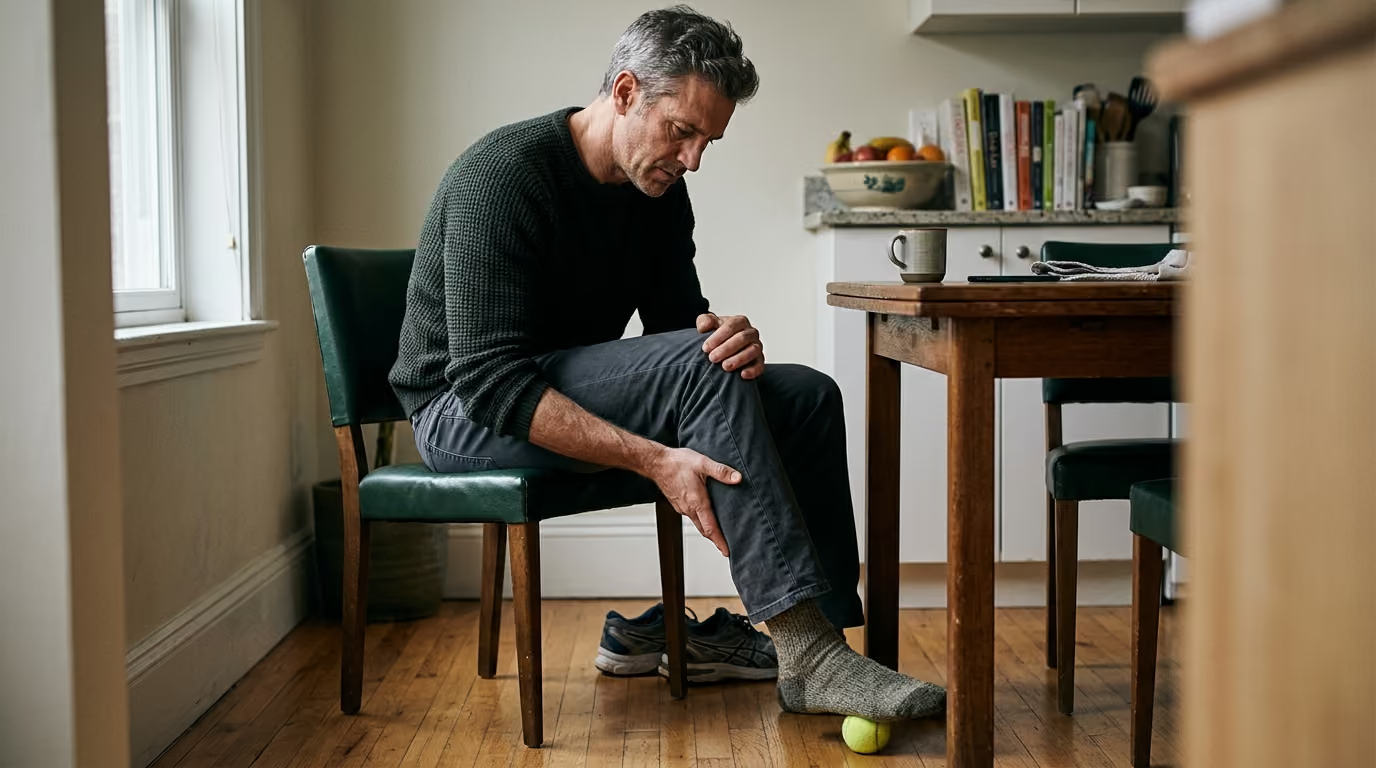

Deep, uninterrupted sleep becomes much easier when you align your household lighting, workspace routines, and bedroom environment with your natural body clock.





A circadian sleep environment is not a collection of luxury bedding, blackout shades, and soothing sound machines. It is an organized 24-hour living space that sends strong wake-promoting cues during the biological day and minimizes alerting signals during the biological night. Most sleep advice treats the bedroom as an isolated sanctuary. Real rest depends on the cumulative environmental cues you encounter across every room from morning to night.
The human body clock coordinates daily patterns in core body temperature, hormone production, cognitive sharpness, and physical repair. When your living space provides conflicting signals, your internal timing drifts. This guide breaks down the science of environmental circadian cues across each living area. It provides a structured, room-by-room checklist to help you align your home with your natural biological rhythms.
The central circadian pacemaker sits within the suprachiasmatic nucleus of the brain. This neural cluster relies on external time cues, known as zeitgebers, to synchronize internal biological time with the external solar day. Light serves as the primary zeitgeber for humans. Regular physical movement, consistent meal timing, environmental temperature shifts, and social interactions provide secondary timing signals.
Clinical research from the American Academy of Sleep Medicine confirms that light exposure produces distinct physiological effects depending on when it reaches the retina. Light received during the biological morning causes a phase advance. This shifts your sleep and wake schedule earlier. Light received in the late evening or early night produces a phase delay, pushing your biological bedtime later.
Sleep timing operates through two balancing forces known as the two-process model. Process S represents homeostatic sleep pressure, which accumulates steadily across every hour of wakefulness. Process C represents the circadian alerting signal generated by the suprachiasmatic nucleus. When your environment is well timed, circadian alerting drops just as sleep pressure reaches its peak. If your home exposes you to bright artificial lighting late at night, circadian alerting stays elevated. You may feel physically exhausted yet remain unable to fall asleep.
Laboratory measurements often evaluate circadian phase by tracking dim-light melatonin onset. This marker represents the initial evening rise in natural melatonin production under controlled, dim conditions. Melatonin acts as an internal biological signal of darkness. Endogenous melatonin levels usually start rising two to three hours before habitual sleep onset. When household lighting remains intensely bright after sunset, melatonin secretion is suppressed. This suppression delays the onset of the biological night.
A functional circadian environment must support two separate goals:
Addressing only acute comfort without regulating 24-hour environmental cues leaves the body clock vulnerable to constant drift.
Many adults over 35 experience noticeable changes in sleep architecture. Deep slow-wave sleep naturally declines, nighttime awakenings increase, and tolerance for irregular schedules diminishes. You can explore how these biological shifts develop in our guide on understanding body clock shifts after 35. Midlife sleep changes make environmental timing far more influential than it was during early adulthood.
When your home does not provide distinct shifts between day and night, your circadian rhythms flatten. A flat rhythm means lower daytime alertness, reduced physical energy, higher evening mental friction, and lighter, fragmented nighttime rest. Research shows that maintaining consistent daily rhythms supports immune function, cardiovascular health, metabolic stability, and psychological resilience.
A major contributor to circadian misalignment is social jet lag. Social jet lag occurs when your work schedule forces one sleep pattern during the week, but social habits or late mornings shift your schedule on weekends. A two-hour weekend shift disrupts internal timing just like traveling across multiple time zones. By the time Sunday night arrives, your internal biological evening occurs much later than your alarm clock requires.
Evaluating your home through a circadian lens helps eliminate these recurring mismatches. You can learn more about managing daily rhythms in our dedicated section on circadian rhythm and sleep timing. Organizing each room around its biological function allows your home to support natural recovery automatically.
The morning transition sets the baseline for your entire 24-hour cycle. The primary goal of your morning environment is delivering a strong, immediate wake signal to reset the suprachiasmatic nucleus.
Your morning pathway includes the bedroom exit, hallway, and main entrance area. When you wake, your brain requires an unambiguous signal that the biological day has started. Dim, shadowed hallways delay this transition and prolong sleep inertia.
Outdoor natural daylight provides superior circadian stimulation compared to standard indoor lighting. Direct sunlight can supply between 10,000 and 100,000 lux depending on cloud cover and season. Typical indoor residential lighting rarely exceeds 100 to 300 lux at eye level. Research reviewed by the American Academy of Sleep Medicine notes that light intensities above 1,000 lux are standard for resetting circadian phase markers. Stepping outside or opening blinds in your entryway provides the necessary biological signal.
Assess your morning transition areas using these focal points:
The kitchen serves as an active daytime metabolic anchor. Eating breakfast at consistent times strengthens peripheral circadian clocks in the liver, gut, and pancreas. Combining morning nutrition with high-intensity light solidifies your body clock.
In the morning, maximize natural light across dining surfaces. Position seating near windows to capture indirect morning rays while eating. If your kitchen lacks exterior windows, use high-output daylight bulbs with cool-white color temperatures during morning hours.
In the evening, the kitchen requires a complete lighting shift. Preparing dinner or clearing dishes under high-intensity ceiling spotlights can suppress melatonin and delay your sleep phase. Install dimmer switches or switch to under-cabinet accent lighting producing warm, low-lux illumination.
Assess your kitchen using these specific criteria:
The living room is where daytime activity, entertainment, media consumption, and social wind-down overlap. Without deliberate boundaries, this space often delivers conflicting biological signals that keep the brain alert late into the evening.
Standard residential ceiling fixtures frequently emit 150 to 500 lux of wide-spectrum white light. Exposure to moderate indoor light during the two to three hours before bedtime suppresses melatonin production and shortens biological night duration. Research in environmental sleep medicine shows that even standard room lighting can delay dim-light melatonin onset.
The solution is not sitting in complete darkness after sunset. Instead, create a planned evening light ramp. Begin lowering ambient lighting two hours before your target bedtime. Shift light sources from overhead ceiling positions down to table lamps or low floor fixtures. Light striking the eyes from above stimulates specialized retinal ganglion cells more strongly than light arriving from below eye level.
Electronic devices influence sleep through multiple pathways. First, self-luminous screens emit blue-weighted light that reaches the eyes directly. In research published in environmental health journals, two hours of tablet use at maximum brightness was shown to suppress evening melatonin in young adults. Second, digital media often involves interactive, emotionally engaging, or stressful content. Checking breaking news or reading tense messages elevates cognitive arousal and heart rate.
The Centers for Disease Control and Prevention recommends turning off electronic screens at least 30 minutes before bed. If device use is unavoidable, lower screen brightness manually and position screens farther from your face. Software color filters provide a minor benefit, but they do not eliminate the alerting effects of close-range light or interactive content. You can read more about resolving persistent nighttime alertness in our article on why you cannot sleep even when you are tired.
Assess your living room using these practical points:
Remote work and home offices have blurred the physical boundaries between active labor and recovery. Working in spaces intended for rest creates associative friction. Your brain begins linking your living environment with stress, deadlines, and active problem-solving.
National Institute for Occupational Safety and Health guidance emphasizes reserving the bedroom primarily for rest. If you work from home, establishing a predictable shutdown sequence provides an artificial boundary that signals the end of the working day.
Writing down unfinished tasks reduces bedtime cognitive intrusive thoughts. You can find detailed strategies for calming late-night mental stress in our guide on reducing bedtime mental overload.
In a studio apartment or shared living arrangement, dedicating a separate room for work is often impossible. When physical separation cannot be achieved, create strict temporal and visual separation:
Assess your workspace boundaries using this checklist:
The bedroom must function as a dedicated recovery chamber. The core priorities within the bedroom are absolute darkness, sound stabilization, thermal balance, and psychological association with rest. You can browse more recovery strategies in our library on sleep environments, habits, and technology.
Nighttime light exposure degrades sleep depth even when your eyelids are closed. Streetlights, vehicle headlights, digital clocks, power indicators, and charging LEDs deliver continuous photic input to the retina. Guidance from the Centers for Disease Control and Prevention recommends making the bedroom as dark as possible.
Use blackout curtains or tightly fitted cellular shades to eliminate external light. Seal gaps along the top and sides of window frames. Cover LED standby indicators on electronics with opaque adhesive covers or remove nonessential electronics entirely. If your living situation prevents modifying window fixtures, a contoured eye mask provides an effective, low-friction alternative.
Assess bedroom darkness using these items:
Sound disrupts sleep by causing micro-arousals, elevating heart rate, and shifting the brain out of deep restorative stages. Research reviews on environmental sleep conditions note that continuous bedroom sound levels should ideally remain below 30 decibels. Sudden, intermittent sounds cause far more disruption than steady, predictable background noise.
Intermittent noise can be managed through physical barriers and sound masking. Weather-stripping bedroom doors, installing dense window treatments, and positioning the bed away from shared walls reduce sound transmission. Steady white or pink noise machines can mask unavoidable outdoor traffic or household movements. Keep sound masking devices at a moderate volume to prevent them from becoming an auditory disturbance.
Assess your bedroom acoustics with these questions:
Human core body temperature follows a robust circadian curve. It drops steadily in the evening, reaches its lowest point during the early morning hours, and rises before waking. A room that is too warm prevents the body from shedding heat, leading to restless sleep and frequent awakenings.
Community studies on ambient bedroom conditions show that sleep efficiency is highest when ambient room temperatures remain between 20 and 25 degrees Celsius, or 68 to 77 degrees Fahrenheit. When ambient temperatures rise toward 30 degrees Celsius, sleep efficiency drops significantly. Many clinical guidelines recommend an ambient starting range of 18 to 20 degrees Celsius, or roughly 65 to 68 degrees Fahrenheit, adjusted for individual bedding and personal comfort.
Older adults often experience reduced thermoregulatory flexibility. The goal is maintaining thermal neutrality without causing shivering or excessive sweating. Use breathable bedding layers made of natural fibers like cotton, linen, or wool rather than synthetic materials that trap moisture. If sleeping partners have different thermal preferences, use separate blankets to prevent one person from overheating while the other feels chilled.
Assess thermal comfort using these points:
The bed must serve as a strong psychological cue for sleep. Spending prolonged periods awake in bed reading intense material, watching television, or ruminating weakens this association. Clinical protocols for insomnia emphasize leaving the bed if you remain awake for longer than 20 minutes. Returning to bed only when genuine sleepiness returns preserves the bed as a conditioned stimulus for rest.
Assess bed conditioning with these questions:
Waking to use the bathroom during the night exposes your visual system to light at its most vulnerable circadian phase. Switching on high-output overhead bathroom lights delivers an immediate alerting signal that halts melatonin production and stimulates wakefulness.
The priority for nighttime pathways is balancing safety with minimal circadian disruption. Preventing falls and collisions is critical, especially for older adults or anyone with reduced night vision. Complete darkness in hallways or bathrooms creates an unacceptable safety risk.
Install low-lux, motion-activated nightlights positioned close to the floor along the path to the bathroom. Keep these lights amber or warm red in tone. Red and amber wavelengths stimulate melanopsin-containing retinal ganglion cells far less than blue or cool-white light. Keep the illumination level just bright enough to navigate safely without illuminating the entire room.
Avoid turning on overhead vanity lights, illuminated mirrors, or ceiling fixtures during nighttime awakenings. Keep your phone out of your hands while out of bed to prevent accidental exposure to bright digital displays.
Assess your nighttime pathway using these questions:
A common misconception in sleep planning is focusing entirely on bedtime. Bedtime is difficult to control directly because you cannot force sleep without sufficient homeostatic sleep pressure. Wake time is under your direct behavioral control and serves as the primary anchor for your entire circadian cycle.
When you wake at the same time each morning, your internal biological clock establishes a predictable timing baseline. Morning light exposure, physical activity, breakfast, and social cues all align with this anchor. This consistency allows homeostatic sleep pressure to accumulate across a stable 16-to-17-hour period. As a result, natural sleepiness develops reliably at the same time each night.
Guidance from the Centers for Disease Control and Prevention highlights consistent sleep schedules as a foundational health habit. Large observational health studies show that individuals with highly regular sleep patterns have significantly lower risks of all-cause mortality compared to those with irregular sleep-wake timing. While observational data cannot prove direct causation, consistent timing remains a primary tool for biological rhythm stabilization. You can learn how to implement an anchoring schedule in our guide on stabilizing your body clock with a wake-time reset.
Sleeping in late on weekends to recover from weekday sleep loss frequently backfires. Waking several hours later delays morning light exposure, pushing your internal phase later. It also reduces homeostatic sleep pressure during Sunday evening, leading to delayed sleep onset and intense Monday morning fatigue.
If you need to catch up on rest, keep your weekend wake-time variation within 30 to 60 minutes of your weekday schedule. Compensate for sleep debt by going to bed slightly earlier or taking a brief 20-minute nap in the early afternoon rather than sleeping late into the morning.
Assess your wake-time habits using these criteria:
Use this structured rating framework to assess your entire home. Rate each item honestly to identify which environmental areas support your biological timing and which require adjustments.
While environmental circadian design is grounded in robust physiological science, certain limitations exist within the literature. Much of our precise understanding of human phase response curves comes from tightly controlled laboratory protocols. In these studies, participants live in specialized suites with fixed light exposures, rigid schedules, and constant posture. Translating these findings into standard residential homes involves natural variability.
Household lighting products marketed with circadian claims are not always backed by rigorous clinical testing. Bulbs labeled as circadian or blue-blocking glasses vary widely in their spectral output and real-world efficacy. Simply changing a light bulb cannot compensate for spending entire days in windowless rooms or working on laptops until midnight. Circadian entrainment is the result of your total 24-hour photic and behavioral history, not a single product.
Individual biology also shapes environmental sensitivity. People carry different chronotypes, ranging from early larks to late night owls. A morning light schedule that energizes an early chronotype may require gradual adjustment for someone with a natural evening preference. Age, ocular health, cataracts, and pupil responsiveness also alter how much light reaches the retina. Environmental modifications should be treated as foundational habits rather than rigid, guaranteed solutions.
Environmental optimization creates ideal conditions for rest, but it cannot cure underlying medical sleep disorders. If you implement consistent lighting, temperature, sound, and schedule adjustments for several weeks without improvement, you should consult an appropriate healthcare professional.
A comprehensive evaluation by a sleep physician or primary care provider is indicated if you experience:
Clinical interventions such as Cognitive Behavioral Therapy for Insomnia, formal sleep studies, or prescribed chronotherapy protocols provide targeted medical care that environmental changes alone cannot replace.
A restorative sleep space is an active 24-hour environmental system that coordinates bright, wake-promoting mornings with dim, quiet, and cool evenings across your entire home. Stabilizing your daily light exposure, bedroom conditions, and morning wake-time provides the reliable biological anchors your body clock needs for consistent rest.
Outdoor daylight is the most effective biological signal, providing between 10,000 and 100,000 lux. If you must use indoor artificial lighting, aim for bright, cool-white light delivering at least 1,000 lux at eye level. Spending 15 to 30 minutes in outdoor daylight shortly after waking provides a dependable cue for resetting your suprachiasmatic nucleus.
No. Blue-light filtering glasses reduce only a portion of the blue wavelength spectrum reaching your eyes. They do not block wide-spectrum light intensity, nor do they eliminate the cognitive stimulation that comes from interacting with digital devices. Dimming ambient room lighting and turning off overhead fixtures remain necessary for supporting natural evening melatonin production.
The most practical solution is keeping the ambient room temperature cool, between 18 and 20 degrees Celsius, while customizing individual bedding layers. Using two separate twin-sized blankets on a shared bed allows each person to regulate their personal microclimate without compromising the room temperature needed for optimal sleep efficiency.
Shift workers can adapt this checklist by reversing the timing of environmental cues. Use dark sunglasses during the morning commute home, maintain complete darkness and cool temperatures in the bedroom during daytime sleep, and use bright, high-lux lighting during the first half of the night shift to promote alertness and biological adjustment.
Stay connected for research and practical guidance on sleep, stress, circadian rhythm and recovery. Clear ideas for adults 35+ who want better rest, steadier energy and more resilient days.



Explore practical guidance on sleep, stress and recovery without chasing every new hack, device or promise.
explore the blog