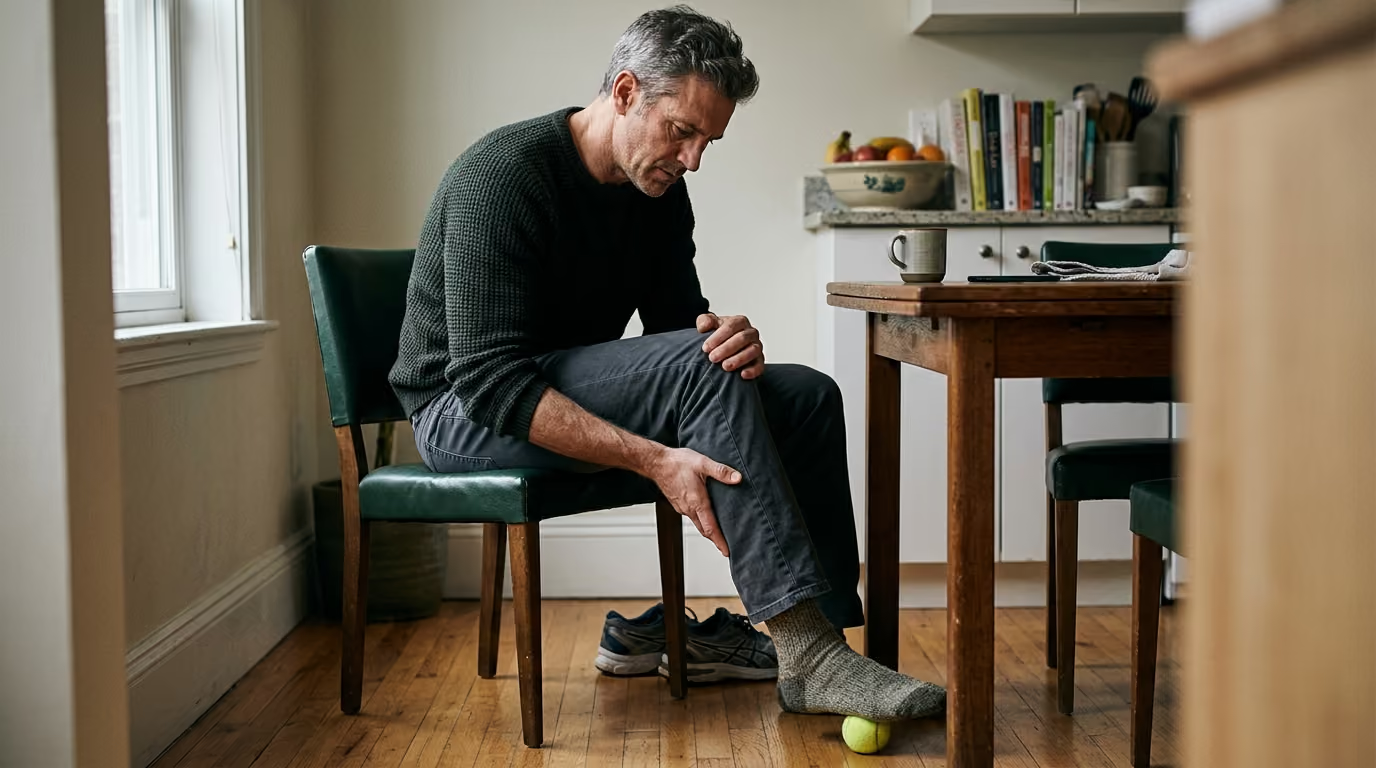

Tossing and turning each night becomes much less frequent when you optimize your light exposure, meal timing, and evening habits for deeper rest.





You look at the clock on your nightstand and see 10:30 PM. You have spent the last hour running through a mental checklist of sleep rules. You drank a specific herbal blend, put on specialized blue-light glasses, adjusted the thermostat to a precise decimal, and queued up a forty-minute relaxation track. Yet your pulse feels slightly elevated, your mind is racing, and you feel more alert than you did an hour ago.
This experience is remarkably common for adults past 35. What began as an effort to improve rest has slowly turned into a high-stakes performance test. Sleep hygiene was originally created to remove basic physical friction before bed. Over time, commercial marketing and internet advice turned simple habits into an exhausting series of rigid demands.
When evening habits become stressful, they produce the exact arousal they were designed to prevent. Effective sleep hygiene is not about building a flawless ritual. It is about creating reliable, low-friction cues that allow your body to do what it already knows how to do.
Scientific bodies view sleep hygiene as a set of environmental and behavioral adjustments that support healthy rest. These practices target common external disruptors like room temperature, ambient light, acoustic interruptions, irregular schedules, and stimulant timing. The evidence supporting these foundational habits is solid and consistent.
Research makes a sharp distinction between baseline hygiene and clinical treatment. Sleep hygiene creates favorable conditions for rest. It does not cure underlying medical or psychological sleep disorders. The American Academy of Sleep Medicine specifically recommends that sleep hygiene should not be used as a standalone treatment for chronic insomnia.
To understand what habits can accomplish, it helps to distinguish the core dimensions of nightly rest:
Public health guidelines from the Centers for Disease Control and Prevention advise that adults aged 18 to 60 aim for at least seven hours of sleep per night. Adults aged 61 to 64 typically need seven to nine hours. Adults aged 65 and older generally require seven to eight hours.
These figures represent broad population targets rather than an exact nightly quota for every person. When you evaluate evening habits, the goal is not perfection. The goal is removing the physical and mental obstacles that drag your personal numbers down.
Your nightly rest is governed by two primary biological forces. The first force is sleep pressure, driven by the chemical adenosine. Adenosine accumulates in your brain with every hour you remain awake. By the end of the day, high sleep pressure creates a powerful physiological drive to sleep.
The second force is your circadian rhythm. This 24-hour internal timing mechanism is regulated by the suprachiasmatic nucleus in your brain. It manages fluctuations in core body temperature, alertness, and hormone production. Light exposure is the primary signal that synchronizes this internal clock with the solar day.
When your evening habits conflict with these biological systems, friction occurs. Consuming caffeine late in the afternoon blocks adenosine receptors. Sitting under harsh overhead lighting suppresses natural melatonin onset and delays circadian timing. Heavy late meals keep core body temperature elevated when your brain is trying to cool down.
Another critical factor is stimulus control. When you regularly work, scroll through upsetting news, or lie awake worrying in bed, your brain learns an unhelpful association. It begins to treat the mattress as a place of active vigilance rather than deep rest. If you often experience fatigue yet feel completely awake the moment your head hits the pillow, you may be experiencing this exact conditioned arousal. You can learn more about this biological disconnect in our guide on why you cannot sleep even when you are tired.
Evening habits shape the quality of your waking life just as much as your nights. Fragmented sleep disrupts tissue repair, weakens memory consolidation, and increases daytime fatigue. A predictable evening wind-down reduces physiological arousal and protects sleep continuity.
No single bedtime routine works identically for every individual. Several biological and environmental variables influence how your body responds to evening habits.
As adults cross age 35, sleep architecture naturally changes. Deep slow-wave sleep tends to decrease, making sleep lighter and more vulnerable to environmental noise. The circadian clock often shifts slightly earlier, a process known as phase advance. This shift can cause earlier evening sleepiness and earlier morning awakenings.
Middle adulthood also brings hormonal shifts that influence thermal regulation and sleep continuity. You can review these developmental patterns in our overview of how midlife circadian shifts affect rest.
Individuals vary widely in their sensitivity to evening light. Some people experience circadian delays from modest residential room lighting, while others are less reactive. Adolescents and younger adults often show higher sensitivity to short-wavelength light than older adults. However, bright artificial light close to bedtime remains a potent timing cue for anyone.
Your core body temperature must drop by roughly one to two degrees Fahrenheit to facilitate deep rest. Your bedroom temperature, blanket breathability, mattress materials, and clothing all interact to create your sleep microclimate. If your bedding traps excess heat, your body struggles to shed core warmth, causing frequent micro-arousals.
High chronic stress keeps the sympathetic nervous system active. When cortisol and adrenaline remain elevated in the evening, standard hygiene tips like dimming lights may feel insufficient. A person experiencing significant life stress requires a longer, gentler wind-down buffer to allow their nervous system to shift toward parasympathetic rest.
When building an evening routine, focus your energy on the habits that provide the highest return. These fundamental adjustments directly influence circadian timing, sleep pressure, and physical comfort.
The most effective sleep habit does not happen at night. It happens in the morning. Maintaining a consistent wake time seven days a week stabilizes your circadian rhythm faster than any evening trick.
When you wake at the same time each day, you set a reliable timer for evening melatonin release. You also start accumulating sleep pressure at a predictable hour. If you sleep late on weekends to recover from late nights, you create social jet lag. This circadian mismatch makes falling asleep on Sunday evening frustratingly difficult.
For practical steps on setting an effective schedule, read our breakdown of the wake-time first sleep reset.
Caffeine has an average elimination half-life of roughly five to seven hours in healthy adults. For some people, complete clearance takes even longer due to variations in liver enzyme activity. This means a quarter of the caffeine from a 4:00 PM coffee may still circulate in your brain at midnight.
Public health agencies, including the CDC, advise cutting off caffeine in the afternoon. Rather than following an arbitrary rule, test your own sensitivity. Try setting your caffeine cutoff at 12:00 PM or 2:00 PM for two weeks. Observe whether your sleep initiation and nighttime awakenings improve.
Remember that coffee is not the only source of caffeine. Look out for less obvious sources:
Alcohol is a central nervous system depressant that can induce rapid drowsiness. Because of this sedative effect, many people mistakenly view a nightcap as a helpful sleep aid.
Clinical research tells a different story. As your liver metabolizes alcohol during the night, it creates a rebound effect that fragments your sleep architecture. Alcohol suppresses rapid eye movement sleep, worsens upper airway resistance, and increases nighttime awakenings. To protect your sleep continuity, finish alcoholic drinks at least three to four hours before turning in.
Eating a large, rich, or spicy meal within two to three hours of bedtime forces your digestive system to remain active. Digestion raises your metabolic rate and elevates core body temperature, working directly against the cooling needed for sleep. Heavy meals can also trigger gastroesophageal reflux when you lie flat.
Going to bed uncomfortably hungry can also cause awakenings due to drops in blood glucose. If you need food late in the evening, choose a small, simple snack that is easy to digest.
Waking up multiple times to use the bathroom fragments your sleep cycles and leads to daytime exhaustion. Traditional sleep hygiene advises limiting large volumes of liquids during the final two hours before bed.
The goal is to shift your primary fluid intake to the daytime hours, not to dehydrate yourself. Sip small amounts of water if your mouth feels dry. People taking diuretic medications, pregnant individuals, and those with specific cardiovascular or renal conditions should always follow their physician's fluid guidance.
Personal grooming habits do double duty in an evening routine. They support physical health and serve as clear behavioral markers that signal the end of the working day.
Taking a warm bath or shower before bed is one of the few personal care habits supported by strong clinical data. A systematic review and meta-analysis published in sleep medicine literature examined the effects of water-based passive body heating. The researchers found that bathing in water between 104°F and 108.5°F (40°C to 42.5°C) for as little as 10 minutes significantly improved sleep.
This practice shortened sleep-onset latency, improved self-rated sleep quality, and increased sleep efficiency. The most favorable timing occurred when the bath or shower was scheduled one to two hours before bedtime.
The underlying mechanism involves vascular physics rather than simple cleanliness. Warm water dilates blood vessels in your hands, feet, and skin surface, a process called peripheral vasodilation. When you step out of the shower, this increased peripheral blood flow allows your body to radiate core heat quickly. This rapid drop in core body temperature mimics and accelerates the natural circadian cooling curve that precedes deep sleep.
To use this habit effectively:
The American Dental Association recommends brushing your teeth twice daily with fluoride toothpaste for two full minutes, with one of those sessions occurring right before bed. Evening brushing removes plaque, food particles, and acids that accumulate during the day, protecting your enamel during the low-saliva nighttime hours.
Bedtime oral care does not directly trigger sleep physiology, but it serves as a powerful psychological transition marker. Brushing, cleaning between your teeth, and clearing away food signals to your brain that eating and daytime activity are finished.
Keep your oral routine straightforward:
Persistent dry mouth at night is worth monitoring. While it can result from mild dehydration or mouth breathing, it is also a common sign of obstructive sleep apnea. If you frequently wake with a parched throat, discuss this symptom with a healthcare provider.
A simple evening skincare routine provides practical comfort by removing sweat, pollutants, sunscreen, and excess oils. Cleansing your face and applying a light moisturizer prevents skin tightness, itching, and irritation that might otherwise distract you when lying in bed.
Skincare is an area where commercial trends frequently create unnecessary bedtime friction. Multi-step regimens featuring numerous serums, active chemical exfoliants, and specialized tools have no proven connection to deeper sleep. Applying strong active ingredients right before bed can sometimes cause tingling, warmth, or irritation that keeps you awake.
Keep your evening skincare centered on basic comfort:
There is no scientific proof that a specific brand, weave, or luxury fabric will transform your sleep. What matters is thermal regulation, breathability, and physical ease.
Choose sleepwear made from breathable fabrics that allow heat to escape and do not restrict movement. Avoid tight waistbands, binding seams, or synthetic fabrics that trap moisture against your skin. Layering your blankets is often more effective than using a single heavy comforter. Layers allow you to adjust your microclimate during the night without fully waking up.
Your bedroom should function as a dedicated environment for rest. When setting up your sleep space, focus on the three primary environmental factors: light, noise, and ambient temperature. You can explore more setup strategies in our guide to sleep environment and habits.
Light is the most influential external cue for your internal clock. Even low levels of ambient light penetrating your eyelids during sleep can disrupt sleep depth and alter circadian timing.
Take steps to eliminate light leaks in your bedroom:
Acoustic disruptions trigger micro-arousals that pull you out of deep sleep stages, even if you do not remember waking in the morning. Environmental sleep research suggests keeping steady sleep-environment noise levels below 35 decibels whenever possible.
Sudden, intermittent noises like traffic, barking dogs, or hallway footsteps are far more disruptive than continuous sound. If you cannot eliminate external noise, try these approaches:
Environmental studies show that moderate ambient room temperatures between 65°F and 68°F (18°C to 20°C) support continuous sleep for most healthy adults. However, personal preference, humidity, and bedding weight all influence your ideal number.
If you share a bed with a partner who has different thermal needs, avoid fighting over the main thermostat. Try using separate top sheets and blankets. This simple adjustment allows each person to tailor their microclimate without disturbing the other. Keep the room ventilated by cracking a door or window when weather permits to prevent carbon dioxide buildup.
Stimulus control is a cornerstone of behavioral sleep medicine. To keep your brain from associating your bed with alertness, reserve the mattress exclusively for sleep and intimacy.
Avoid using your bed as a home office, an entertainment lounge, or a space for difficult household discussions. If you find yourself lying awake in bed for more than 20 to 30 minutes, get up calmly. Move to a dimly lit chair in another room, read something relaxing, and return to bed only when genuine sleepiness arrives.
Advising people to avoid all electronic screens after dark is rarely realistic. A more effective approach is understanding why screens interfere with sleep so you can set practical boundaries.
Electronic devices affect your rest through three distinct pathways:
The psychological content on your screen often causes more wakefulness than the light emitted by the pixels. Reading a stressful work email, arguing in a comment section, or watching high-intensity news triggers the release of stress hormones. This emotional arousal directly opposes the calm physiological state needed for sleep.
Interactive technology also causes time displacement. Scrolling through short-form video feeds or playing engaging games delays your intended bedtime, cutting directly into your total sleep opportunity.
Use these realistic boundaries to reduce screen-related friction:
If persistent evening thoughts and racing mental loops keep you awake even after shutting off screens, review our guide on reducing bedtime mental overload.
A rigid schedule creates stress when unexpected life events interrupt it. Instead of an inflexible checklist, think of your evening as a gradual landing sequence. The following timeline provides a practical framework you can adapt to your household's schedule.
To see how these principles apply to everyday situations, consider three practical scenarios:
Scenario: An adult takes a hot shower immediately before climbing under a heavy synthetic duvet, then lies awake sweating and frustrated.
Adjustment: Move the warm shower to 75 minutes before bed. Swap the synthetic duvet for breathable, layered cotton blankets, and crack the bedroom door for airflow. This lets peripheral heat dissipate naturally, promoting rapid core cooling.
Scenario: An individual drinks 24 ounces of water right at bedtime, wakes twice to urinate, and drinks more water each time due to feeling parched.
Adjustment: Shift hydration earlier in the afternoon and limit fluid intake to small sips in the final two hours before bed. If the dry mouth persists alongside snoring, seek a clinical evaluation to rule out mouth breathing or sleep apnea.
Scenario: A professional brings a laptop into bed to answer late emails, then scrolls social media for an hour to unwind from the work stress.
Adjustment: Establish a firm laptop cutoff at the kitchen table two hours before bed. Keep the phone charger in the hallway, and spend the final 30 minutes reading fiction under a dim, warm reading lamp.
The modern sleep industry is filled with products promising effortless, deep rest. While some tools provide modest comfort, many popular trends lack rigorous scientific validation.
Consumer smartwatches, rings, and sensor pads have made sleep tracking accessible to millions. These devices use accelerometers, optical heart rate sensors, and temperature monitors to estimate sleep stages.
The American Academy of Sleep Medicine notes that while consumer wearables are useful for identifying general schedule patterns, they are not diagnostic medical instruments. Wearables frequently misclassify quiet, still wakefulness as light sleep. They can also provide inaccurate estimations of deep versus rapid eye movement sleep.
Relying too heavily on daily sleep scores can lead to orthosomnia, a condition where anxiety over achieving perfect wearable metrics actually impairs sleep. Use sleep trackers to observe multi-week trends rather than stressing over a single night's score. Never assume a reassuring wearable score means you are free from sleep apnea or other clinical sleep disorders.
Motorized adjustable frames, automated cooling mattresses, and app-connected ambient sensors are heavily marketed to adults seeking better rest. While a mattress that dissipates heat can improve physical comfort, expensive smart beds rarely solve chronic sleep difficulties on their own. Simple behavioral adjustments, appropriate bedding layers, and basic room temperature control achieve comparable physical conditions at a fraction of the cost.
Wearing amber-tinted glasses to block screen light has become a popular evening habit. While optical filters do reduce short-wavelength light exposure, they do not neutralize the cognitive arousal caused by checking work messages or engaging with provocative content. Dimming your household lighting and putting devices away remains far more effective than wearing specialized glasses while continuing to work in bed.
Countless teas, powders, and dietary supplements claim to induce rapid sleep. Most of these products lack robust, high-quality clinical trial data supporting their effectiveness for long-term sleep quality. Relying on an ever-growing list of nighttime supplements can add financial cost and psychological dependency without addressing the behavioral roots of poor rest.
Sleep hygiene is a supportive foundation, not a cure for medical sleep disorders. If you have maintained consistent, low-friction habits for several weeks and still struggle with poor rest, continuing to add hygiene rules will not solve the issue.
The National Heart, Lung, and Blood Institute outlines several clinical patterns that warrant professional evaluation:
If chronic insomnia is your primary challenge, the standard medical treatment is Cognitive Behavioral Therapy for Insomnia (CBT-I). CBT-I is a structured, evidence-based therapy that addresses the conditioned arousal, behavioral patterns, and unhelpful beliefs that maintain insomnia over time.
You can read more about how this approach differs from routine hygiene in our guide on beyond sleep hygiene for persistent insomnia.
If you recognize symptoms of sleep apnea, restless legs, or persistent insomnia, schedule an appointment with a primary care physician or a board-certified sleep specialist. An accurate clinical evaluation provides targeted medical treatments that basic bedtime habits cannot replicate.
Revisit these guidelines whenever you notice your evening routine turning into a source of stress, after recovering from illness, during major schedule changes, or when daytime fatigue begins to creep back into your routine.
Good sleep is supported by repeatable habits that lower physical and mental friction, not by an exhausting search for bedtime perfection. Focus on consistent wake times, a comfortably cool room, sensible light boundaries, and a simple wind-down sequence that allows your body's natural restorative systems to take over.
Stay connected for research and practical guidance on sleep, stress, circadian rhythm and recovery. Clear ideas for adults 35+ who want better rest, steadier energy and more resilient days.



Explore practical guidance on sleep, stress and recovery without chasing every new hack, device or promise.
explore the blog