
Audio technology supports better rest when you pair clinically supported sounds with comfortable headphones or speakers designed for your specific sleeping position.





Sleep audio is any sound delivered through personal hardware or room speakers designed to aid the transition into rest or block disruptive background noise. It is not a cure for chronic sleep disorders, nor is it a guaranteed method for deeper rest. When used thoughtfully, sound tools can soften abrupt environmental noises or lower evening tension. When used improperly, these same devices can irritate the ear canal, cause cumulative hearing strain, or fragment sleep architecture. This guide examines the mechanics of sleep headphones, earbuds, and bedside sound systems, detailing how to choose and configure audio tools safely without adding friction to your nightly routine.
Scientific interest in nocturnal sound has expanded over recent decades, producing a mix of clear clinical findings and notable gaps. The evidence shows that different categories of sound yield very different physiological outcomes.
Music interventions carry the most consistent research backing among all auditory bedtime tools. A Cochrane systematic review evaluated music interventions for adults experiencing insomnia symptoms across ten randomized trials with 708 participants. The researchers identified moderate-certainty evidence showing that soothing music improves subjective sleep quality, yielding an average improvement of 2.79 points on the Pittsburgh Sleep Quality Index compared to standard care or no intervention.
Further data comes from a network meta-analysis of 20 trials examining 1,339 adults with primary insomnia. This analysis confirmed that music-supported relaxation produced superior subjective rest outcomes compared to passive controls. Systematic reviews focusing on older adults have noted meaningful improvements in sleep latency, total sleep duration, and daytime functioning when gentle music is integrated into a consistent bedtime routine.
The measurable benefit of music centers largely on perceived relaxation and autonomic calming. Research tracking objective polysomnography shows that music may alter specific sleep stages, yet it does not universally transform every objective sleep metric. Music works best as an intentional psychological and autonomic wind-down cue rather than an automatic physiological switch.
Continuous masking sounds, including white, pink, and brown noise, rest on a smaller and more fragmented foundation of evidence. A comprehensive systematic review analyzed 34 auditory-stimulation studies involving 1,103 subjects across multiple sound types. While positive effects appeared in isolated studies (six white-noise trials and nine pink-noise trials), the authors concluded that high-quality evidence remains insufficient to confirm broad sleep benefits for the general public.
In specialized clinical settings, the picture changes slightly. A review of sound machines used in hospital environments found that white noise and steady ambient sounds helped improve sleep efficiency. In these cases, the sound machine reduced the startling effect of sudden corridor noises, monitor beeps, and staff conversations.
Auditory masking does not actively generate sleep. It simply smooths the difference between ambient baseline noise and peak acoustic disruptions. Masking sounds can be helpful in loud environments, but the evidence does not support using high-volume noise machines in quiet bedrooms where background disruptions do not exist.
Sound is processed by your central nervous system even while you sleep. The brain tracks acoustic patterns, changes in pitch, and sudden spikes in volume throughout all non-REM and REM sleep cycles.
Choosing the right equipment begins with identifying your primary goal. Relaxation audio and sound masking serve two distinct functions in your sleep environment and habits.
Relaxation audio is designed to lower physiological arousal before you fall asleep. This category includes:
Because relaxation audio targets the transition into sleep, it only needs to play for 15 to 45 minutes. Once you are asleep, relaxation audio has finished its job and should turn off automatically.
Sound masking is designed to cover unpredictable environmental noises that could trigger cortical awakenings. This category includes:
Because noise masking shields your rest from outside sounds, it often runs across multiple hours. This continuous exposure makes volume calibration, speaker placement, and physical comfort critical considerations for long-term health.
Sudden sounds cause transient arousals, brief shifts from deeper sleep stages into lighter stages or micro-awakenings. These shifts can happen without you remembering them in the morning, yet they fragment your sleep architecture and diminish restorative slow-wave sleep.
A steady sound source creates a predictable acoustic blanket. By elevating the baseline noise floor slightly, the relative spike of a car door closing or a floorboard creaking is diminished. The auditory cortex is less likely to register an abrupt threat response when the contrast between silence and the disturbance is minimized.
Playing audio that is too loud or emotionally engaging can backfire. If an audio track contains dramatic musical shifts or dynamic podcast dialogue, the auditory system stays alert, which prevents your heart rate and brainwave frequencies from settling into deep rest.
No single audio device fits every sleeper. Physical sleeping posture, ear canal sensitivity, household arrangements, and emergency awareness dictate which hardware option is safest and most comfortable.
In-ear buds sit directly inside the ear canal. They offer high acoustic isolation and keep playback private from a sleeping partner. Specialized sleep buds feature ultra-thin silicone profiles designed to fit flush with the outer ear structure.
The drawbacks of in-ear hardware center on long-term canal health. Placing an object inside the ear canal for seven to eight hours blocks natural airflow, traps moisture, and compacts earwax. Side sleepers often experience mechanical pressure when their ear presses against a pillow, leading to cartilage soreness or canal irritation.
Sleep headbands integrate ultra-thin speakers inside a soft, elastic fabric wrap that sits over your forehead and ears. These devices eliminate the need to insert foreign objects into the ear canal.
Headbands distribute mechanical pressure across the skull, making them a popular option for side sleepers. The main limitations include thermal buildup around the head during warmer months, occasional speaker shifting during body turns, and the need to wash the fabric band regularly after removing the internal wiring.
Standard over-ear and on-ear headphones provide rich sound quality and effective passive isolation. However, they are rarely suitable for overnight use.
The rigid headband and bulky earcups place intense torque on the neck and jaw when you turn sideways. They easily slip off during natural nocturnal movement and can trap excessive heat around the ears. Over-ear models are best reserved for daytime relaxation or pre-bed wind-down routines while sitting upright in a chair.
Pillow speakers sit directly underneath your pillow or beside your head on the mattress. They use acoustic transmission through the pillow material or low-profile bone-conduction drivers to deliver sound straight to your ears without any wearable hardware.
These devices allow you to move freely without physical wires or headbands. They keep your ear canals open and eliminate pressure points. The trade-off is sound leakage; a partner sleeping in the same bed may hear a faint murmur if the volume is turned up too high.
Bedside speakers project sound openly into the room. This remains the simplest, lowest-friction way to introduce audio into your bedroom.
Room speakers present zero risk of ear canal irritation, wax impaction, or localized mechanical pressure. They let you hear smoke alarms, crying children, or telephone alerts easily. The main limitation is that both bed partners must share the same acoustic environment, which requires mutual agreement on sound type and volume levels.
The overall success of sleep technology depends on environmental and behavioral factors. A setup that works well for a solo back-sleeper in a quiet home can fail completely for an urban side-sleeper.
Your sleeping position is the primary filter for wearable audio gear. Back sleepers can comfortably wear almost any low-profile device, including sleep headbands, pillow speakers, and soft earbuds.
Side sleepers face constant lateral compression against the mattress. When the side of the head rests on a firm pillow, an earbud can be driven deep into the canal cartilage. Side sleepers should default to room speakers, thin pillow transducers, or flat fabric headbands where the internal driver is less than four millimeters thick.
The structure of what you listen to matters just as much as how you deliver it. Research on music interventions highlights that tracks with a slow tempo of 60 to 80 beats per minute, predictable melodic lines, and minimal dynamic swings work best. This tempo mirrors a resting heart rate and assists the parasympathetic nervous system during the wind-down period.
Spoken-word content requires careful selection. Engaging audiobooks, fast-paced educational podcasts, or suspenseful narratives demand active cognitive processing. The brain remains focused on plot developments, which delays the onset of sleep. If you prefer spoken audio, opt for familiar stories, calm guided relaxation, or monotonous readings with flat vocal intonation.
Introducing sound into a shared bedroom requires clear communication. One partner may require pink noise to drown out street traffic, while the other may need absolute silence to drift off.
When preferences clash, personal audio like a sleep headband or low-volume pillow speaker is preferable to blasting a room sound machine. If a sound machine is used in a shared space, place it closer to the person who needs the sound, angled away from the sensitive sleeper, and keep the volume at the lowest functional threshold.
Audio technology introduces direct physical and physiological risks if sound exposure, moisture, and hygiene are not properly managed. Protecting your hearing and ear anatomy requires clear personal boundaries.
Hearing damage is determined by acoustic intensity and exposure duration. The World Health Organization establishes a safe environmental listening threshold of 80 decibels averaged over 40 hours per week for adults, and a stricter limit of 75 decibels for children over the same timeframe.
When you wear headphones during an eight-hour sleep window, you accumulate extensive listening time. Safe exposure guidelines derived from occupational health data note that at 85 decibels, safe exposure is capped at eight hours. For every 3 decibels added above that mark, safe listening time is cut in half. A loud headphone session playing at 100 decibels can create permanent inner-ear hair cell strain in as little as 15 minutes.
Device volume sliders on smartphones are not standardized sound-level meters. A 50 percent setting on one device can produce a dangerously loud output on low-impedance earbuds. As a baseline safety measure, clinical specialists suggest setting headphone volume to 50 percent or lower, and never exceeding 60 percent of the maximum output for ambient listening.
The human ear canal relies on open air circulation to regulate humidity and move cerumen (earwax) outward. Sealing the canal with silicone or foam tips for seven to eight continuous hours creates a dark, warm, and humid micro-environment.
This trapped moisture provides an ideal setting for bacterial and fungal growth, raising the risk of otitis externa (swimmer's ear). Using earbuds immediately after taking an evening shower or bath traps water deep against the tympanic membrane. In-ear tips can also push existing wax back toward the eardrum, creating dense impactions that lead to temporary hearing dampening, fullness, and discomfort.
Active noise cancellation (ANC) uses exterior microphones to capture incoming sound waves and generate an inverted phase wave to neutralize them. ANC allows you to hear audio content clearly at lower, safer playback volumes without competing against external ambient noise.
Total acoustic isolation introduces safety risks inside a home. Completely tuning out the environment with deep-insertion ANC earbuds can prevent you from hearing smoke alarms, security alerts, home entry sounds, or a child calling for help. Maintaining situational awareness is a necessary part of responsible sleep setup planning.
Integrating audio into your nightly routine should reduce mental strain, not create new technical complications. Follow this structured approach to establish a safe, comfortable, and low-friction acoustic routine.
Identify the specific obstacle you are trying to overcome. If you struggle to calm a racing mind, your objective is pre-sleep relaxation. If you are regularly woken by garbage trucks or early morning traffic, your objective is environmental sound masking. If you are trying to understand why you cannot sleep even when tired, matching your equipment to your actual sleep challenge is a vital starting point.
Default to the least invasive hardware option first. Place a dedicated sound machine or small speaker on a nightstand two to three feet away from your head. Keep the volume set to a gentle murmur, resembling light rain or a distant breeze. Only move to wearable headbands or specialized sleep buds if partner preferences or extreme environmental noise make open-air sound impossible.
Do not let relaxation audio, music, or podcasts play continuously across the night. Set a sleep timer for 20 to 45 minutes using your media player or smart speaker. This ensures the audio ceases shortly after you achieve sleep onset, protecting your ears from unnecessary acoustic exposure and preventing sudden sound transitions from waking you during light sleep stages.
Never test new sleep headphones for the first time at midnight. Lie down on your actual mattress and pillow in your normal sleeping posture for fifteen minutes during the middle of the day. Pay close attention to any focal pressure points on your outer ear, cartilage, or temples. If you feel localized aching or thumping after fifteen minutes, the device will cause significant discomfort over an eight-hour night.
Follow these practical safety habits to keep your ears healthy and your devices functional:
To understand how these principles function in everyday living, consider two practical implementation models.
An illustrative model for an urban apartment dweller involves dealing with early morning traffic noise. Rather than turning up personal earbuds to compete with street noise, the individual places a compact room sound machine on the window sill between the bed and the street. The sound machine runs a flat, low-pitch brown noise profile at 48 decibels, which raises the ambient noise floor just enough to soften sudden vehicle horns without causing ear canal irritation or isolation risks.
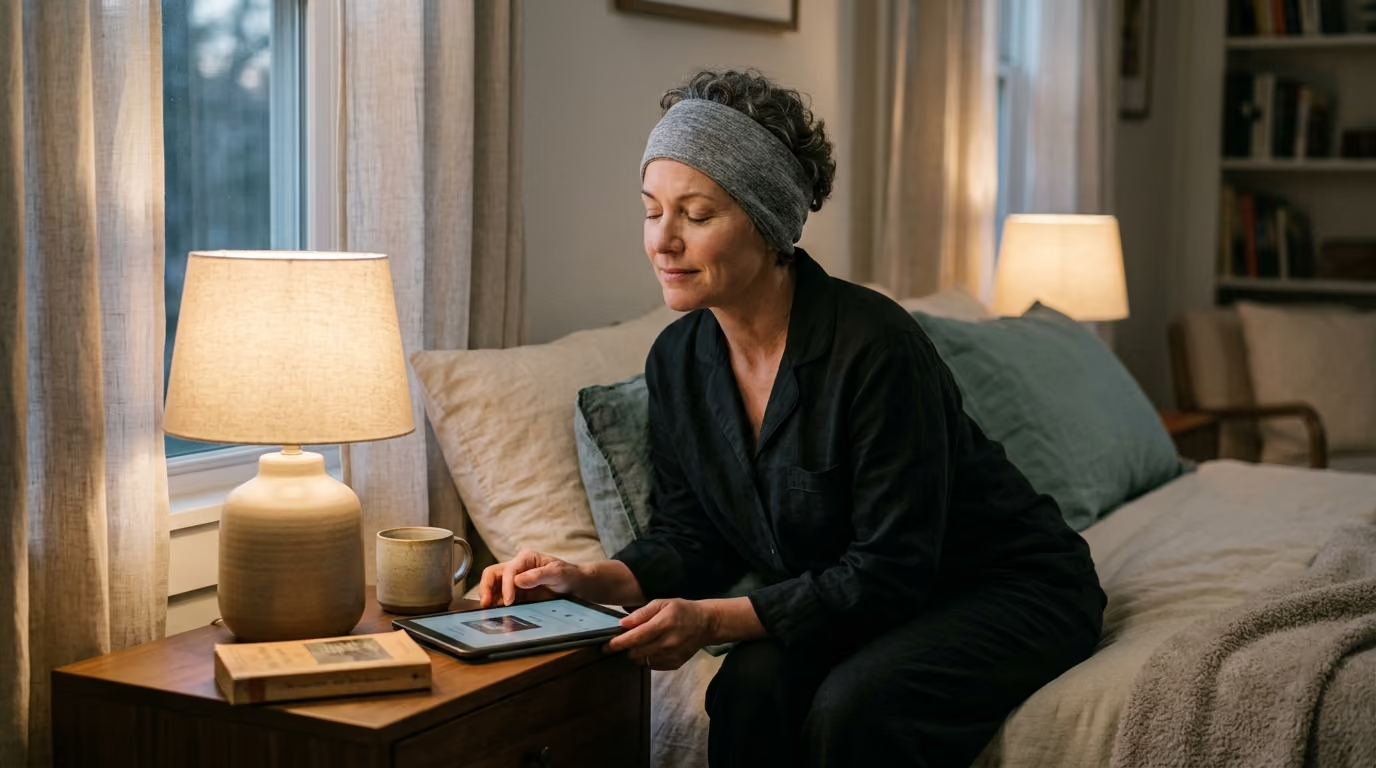
An illustrative model for a midlife professional managing bedtime mental strain involves using music to wind down. The individual connects a sleep headband to a smartphone running an offline instrumental playlist with a tempo of 65 beats per minute. Autoplay is turned off, the volume is set to 30 percent, and an integrated sleep timer halts playback after 30 minutes. This structure offers a predictable sensory cue that supports nervous system down-regulation without subjecting the listener to all-night audio exposure. Exploring broader practical habits for persistent sleep difficulty can provide additional context for structuring these non-pharmacological routines.
While sleep audio tools are widely marketed and commercially successful, consumers should recognize where marketing claims outpace published science.
Much of the literature evaluating ambient sound machines, pink noise, and auditory stimulation consists of small, heterogeneous trials. Many studies evaluate sleep in unfamiliar hospital wards or sleep laboratories rather than natural home environments. Translating outcomes from a noisy intensive care unit to a quiet suburban bedroom is scientifically problematic.
Standardization among sound profiles is also lacking. One study may evaluate synthetic pink noise with a specific spectral slope, while another tests recorded waterfall sounds. This variation makes it difficult to state definitively that a specific colored noise frequency improves sleep for everyone.
Consumer sleep headphones and smart audio wearables frequently claim to track sleep stages, adjust volume dynamically based on sleep depth, or optimize brainwave patterns. These commercial algorithms rarely undergo independent, peer-reviewed validation.
Consumer devices also lack laboratory-grade sound calibration. Phone operating systems and headphone drivers interact differently, meaning volume percentages displayed on screens are rough approximations rather than certified decibel measurements. Users must rely on conservative volume habits rather than assuming an automated algorithm will protect their hearing.
Bedside sound tools are practical environmental aids, not clinical treatments. Relying on sound machines to mask serious underlying medical issues can delay necessary care.
If you experience consistent difficulty falling asleep, staying asleep, or waking up too early at least three nights per week for three months or longer, audio gear is unlikely to resolve the root cause. The American Academy of Sleep Medicine establishes Cognitive Behavioral Therapy for Insomnia (CBT-I) as the primary first-line treatment for chronic insomnia in adults.
CBT-I addresses the cognitive patterns, conditioned arousal, and behavioral associations that drive sleep disruption. Sound machines and music can serve as helpful adjuncts during wind-down routines, but they should not displace structured behavioral therapy when insomnia becomes chronic. Understanding how your body clock and circadian timing shift after 35 can also help clarify when sleep changes require broader lifestyle adjustments rather than simple acoustic adjustments.
Loud, chronic snoring, morning choking sensations, witnessed breathing pauses, and severe daytime exhaustion are cardinal indicators of obstructive sleep apnea. Audio devices and sound masking should never be used to cover up snoring without investigating potential airway obstruction. Sleep apnea is a serious cardiovascular and metabolic risk that requires evaluation by a qualified sleep medicine physician.
You should stop using wearable sleep headphones and consult an otolaryngologist, audiologist, or primary healthcare provider if you notice any of the following symptoms:
Audiological evaluations are simple, non-invasive procedures that establish your baseline hearing health and detect noise-induced strain or cerumen impactions early.
Running a room fan or dedicated sound machine across the night is safe for adults, provided the device is positioned several feet away from the bed and the volume remains at a moderate, conversational level (below 60 decibels). This avoid localized ear pressure and maintains full room awareness.
Low-volume background sound is frequently used in tinnitus management to reduce the perceptual contrast between silence and the ringing sensation. However, if the audio is played too loudly or delivered through deep-insertion earbuds for extended durations, it can create auditory fatigue and potentially worsen tinnitus symptoms. Keep sound levels gentle and discuss chronic tinnitus with an audiologist.
Podcasts feature dynamic vocal ranges, varied recording levels, unexpected introductory music, and new speaking styles across episodes. These acoustic shifts alert the auditory cortex, triggering a transient arousal that pulls you out of deep sleep. If you prefer spoken content, use a dedicated sleep timer set to 20 or 30 minutes, disable all autoplay settings, and choose familiar, low-arousal recordings.
Bone conduction headphones leave the ear canal completely open, which eliminates moisture accumulation, earwax impaction, and internal canal pressure. However, the rigid wrap-around frames used on most bone conduction sets can press painfully against the temples and back of the head when sleeping on your side. They also deliver acoustic energy directly to the inner ear, meaning safe volume limits still apply.
Sleep headphones and bedside audio tools are practical aids for softening outside noise and easing evening tension when configured with modest volume, short timers, and comfortable physical profiles. Let sound serve as a quiet, temporary bridge into rest rather than an all-night dependency that compromises your hearing, ear canal health, or environmental awareness.
Stay connected for research and practical guidance on sleep, stress, circadian rhythm and recovery. Clear ideas for adults 35+ who want better rest, steadier energy and more resilient days.



Explore practical guidance on sleep, stress and recovery without chasing every new hack, device or promise.
explore the blog