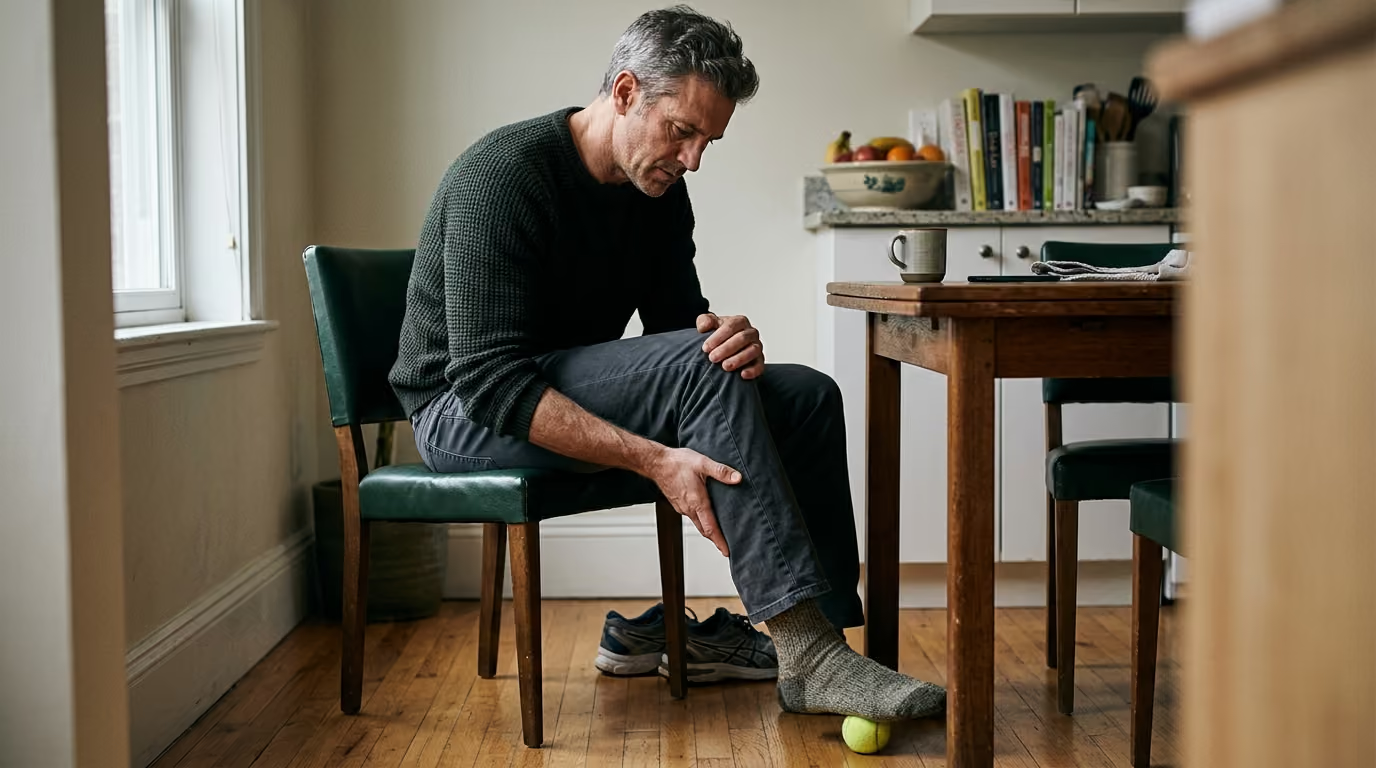

Disrupted schedules and stressful periods derail healthy rest, but a flexible recovery plan helps you maintain core sleep anchors and restore your baseline.





It is 2:15 a.m. on a Wednesday. You have spent the last three days managing a severe sinus infection, helping a sick family member, or handling an urgent work deadline that followed you home. Your body feels completely exhausted, yet your brain remains wide awake. You look at the clock, calculate how few hours remain before your alarm rings, and feel a surge of frustration.
Moments like this happen to everyone. When an unexpected crisis hits, normal routines break down. Sleep is often the first system to suffer.
Clinical research shows a clear distinction between temporary sleep disturbances and chronic insomnia disorder. Chronic insomnia involves significant distress or daytime impairment, occurring at least three nights per week for at least three months. A difficult week, while frustrating, does not mean your sleep system is broken.
The evidence supporting short-term sleep recovery is grounded in two primary biological mechanisms. The first is the circadian rhythm, your internal twenty-four-hour body clock. The second is homeostatic sleep drive, the biochemical pressure to rest that accumulates the longer you stay awake.
When acute strain occurs, clinical trials show that attempting to force rigid sleep perfection often backfires. Trying too hard to sleep increases nervous system arousal.
During an intense week, your goal is not flawless rest. Your goal is to protect physical safety, obtain enough restorative opportunity, reduce wake-promoting habits, and maintain a few basic anchors. These anchors make it simple to return to your standard baseline once the acute pressure passes.
A difficult period affects rest across several distinct dimensions. Understanding these components helps you choose the right response rather than worrying about a single bad night.
According to data from the Centers for Disease Control and Prevention, more than one-third of adults report sleeping fewer than seven hours in a typical twenty-four-hour period. Most healthy adults require between seven and eight hours of sleep per night to maintain daytime alertness, cognitive function, and metabolic health. During high-strain periods, sleep opportunity and sleep continuity usually decline together.
When a temporary crisis occurs, sleep loss generates sleep debt. Sleep debt represents the mathematical difference between the amount of sleep your body requires and the amount you actually receive.
Carrying a sleep debt reduces reaction time, impairs emotional regulation, and weakens immune defense. If you try to repay that debt through extreme measures, you can create a secondary circadian rhythm misalignment.
Sleeping until noon on a weekend or spending twelve hours in bed after a poor night scatters your circadian signals. When you spend hours tossing and turning, your brain begins to link your mattress with frustration instead of rest.
Researchers at the National Heart, Lung, and Blood Institute note that regular sleep schedules support daily functioning and overall health. When routines fracture, protecting your fundamental circadian anchors prevents short-term sleep loss from becoming a lasting sleep disorder.
When life feels chaotic, multiple physiological and environmental variables influence whether you can rest. Recognizing these factors helps you make realistic adjustments.
When you are exhausted, complex lifestyle routines fail. You need a streamlined, practical framework that adapts to changing demands without requiring flawless execution.
Before trying any intervention, identify what is keeping you awake. Is the issue physical illness, musculoskeletal pain, cognitive stress, or an unavoidable schedule change?
A person suffering from a respiratory infection needs symptom relief, elevated pillows, and hydration. A person lying awake because of an impending work crisis needs a cognitive wind-down plan and stimulus control. Matching the intervention to the exact driver prevents wasted effort.
During a demanding week, strip your routine down to three non-negotiable habits:
When sleep refuses to come, stop fighting your physiology. If you find yourself awake and agitated for what feels like twenty minutes, get out of bed.
The American Academy of Sleep Medicine identifies this practice, known as stimulus control, as a foundational behavioral intervention for sleep difficulties. Move to a comfortable chair in dim light. Read a print book or listen to calming audio until your eyelids feel heavy.
Return to bed only when your body shows clear signs of sleepiness. This protects your brain's learned association between your mattress and deep rest.
If you get less than five hours of rest, avoid spending ten hours in bed the following evening. Going to bed hours before you feel sleepy creates prolonged wakefulness and anticipatory anxiety.
Instead, allow yourself a single, brief nap between twelve and twenty minutes during the early afternoon. The National Heart, Lung, and Blood Institute advises keeping adult naps short and finishing them before 3:00 p.m. This timing provides cognitive relief without siphoning away the sleep pressure needed for the coming night.
Once the acute crisis subsides, begin the transition back to your standard rhythm. Step back into your normal bedtime schedule, eliminate daytime naps, and resume regular daytime physical activity.
If your schedule became shifted during the difficult week, you can use the wake-time first sleep reset to re-align your circadian clock over a couple of mornings.
Different life events stress your body in distinct ways. Apply these tailored strategies when facing specific short-term challenges.
When your immune system fights a pathogen, your body requires additional rest. Inflammatory cytokines alter sleep architecture, increasing non-rapid eye movement rest while fragmenting sleep continuity.
Sleep disturbance and physical pain maintain a bidirectional relationship. Peer-reviewed research demonstrates that poor sleep increases sensitivity to pain signals, while acute pain creates frequent night awakenings. Some clinical reviews show that sleep loss may predict next-day pain intensity even more strongly than pain predicts sleep duration.
During acute emotional distress, your sympathetic nervous system enters a state of hyperarousal. You may feel physically exhausted while your mind races with unfinished problems, creating a state where you cannot sleep even when you are tired.
Caring for an infant, supporting an aging parent, or working mandatory short-term overtime fractures sleep into fragmented blocks.
When routines collapse, people often adopt well-intentioned compensatory habits that inadvertently make sleep worse.
After a poor night, the temptation to climb into bed at 8:00 p.m. is strong. Unless you are experiencing severe illness, your circadian clock and homeostatic drive will not support sleep hours ahead of your normal schedule. You will likely spend two hours tossing and turning, which triggers performance anxiety. Stay up until you feel genuine physical sleepiness.
Attempting to wipe out five days of poor sleep by sleeping until midday on Saturday shifts your circadian rhythm forward, a phenomenon known as social jetlag. This makes falling asleep on Sunday night difficult, starting a cycle of exhaustion for the upcoming week. You can review the science behind weekend catch up sleep to understand how to recover without disturbing your internal timing.
Looking at your alarm clock every time you wake up fuels panic. Calculating how many minutes remain before your alarm triggers an adrenaline spike that elevates your heart rate. Turn all digital displays away from your bed, and place your phone across the room.
Alcohol acts as a central nervous system depressant that may speed up sleep onset, but it severely degrades sleep quality. As your liver metabolizes alcohol during the night, it causes frequent micro-arousals, worsens snoring, and fragments your deepest sleep stages. Avoid using alcohol to cope with difficult nights.
Taking a warm bath, drinking herbal tea, and lowering the room temperature are helpful supportive practices. However, clinical guidelines from the American Academy of Sleep Medicine state that sleep hygiene alone is insufficient to resolve persistent sleep difficulties. When sleep issues continue, structured behavioral protocols like stimulus control and cognitive restructuring are far more effective.
These illustrative models show how flexible recovery plans adapt to different real-world disruptions without relying on rigid rules.
An executive faces a critical project deadline requiring late-night work for four consecutive days. Sleep opportunity drops to five hours per night, and cognitive arousal remains elevated.
Instead of staying in bed late on the weekend to compensate, the executive maintains a consistent 6:30 a.m. wake time. Each afternoon at 1:00 p.m. they take a structured fifteen-minute rest break in a quiet room.
They write down all remaining tasks at 7:00 p.m. to psychologically close the workday. Once the project concludes, they return to their standard 10:30 p.m. bedtime, recovering full restorative rest within two nights without lingering schedule confusion.
A runner experiences an acute knee sprain that causes sharp discomfort whenever they shift positions in bed. Frustration builds, and they begin spending nine hours in bed trying to squeeze in extra rest.
The runner speaks with their healthcare provider to coordinate their anti-inflammatory medication forty-five minutes before bed. They place a firm pillow between their knees to stabilize the joint and remove pressure.
When pain-related awakenings cause frustration, they sit in a living room chair and practice slow diaphragmatic breathing until drowsiness returns. By treating the physical driver directly and avoiding prolonged periods of awake frustration, they preserve their sleep-wake association.
A parent catches a seasonal viral infection with coughing, fever, and severe fatigue. They spend much of the first two days sleeping on the couch.
During the acute phase, they allow their body the extra rest needed to support immune function. As the fever breaks and energy returns, they begin sitting outside in the morning sunlight.
They keep afternoon naps under thirty minutes and move their wake time thirty minutes earlier each morning over three days. This systematic shift guides their circadian clock back to baseline without lingering insomnia.
While behavioral strategies are well supported by clinical evidence, sleep science has distinct limitations that are helpful to understand.
Clinical trials overwhelmingly support Cognitive Behavioral Therapy for Insomnia (CBT-I) as the gold-standard initial treatment for chronic insomnia. The American College of Physicians strongly recommends CBT-I for adult sleep disorders based on extensive clinical evidence. Components such as stimulus control, relaxation training, and sleep compression produce reliable improvements in sleep efficiency.
Conversely, evidence supporting standalone sleep hygiene is weak when applied to established sleep difficulties. While maintaining a cool, dark room is beneficial, it does not resolve the conditioned psychological arousal that keeps people awake.
Scientific evidence for common over-the-counter sleep supplements is also limited. Systematic reviews of insomnia pharmacotherapy show insufficient evidence to support the long-term effectiveness of products like diphenhydramine, melatonin, or unprescribed sedatives for restorative sleep. Antihistamine-based sleep aids often cause next-day grogginess, dry mouth, and rapid tolerance without improving sleep architecture.
Commercial sleep trackers present another area where evidence is mixed. While wearables offer useful estimations of sleep duration and schedule consistency, their ability to measure deep sleep or rapid eye movement rest remains imprecise.
Obsessing over daily sleep scores can generate orthosomnia, a condition where anxiety over tracking metrics actively prevents natural sleep. Use wearable data as a general trend indicator rather than an exact diagnostic verdict. For deeper insight into evidence-based sleep interventions, explore practical habits for persistent insomnia.
Temporary sleep disruption during a difficult week is a normal physiological reaction to life stress. Certain symptoms warrant evaluation by a qualified medical professional or sleep specialist.
If your sleep disruption is accompanied by loud snoring, morning headaches, dry mouth, or witnessed pauses in breathing, schedule an evaluation for obstructive sleep apnea. The National Heart, Lung, and Blood Institute identifies persistent daytime fatigue and frequent nighttime urination as common signs of sleep-disordered breathing.
An uncomfortable urge to move your legs during periods of rest indicates possible restless legs syndrome, which requires dedicated medical management rather than behavioral sleep routines.
Sleep loss significantly impairs motor coordination and reaction speed. The National Heart, Lung, and Blood Institute warns that caffeine cannot compensate for severe sleep deficiency.
If you feel drowsy while driving, operating heavy machinery, or performing safety-sensitive work, prioritize immediate safety. Arrange alternative transportation, postpone hazardous tasks, or step away from work until you obtain restorative sleep.
If sleep difficulty continues for three months or longer after the original life crisis has resolved, consult a physician or a behavioral sleep specialist. A clinician can review your current medications, check for underlying health conditions, and provide structured CBT-I. Never adjust, combine, or stop prescribed medications without direct medical supervision.
Keep this reference accessible so you can navigate demanding weeks with minimal cognitive effort.
Return to this flexible plan whenever an acute illness, injury flare-up, heavy travel schedule, or sudden personal crisis threatens your daily routine. Reviewing these basic anchors will help you navigate short-term strain with confidence and calm.
One poor night of rest is simply biological feedback, not a lasting verdict on your health or resilience. By protecting a few core anchors and letting go of rigid sleep perfection, your body will naturally find its way back to restorative rest.
Stay connected for research and practical guidance on sleep, stress, circadian rhythm and recovery. Clear ideas for adults 35+ who want better rest, steadier energy and more resilient days.



Explore practical guidance on sleep, stress and recovery without chasing every new hack, device or promise.
explore the blog