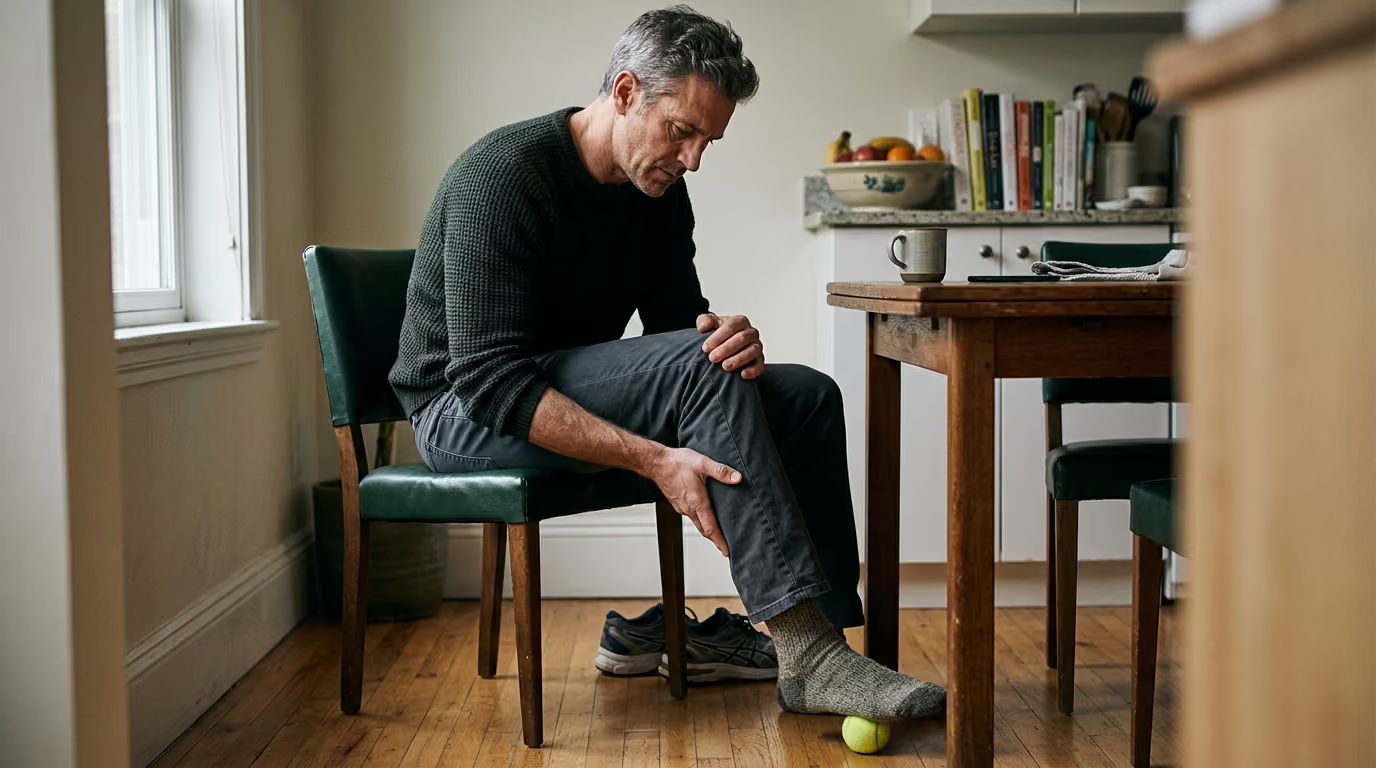

A 29 percent higher risk of heart disease from relational strain shows why partners need practical de-escalation tools, clear boundaries, and daily physiological recovery habits.





If you are in immediate danger, call 911. For 24/7 support, call or text 988 and press 1 for the Veterans Crisis Line, or text 838255.
Popular health advice often presents human connection as a universal cure for stress. We are routinely told that spending time with others will calm our nerves, lower our blood pressure, and extend our lives.
That advice overlooks a fundamental reality of adult life. Being around other people is not automatically calming. While supportive bonds can buffer tension, turbulent or unpredictable relationships represent some of the most potent stressors a human body can encounter.
Unresolved conflict, silent resentment, and continuous relationship uncertainty keep the central nervous system on high alert. When home life or close partnerships feel unpredictable, the body struggles to shift into true physiological rest.
Understanding how relationships influence our physical recovery requires examining both sides of social interaction. We need to look closely at what happens inside the body during interpersonal strain, why some relational patterns exhaust us, and how we can establish genuine safety, repair, and rest.
Scientific research paints a clear picture of how close relationships interact with our physiology. The biological impact of our social ties is substantial, measurable, and tracked across multiple organ systems.
Experimental and clinical studies show that relationship quality directly influences cardiovascular patterns, endocrine regulation, and immune function. A review by researchers Robles, Slatcher, Trombello, and McGinn noted that dyadic strain alters cardiovascular reactivity and disrupts neuroendocrine balance. Hostile interactions between partners trigger rapid spikes in blood pressure and heart rate. Strained partnerships are also linked to flattened daytime cortisol slopes, meaning the body fails to experience the natural hormonal drop required for evening recovery.
Interpersonal friction leaves an imprint on the immune system. Research led by Janice Kiecolt-Glaser demonstrated that hostile behaviors during marital conflict slow physical wound healing and increase systemic inflammation. Strained interactions prompt the release of pro-inflammatory cytokines such as interleukin-6. Over months or years, repeated inflammatory spikes place prolonged wear on tissues and blood vessels.
Negative interactions appear to carry more biological weight than positive ones. Research on social support and social strain led by Bert Uchino showed that social strain from partners, family, and friends significantly increased inflammatory markers like C-reactive protein. Modest supportive interactions provided mild protective effects, but the biological damage of chronic strain was considerably stronger.
Data from the U.S. Surgeon General highlights the broad public health stakes of relational health. Severe social isolation increases the risk of premature death by 29 percent, while persistent loneliness raises that risk by 26 percent. Poor social relationships and isolation are associated with a 29 percent higher risk of heart disease and a 32 percent higher risk of stroke.
These findings confirm that human bodies respond directly to interpersonal safety and threat. Our biology tracks the emotional climate of our primary bonds.
The biological cost of relational strain stems from how the nervous system interprets threat. The body cannot easily distinguish between physical danger and the social threat of rejection, hostility, or abandonment.
Relational strain operates across several distinct temporal phases. Acute stress occurs during a specific heated argument. Intermittent stress surfaces when unresolved tensions flare up every few days. Chronic stress develops when tension becomes the permanent background condition of the home.
Anticipatory stress and post-conflict activation prolong this physical strain. Anticipatory stress occurs when you brace yourself before walking through the front door or tense up while waiting for a text message. Post-conflict activation happens when an argument ends outwardly, but your mind continues to replay every word for hours.
During post-conflict activation, your sympathetic nervous system stays engaged. Heart rate variability drops, muscle tension remains elevated, and your mind runs through defensive scenarios. This persistent vigilance interferes directly with normal nervous system recovery strategies that help the body return to baseline.
Sleep architecture suffers dramatically under sustained interpersonal stress. High nighttime cortisol delays the onset of deep, slow-wave sleep and causes frequent nocturnal awakenings. Without restorative sleep stages, the brain cannot clear metabolic waste or consolidate emotional memories effectively.
Over time, this continuous alertness creates severe daytime fatigue. Adults over 35 often notice that their stamina drops and their patience wears thin. Learning how chronic tension drains daily stamina helps clarify why unresolved relationship dynamics leave you physically exhausted. When your home does not feel like a safe harbor, your body never gets full permission to power down.
Interpersonal friction rarely happens at random. Most relationship stress follows recurring cycles that keep both people trapped in persistent survival states.
The conflict-escalation cycle begins with a trigger, such as a sharp tone, a missed chore, or an unreturned phone call. The brain instantly assigns meaning to that trigger, interpreting it as disrespect, neglect, or impending abandonment.
Once threat is perceived, protective behavioral responses take over. One person attacks or criticizes, while the other defends, minimizes, or shuts down. This reaction confirms the first person's worst fears, intensifying the argument. Both bodies enter a state of high physiological arousal, making rational problem-solving impossible.
Clinical psychology often describes this dynamic through the window of tolerance framework. When people are inside their window, they can manage difficult emotions, think flexibly, and listen to another perspective.
High stress pushes individuals out of this window in two opposite directions:
These states fuel common interpersonal patterns. In a pursue-withdraw dynamic, one partner experiences hyperarousal and demands immediate reassurance, while the other experiences hypoarousal and retreats behind a wall of silence. In an attack-defend pattern, both partners stay hyperaroused, trading blame while neither feels heard. In an appease-resent pattern, one person repeatedly swallows their needs to maintain artificial peace, accumulating quiet exhaustion.
Social baseline theory explains why these patterns carry such a heavy physiological burden. The human brain assumes that close relationships will share the cognitive and emotional load of daily life. When a partner becomes a source of threat rather than support, the brain must expend double the metabolic energy to monitor danger and manage daily tasks alone.
Every close relationship encounters friction, miscommunication, and differing priorities. Experiencing conflict does not mean a partnership is broken or harmful.
Healthy conflict differs fundamentally from chronic depletion and abuse. In healthy relationships, conflict is focused on specific behaviors or logistical challenges. Both individuals retain their personal agency, feel free to speak without fear of retribution, and eventually return to mutual goodwill.
Relational depletion occurs when the overall balance of interactions leans heavily toward criticism, demand, and emotional invalidation. You may care deeply about each other, yet find that daily interactions consistently leave you drained. This often happens when couples face severe external pressures without adequate coping tools.
Certain complex life situations naturally strain relationship resources:
Abuse must never be confused with standard communication difficulties. Intimate partner violence involves patterns of coercive control, intimidation, entitlement, and fear.
Data from the Centers for Disease Control and Prevention indicates that more than one in three women and more than one in six men experience sexual violence, physical violence, or stalking by an intimate partner during their lifetime. Psychological aggression, financial control, digital surveillance, and continuous isolation also constitute serious domestic abuse.
If you are experiencing intimidation, physical danger, or extreme control, communication exercises are not the right tool. Your priority must be physical safety and confidential support.
If you are in immediate physical danger, call 911. If you need confidential safety planning, call the National Domestic Violence Hotline at 1-800-799-SAFE (7233) or text "START" to 88788. If you or someone you know is experiencing a mental health crisis or thoughts of self-harm, call or text 988 to reach the Suicide & Crisis Lifeline, or text 838255 for the Veterans Crisis Line.
Abuse is never caused by a mutual failure to communicate. It requires safety planning, firm external boundaries, and specialized professional assistance.
When relationship stress arises from repairable communication breakdowns, learning how to cool the nervous system is the first step toward recovery. Attempting to resolve complex emotional issues while hyperaroused or shut down almost always fails.
Before initiating a challenging conversation, check your physical state. Ask yourself if your jaw is clenched, your chest feels tight, or your heart is beating fast. If your body is bracing for a fight, take fifteen minutes to settle before speaking.
Framing your concern clearly prevents the other person's nervous system from immediately triggering defensive barriers. You can organize your thoughts using a clear, four-part framework:
A practical example sounds like this: "When plans change without notice, I feel anxious and rushed. I need predictable scheduling so I can manage my work week. Would you be willing to text me as soon as you know your schedule shifts?"
When a conversation starts escalating, either person must have the right to call a regulation pause. A regulation pause is not an abandonment or a silent treatment. It is a deliberate, structured break designed to restore physiological balance.
A constructive pause requires four distinct agreements:
Learning practical tools for building mental resilience under sustained pressure allows both partners to step back before words cause lasting harm. Calming the body first makes genuine conversation possible.
Stopping an argument is only half the process. True biological recovery depends on what happens after the conflict concludes.
Research on marital interaction confirms that the quality of repair matters more than the frequency of disagreement. A repair attempt is any statement, gesture, or behavioral adjustment that de-escalates tension and restores emotional security.
Effective repair requires two clear stages. First, both individuals must de-escalate immediate physiological threat through calm posture, open body language, and gentle tones. Second, both people must engage in mutual accountability, addressing what occurred and agreeing on what will change.
Simple phrases can immediately soften defensive barriers:
Apologies that lack behavioral change do not provide lasting relief. When promises are repeatedly broken, the nervous system remains suspicious and vigilant. True relational recovery happens when respectful communication is demonstrated consistently over weeks and months.
Alongside repair, personal boundaries serve as vital protective rails for your well-being. A boundary is not a demand that another person change their personality. A boundary is a clear statement of what you will personally do to protect your time, energy, and peace.
Clear boundaries follow a simple template: "I value our conversations, but I cannot participate while there is yelling. If shouting starts, I will step into the other room until we can speak calmly."
Boundaries also apply to how you distribute your social needs. No single partnership can carry every emotional, intellectual, and logistical demand of adult life. Expecting one person to be your sole confidant, co-parent, best friend, and business partner creates immense strain.
You can protect your primary bond by widening your support network:
Diversifying your social ecosystem reduces the emotional pressure on your primary relationship. It ensures that temporary friction with one person does not strip away your entire foundation of support.
While conversations and boundaries resolve structural problems, daily physiological routines help the body recover from everyday stress. Recovery is not purely intellectual. It is an embodied habit built through consistent daily patterns.
Partners can actively assist each other in shifting out of sympathetic dominance. This shared regulation relies on simple, predictable daily touchpoints that signal safety to the brain.
Simple co-regulation habits include:
These practices help establish restorative sleep habits that protect both individuals from cumulative burnout. When the home environment offers reliable physiological safety, the central nervous system naturally transitions from defense to cellular repair.
During periods of high external stress, taking time for evaluating your personal energy levels allows you to adjust expectations realistically. When energy is low, simplifying daily expectations prevents minor household frictions from turning into major marital crises.
While the biological evidence connecting relationships to health is compelling, we must interpret scientific studies with appropriate nuance. Human relationships are complex, and scientific research has distinct limitations.
Much of the published literature relies on observational and correlational data. Population studies show strong statistical links between social isolation and cardiovascular disease, but they cannot prove direct causation in every individual life. A person facing chronic illness may become isolated because their physical mobility is limited, meaning health status can drive social disconnection rather than the other way around.
Biomarkers like cortisol and inflammatory cytokines are influenced by numerous overlapping variables. Your daily cortisol slope is shaped by relationship quality, but it is also altered by caffeine consumption, shift work, physical activity, underlying metabolic conditions, and genetic predispositions. An elevated level of C-reactive protein indicates physiological inflammation, but it cannot pinpoint relationship friction as the sole cause.
Furthermore, laboratory stress studies have inherent constraints. Observing how a couple discusses a simulated disagreement in a university clinic while wearing heart monitors does not capture the full complexity of twenty years of shared life. Laboratory findings show immediate physiological reactivity, but they cannot always predict how people adapt and repair over decades.
Cultural context also shapes how interpersonal dynamics are experienced. Communication styles that seem direct and healthy in one culture may feel aggressive in another, while silence can represent respectful restraint rather than hostile stonewalling.
Recognizing these scientific boundaries prevents us from adopting rigid, one-size-fits-all rules about relationships. Improving relationship quality is a powerful tool for supporting health, but it works alongside medical care, financial stability, exercise, and adequate sleep.
Many couples navigate recurring stress using personal reflection, communication adjustments, and structured boundaries. However, certain situations exceed the capacity of self-help strategies and require objective clinical support.
Seeking professional guidance is appropriate when relationship strain becomes persistent, debilitating, or cyclical. When two people find themselves having the exact same destructive argument for years without progress, an experienced therapist can help uncover the unstated vulnerabilities driving the pattern.
Professional consultation is strongly indicated under several conditions:
Couples therapy offers structured frameworks for identifying triggers, learning safe de-escalation, and restoring mutual responsiveness. Evidence-based modalities like Emotionally Focused Therapy (EFT) and the Gottman Method provide practical roadmaps for rebuilding secure connection.
Joint therapy is not appropriate for every distressed dynamic. In relationships characterized by intimate partner violence, coercive control, or severe fear, standard couples counseling can increase danger. When power is deeply unbalanced or physical safety is compromised, individual counseling and specialized advocacy services are the proper clinical path.
Working with an individual therapist allows you to clarify your personal limits, process historic grief, and decide how to navigate difficult relationship dynamics safely. Professional support is not an admission of failure. It is a practical resource for protecting your health and well-being.
Human connection possesses a profound capacity to buffer life's heaviest burdens, but only when relationships offer genuine emotional safety, mutual respect, and dependable rest.
Stay connected for research and practical guidance on sleep, stress, circadian rhythm and recovery. Clear ideas for adults 35+ who want better rest, steadier energy and more resilient days.



Explore practical guidance on sleep, stress and recovery without chasing every new hack, device or promise.
explore the blog