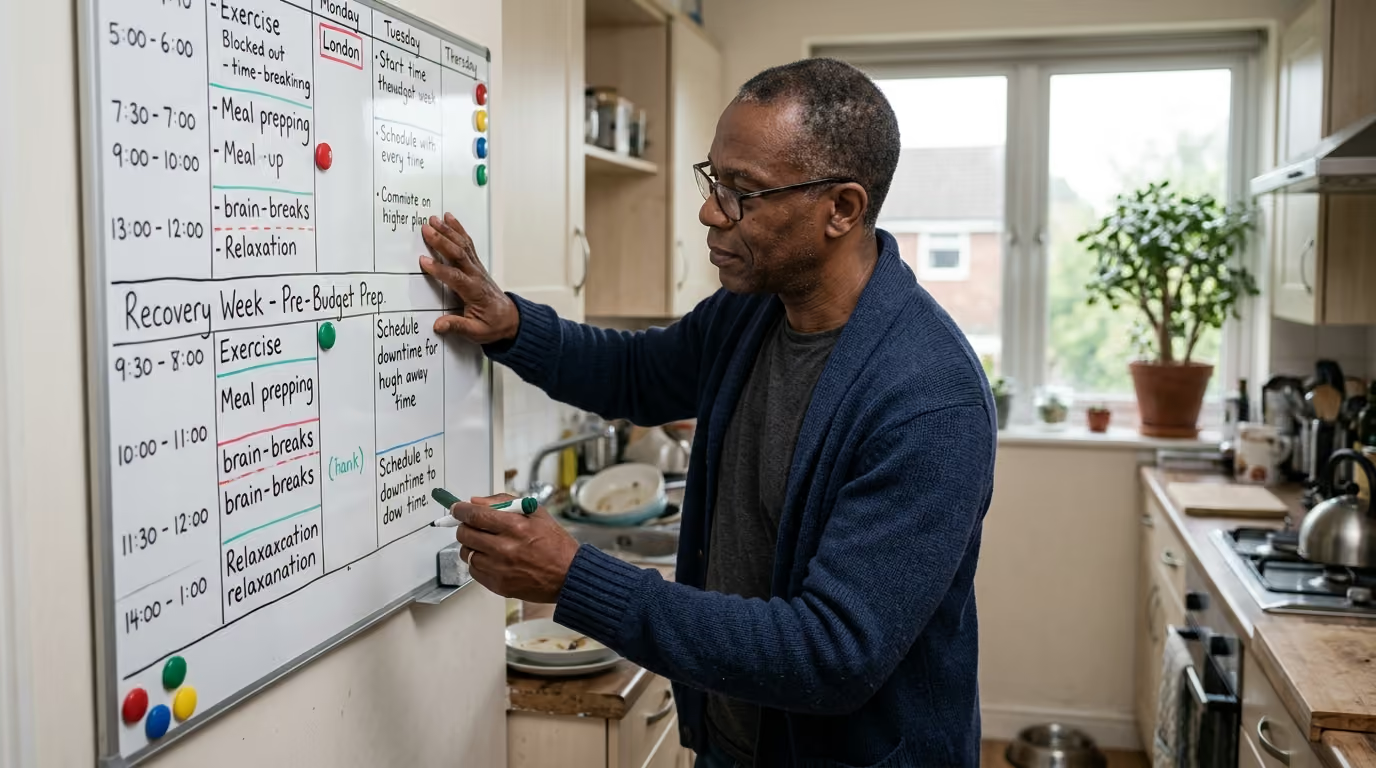

Seven strategic planning steps guide professionals through high-pressure weeks by targeting the core psychological mechanisms that rebuild sustained stamina.





If you are in immediate danger, call 911. For 24/7 support, call or text 988 and press 1 for the Veterans Crisis Line, or text 838255.
You open your calendar on Sunday evening and feel an immediate knot in your stomach. The upcoming week holds a major client deadline, an early morning flight, two back-to-back board meetings, and a long-standing family commitment. Most adults try to push through periods like this through sheer willpower, relying on extra caffeine during the day and collapse at night. By Wednesday afternoon, concentration begins to unravel, irritability rises, and sleep becomes shallow and fitful.
This pattern is familiar to many adults over 35, who often notice that stamina and physiological resilience do not bounce back as rapidly as they did a decade earlier. When responsibilities multiply, relying on willpower alone turns normal life strain into severe exhaustion.
A demanding week should not be treated as a character test. It is a temporary cycle of elevated load that requires proactive risk management.
Recovery planning is the intentional arrangement of sleep, nutrition, microbreaks, nervous system downtime, and post-event decompression around a predictable surge in effort. By designing a clear recovery structure before the calendar fills, you can meet high-stakes demands without depleting your physical reserves or running into deep fatigue.
Scientific research on human performance and occupational health treats rest not as an indulgence, but as an operational requirement. When the body encounters physical, cognitive, or emotional demand, it activates physiological systems to mobilize energy. Once the demand ends, those systems must return to their baseline.
The foundational framework for this process is effort-recovery theory. Proposed by organizational psychologists, the model states that working through demands produces short-term physiological and psychological strain. When an individual has adequate opportunities to rest, these strain reactions subside completely. When workload continues without sufficient pause, recovery remains incomplete, forcing the body to expend extra effort to maintain baseline functioning.
Over time, this continuous compensatory effort leads to persistent fatigue and sleep difficulties. Peer-reviewed research on sustained job demands confirms that ongoing pressure combined with incomplete recuperation directly predicts poor sleep quality and psychological strain.
At a systemic level, repeated cycles of unresolved stress contribute to what researchers call allostatic load. Allostatic load refers to the cumulative physiological toll on cardiovascular, metabolic, and immune systems when the body repeatedly adapts to stress. A comprehensive systematic review of 267 studies demonstrated that higher allostatic load correlates with measurable physical and mental health challenges across diverse populations.
Research also demonstrates a clear association between sleep disturbance and higher allostatic load markers. In clinical research, allostatic load is an observational framework rather than a daily medical diagnosis, but its practical takeaway is clear: the human body cannot run at high output indefinitely without structured periods of physiological down-regulation.
Restoration is not a single, passive activity. The DRAMMA framework identifies six distinct psychological mechanisms that drive effective recuperation:
Mentally disengaging from work tasks, deadlines, and problem-solving during non-work hours.
Calming the body and mind through low-effort activities that lower sympathetic nervous system arousal.
Engaging in stimulating, low-stakes activities outside of work that build competence and learning without performance pressure.
Exercising personal autonomy over how you spend your non-demand time.
Participating in activities that provide personal significance, purpose, and alignment with your values.
Experiencing genuine social connection, mutual support, and psychological safety with others.
A meta-analysis examining 316 samples and nearly 100,000 participants confirmed that relaxation and mastery experiences strongly correlate with personal well-being. The same data demonstrated that psychological detachment protects against occupational exhaustion and emotional strain. When designing a recovery plan, matching your rest habits to these specific recovery experiences creates far better outcomes than simply lying on the sofa with a digital screen.
Managing rest during intense periods is vital because sleep and cognitive resources do not operate on an infinite credit system. The brain requires predictable cycles of down-time to clear metabolic waste, consolidate memory, and regulate emotional processing centers.
The Centers for Disease Control and Prevention recommends that adults obtain at least seven hours of sleep per night. The CDC also emphasizes that maintaining consistent bed and wake times supports circadian stability and daily recovery. Sleep deficiency compromises executive function, working memory, emotional regulation, and physical reaction times. When you enter a high-demand week with existing sleep debt, your capacity to process complex information and manage interpersonal friction drops significantly.
Understanding why recovery feels slower as we age helps explain why pushing through intense weeks becomes progressively harder after age 35. Deep slow-wave sleep naturally decreases with age, reducing the efficiency of overnight tissue repair and hormonal balance. Autonomic nervous system flexibility shifts, meaning that elevated heart rates and cortisol levels take longer to return to baseline after acute stressors.
When you attempt to absorb an intense workload without proactive buffers, several physiological systems suffer:
Proactive planning protects your baseline capacity so you do not enter demanding events in a state of physiological exhaustion.
Every person possesses a fluctuating amount of physical, emotional, and cognitive capacity. Your capacity during an intense week depends on internal physiology, personal history, and external environment.
Not all intense tasks drain the same internal reserves. Preparing an analytical financial report consumes heavy cognitive resources. Managing a team restructuring or navigating a family conflict demands sustained emotional regulation. Long shifts on your feet or physically taxing travel deplete musculoskeletal energy. Navigating a noisy conference or open-plan office drains sensory bandwidth. Identifying the primary demand category helps you select the correct recuperation method.
Most schedules only account for the main event, such as a two-hour presentation or a four-hour flight. Every major demand carries significant hidden load. Hidden load includes anticipatory worry, physical preparation, packing, commuting, social performance, post-event administrative tasks, and cognitive rumination. A single high-stakes meeting can quietly consume an entire day of energy when you factor in the mental preparation and subsequent decompression.
Having control over your schedule acts as a powerful buffer against physical strain. When you have the autonomy to take a brief walk, adjust a meeting time, or choose your lunch hour, stress levels remain manageable. When demands are completely controlled by external forces with zero flexibility, fatigue accumulates much faster.
Caregiving obligations, household duties, financial constraints, and relational conflicts consume substantial baseline energy. An executive with full domestic support experiences a demanding week differently than a single parent managing eldercare responsibilities. Planning must reflect the actual reality of your life rather than an idealized corporate routine.
The R.E.C.O.V.E.R. framework provides a systematic method to organize your physical, mental, and logistical resources around predictable surges in workload.
Begin by auditing the exact nature of the upcoming surge. Break down the week into specific demands and categorize them by their primary load type:
Ask yourself what specific resource will be under the greatest pressure. If the week is heavily cognitive, your rest should avoid complex mental stimulation. If the week is heavily social, your recovery must prioritize solitude and quiet environments.
Calculate the full timeline of each event rather than just the scheduled hours on your calendar. Add realistic estimates for preparation, transit, delays, emotional processing, and post-event follow-up.
A four-hour business dinner often requires an hour of travel, an hour of anticipatory preparation, three hours of active social performance, and an hour of winding down afterward. By mapping the full seven-hour footprint, you prevent yourself from overbooking the surrounding mornings and evenings.
Build physical and logistical reserves before the heavy demands arrive. Focus on practical friction reduction:
Pacing prevents you from expending your entire physical reserve on Monday and Tuesday. Insert non-negotiable buffers throughout the schedule:
A comprehensive 2022 meta-analysis examining 22 studies on microbreaks confirmed that short pauses of ten minutes or less produce small but statistically significant improvements in subjective vigor and reductions in fatigue. While microbreaks do not magically increase performance output, they act as an accessible tool to keep physical fatigue from reaching critical levels. Step away from your computer, stretch your shoulders, drink a glass of water, or focus your eyes on a distant object across the room.
Rest should be targeted directly at the depleted system. Applying the wrong form of rest will leave you feeling drained despite taking time off:
The ninety minutes immediately following an intense event dictate how quickly your autonomic nervous system returns to baseline. Avoid transitioning directly from a high-stress meeting into answering pending emails or scrolling through news feeds.
Create a predictable decompression sequence:
Schedule a deliberate post-demand recovery day. A recovery day is not a blank canvas to catch up on neglected household chores or tackle backlog work. It is an intentional period of lower output designed to clear accumulated strain.
Keep scheduling minimal. Eat regular meals, take a leisurely walk in nature, engage in light stretching, and allow yourself extra time in bed. World Health Organization guidelines highlight that regular moderate-intensity physical activity supports physical health, and any amount of movement is better than none. A gentle twenty-minute walk in natural light provides gentle circulatory stimulation without placing extra stress on a tired nervous system.
Implementing recovery practices across a structured timeline prevents strain from accumulating uncontrollably.
The goal during this phase is entering the high-demand period with high physiological reserves and zero avoidable friction.
Focus on calming mental anticipation and securing a clean transition into sleep.
Distribute your effort evenly so you do not burn through your energy early in the day.
Shift your body from sympathetic fight-or-flight activation into parasympathetic rest-and-digest status.
Allow your physiological systems to re-establish homeostatic balance.
Different life situations create unique stress profiles. Here is how to adapt the playbook to specific high-demand circumstances.
Many well-intentioned recovery efforts fail because they rely on cultural myths rather than physiological realities. Avoiding these common traps protects your time and energy:
Believing you can absorb five days of unrelenting stress and erase it with a long Sunday sleep is a mistake. Effort-recovery research demonstrates that sustained strain with incomplete daily recovery causes cumulative fatigue that becomes harder to resolve. Incorporate short recovery windows every single day.
Spending six hours motionless on the sofa scrolling on a smartphone is not physiologically restorative. Bright screen light, algorithmic notifications, and passive media consumption keep cognitive and emotional centers active. Gentle movement, outdoor light, creative hobbies, and quiet reading provide far deeper recuperation.
Treating your rest routine as an aggressive optimization checklist creates its own performance anxiety. If tracking your sleep scores, preparing elaborate wellness recipes, or executing rigid meditation routines feels stressful, it ceases to be restorative. Keep your recovery practices simple, flexible, and low-friction.
Leaving your office or closing your laptop does not produce true recovery if your mind remains fixated on unresolved problems. Research on recovery and nervous system balance shows that true physical restoration requires intentional cognitive disengagement. Use written task lists to deposit unresolved thoughts outside your head before stepping away.
The World Health Organization defines burnout specifically as an occupational syndrome resulting from chronic, unmanaged workplace stress. It is characterized by exhaustion, mental distance or cynicism toward one's job, and reduced professional efficacy. Experiencing heavy fatigue after an unusually busy week is normal acute strain, not immediate clinical burnout. Use precise language so you can apply the right solution, whether that means a quiet weekend of rest or long-term structural changes to your employment.
While scientific literature provides strong principles for human recovery, certain areas contain mixed evidence, methodological limitations, and commercial overreach.
Many popular recovery tools, such as commercial infrared saunas, specialized compression garments, and extreme cold exposure protocols, have modest or mixed empirical backing. While these interventions can feel pleasant, peer-reviewed evidence showing long-term reductions in chronic stress biomarkers remains early and limited. Simple fundamentals, including adequate sleep, balanced nutrition, daily movement, and psychological detachment, carry far stronger empirical support.
Research on microbreaks is promising but requires nuanced interpretation. While meta-analyses confirm that short breaks reduce subjective fatigue and restore personal vigor, they do not reliably demonstrate significant boosts in overall task performance. Microbreaks should be used to protect personal well-being and physiological sustainability, not sold as a guaranteed productivity shortcut.
Similarly, allostatic load research relies heavily on population-level observational studies and broad biomarker panels. While allostatic load is a valuable conceptual model for understanding cumulative strain, it cannot be accurately measured through single consumer wearable scores. Wearable sleep and recovery trackers provide helpful general indicators of heart rate variability and sleep duration, but their algorithms are proprietary and should not be treated as clinical diagnostics.
Individual recovery responses vary widely based on genetic differences, baseline fitness, neurodivergence, sensory sensitivities, and chronic health conditions. What provides deep relaxation for one person, such as an energetic group fitness class, may cause acute sensory exhaustion for another. You must treat recovery models as customizable frameworks rather than rigid universal prescriptions.
If you are experiencing severe emotional distress, overwhelming crisis, or thoughts of self-harm, immediate professional help is available:
To manage everyday fatigue safely, use a simple traffic-light tracking system to monitor how your body handles sustained demand:
The National Institute of Mental Health advises consulting a qualified healthcare professional or licensed mental health therapist if severe stress symptoms, mood disturbances, or functional impairment persist for two weeks or longer. Proactive medical evaluation ensures that underlying physical conditions, such as thyroid dysfunction, anemia, vitamin deficiencies, or clinical sleep disorders, are accurately identified and treated.
Keep this practical playbook accessible whenever your upcoming schedule indicates a significant rise in obligations. Review these steps when:
Demanding weeks are an inevitable part of a full, engaged adult life, but running yourself into physical depletion does not have to be. When you plan your recovery with the same intentionality you bring to your professional commitments, you protect your health, sustain your focus, and return to baseline with your physical reserves fully intact.
Stay connected for research and practical guidance on sleep, stress, circadian rhythm and recovery. Clear ideas for adults 35+ who want better rest, steadier energy and more resilient days.



Explore practical guidance on sleep, stress and recovery without chasing every new hack, device or promise.
explore the blog