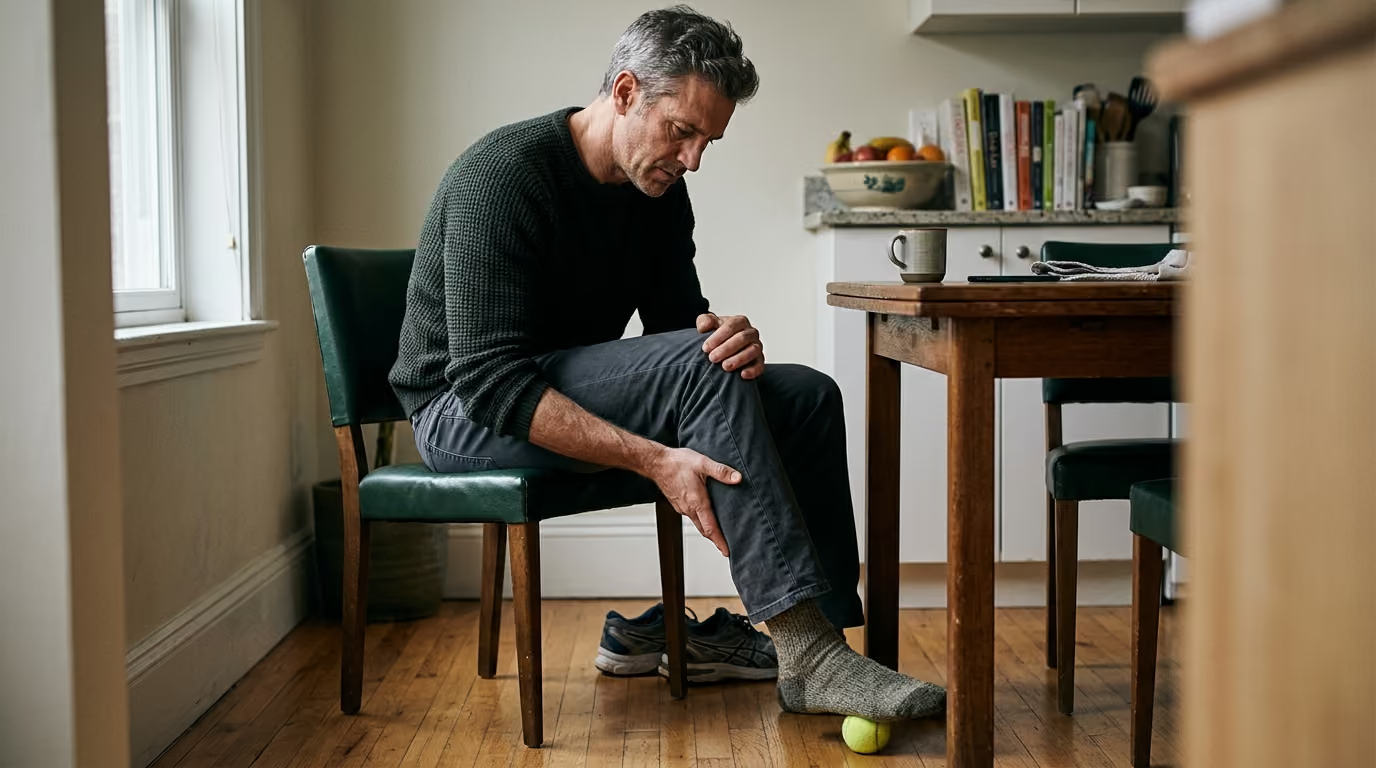

Ten-second micro-anchors and time-graded somatic protocols help regulate the nervous system by combining sensory awareness, breathwork, and physical orientation to resolve acute stress.





If you are in immediate danger, call 911. For 24/7 support, call or text 988 and press 1 for the Veterans Crisis Line, or text 838255.
You search online for how to stop feeling overwhelmed right now because your thoughts are racing, your chest feels tight, and your focus has evaporated. You need a practical way to regain control when stress threatens your ability to think clearly. This field guide provides an evidence-based breakdown of grounding practices, explaining how attentional anchoring works, where its limits lie, and how to use it in daily life.
Grounding refers to the practice of deliberately redirecting attention toward immediate sensory, physical, or environmental information. When internal demands become intense, thoughts can easily spiral into catastrophic projections or distressing memories. Clinical resources describe grounding as a structured method to anchor awareness in physical reality. By engaging sensory input, you create a competing stream of neutral data that interrupts automatic cognitive escalations.
The practice must be clearly distinguished from other wellness concepts. Grounding is not progressive muscle relaxation, which focuses specifically on reducing peripheral muscle tension. It is distinct from broad mindfulness practices that emphasize open, nonjudgmental awareness of all experiences. It is also completely separate from alternative health claims about earthing or walking barefoot to absorb electrical charges. In psychological and clinical settings, grounding is simply an attentional orientation tool.
The broader scientific literature on mindfulness-based stress interventions provides helpful context for understanding attentional redirection. A 2026 systematic review and meta-analysis of non-clinical adults examined seventeen randomized controlled trials with over 1,600 participants. The researchers observed a significant overall reduction in perceived stress scores. Another meta-analysis evaluating preventive online mindfulness programs found a moderate standardized effect of 0.432 for perceived stress reduction.
These findings indicate that structured attention training can alter stress perception across diverse adult populations. A 2024 meta-analysis on evaluative stress demonstrated an effect size of negative 0.716 across 1,275 participants. However, researchers noted possible publication bias, reminding us to interpret broad figures with appropriate caution. Clinical trials involving cardiovascular patients also revealed varying results, showing clear benefits for anxiety but smaller shifts for generalized stress. Broad intervention data show promise, but they do not prove that a single two-minute sensory exercise will instantly resolve acute distress.
When a person experiences severe stress, the autonomic nervous system shifts into a defensive posture. Attention narrows toward real or perceived threats, internal discomfort, and urgent mental warnings. This survival response can impair executive function, working memory, and long-term planning. For adults navigating complex responsibilities, cumulative strain often compromises daytime energy and nighttime recovery. Understanding how persistent stress alters daily energy helps explain why the brain feels trapped in recurring cognitive loops.
Grounding interrupts this loop by providing tangible, non-threatening stimuli for the brain to process. The World Health Organization outlines a clear stress-management framework based on intentional physical orientation. Their clinical guidance teaches people to notice physical sensations, name their internal states, and deliberately reconnect with their surroundings. By pressing feet into the floor or noticing ambient sounds, you recruit sensory processing networks that compete with alarm signals.
The objective of grounding is not to force immediate serenity. Expecting complete calmness during an emergency or high-stakes crisis is unrealistic. The true value of grounding lies in stabilizing baseline awareness so you can choose your next action. It helps shift an individual from total cognitive paralysis to functional, step-by-step problem-solving.
This stabilization directly supports long-term resilience and recovery. When sustained pressure goes unchecked throughout the day, the sympathetic nervous system remains chronically activated. This persistent arousal interferes with evening relaxation and disrupts restorative sleep architecture. Practicing sensory re-orientation during peak moments of friction helps protect your nervous system balance and recovery over time.
National surveys highlight the widespread need for realistic self-regulation tools. The American Psychological Association reported in their 2023 Stress in America survey that nearly one-quarter of adults rated their stress between 8 and 10 on a 10-point scale. Parents of young children reported feeling completely overwhelmed and unable to function on most days. Furthermore, 43 percent of surveyed adults noted that their daily stressors continue to accumulate over time.
Grounding techniques can be categorized by the primary sensory or cognitive channel they utilize. Having a diverse menu of options allows you to choose an approach that matches your current environment and sensory preferences.
Sensory grounding utilizes external environmental inputs to stabilize awareness. The most recognized format is the 5-4-3-2-1 technique, widely recommended by health organizations like the National Health Service. In this exercise, you deliberately identify five visual details, four tactile sensations, three distinct sounds, two scents, and one taste.
The sequence can be adapted freely based on your surroundings. If scent or taste is unavailable or uncomfortable, you can substitute a slow exhalation or another visual observation. The key to making this exercise work is specificity. Rather than mentally listing broad categories, focus on precise physical properties.
Tactile grounding relies on physical touch and body position awareness. Proprioceptive feedback provides the brain with unambiguous evidence of physical safety in the current space. These exercises can be performed quietly without drawing attention from others.
Orientation grounding uses verifiable factual statements to counter catastrophic thoughts. When panic rises, the brain often responds as if past traumatic events or imagined disasters are occurring right now. Factual self-statements anchor your attention firmly in the present day and time.
To practice this, state your full name, your exact physical location, the day of the week, and the current date. Describe the room you are standing in and clarify what task you were doing before the distress began. State clearly what is happening immediately around you without adding emotional interpretation. This factual inventory helps re-engage prefrontal networks responsible for objective reality monitoring.
Cognitive grounding provides the mind with structured, low-stakes mental operations. These exercises demand focused attention without triggering emotional investment. They redirect mental energy away from unproductive worry loops.
Gentle physical movement can discharge muscular tension and clarify bodily boundaries. Physical motion helps ground individuals who find static observation frustrating or agitating.
Breathing exercises can serve as an effective physical anchor when applied correctly. Clinical protocols often recommend breathing in smoothly through the nose and exhaling through the mouth. The World Health Organization suggests allowing the lungs to empty completely before taking the next breath.
However, breath awareness is not universally helpful. For individuals with panic tendencies or certain medical conditions, concentrating on breathing can increase anxiety and trigger hyperventilation. If focusing on your breath makes you feel confined or lightheaded, switch immediately to external visual or tactile anchors.
Grounding practices should adapt to the time and privacy available in any given situation. Structuring techniques into distinct time tiers helps you match the exercise to the moment.
The ten-second protocol is designed for acute workplace moments, high-pressure conversations, or sudden surges of irritability. It requires no visible physical adjustments and can be executed during brief conversational pauses.
The sixty-second reset provides a structured pause during task transitions, intense email processing, or sensory overload. It creates enough cognitive distance to interrupt emotional momentum.
The five-minute protocol is suited for private environments when mental overload has brought work to a standstill. It combines sensory observation, physical movement, and practical planning.
Consistent baseline practice improves your ability to use these tools under acute pressure. The World Health Organization notes that practicing stress-reduction skills for just a few minutes daily during calm periods helps build practical familiarity. Setting aside time to practice when calm makes these techniques much easier to recall when intense pressure arrives.
Stress presents differently depending on your physical environment and social obligations. Adapting grounding strategies to your specific setting ensures they remain practical, safe, and effective.
Workplace stress often stems from relentless communication, ambiguous deadlines, and high-stakes evaluations. In open-plan offices or virtual meetings, obvious physical exercises may feel awkward or unprofessional. Grounding at work should remain subtle and focused on functional task management.
When facing severe inbox paralysis, pause and plant your feet on the floor. Identify the weight of your wrists resting against the desk surface. Write down a simple factual statement: "I have received six urgent messages, and I can only address them one at a time." Prioritize the most time-sensitive task and set a timer for ten minutes. Using structured stress management and mental resilience strategies allows you to respond thoughtfully rather than reacting out of panic.
Grounding should never be used as a tool to tolerate unsafe working conditions or unreasonable workloads. If operational demands are excessive, personal grounding must be paired with workplace boundaries. Use the clarity gained from grounding to request project prioritization, decline non-essential tasks, or discuss resource constraints with leadership.
Commuting often involves crowded spaces, unexpected delays, bright lights, and unpredictable noise. These factors can quickly trigger sensory overload or claustrophobia. Grounding during travel must prioritize personal safety and situational awareness.
Caregivers frequently experience emotional flooding while attending to dependents, children, or aging family members. In these moments, you must manage your own internal stress while remaining responsible for someone else's well-being. Grounding provides a rapid way to steady your responses and prevent reactive shouting or distress.
When feeling overwhelmed during caregiving, plant both feet firmly on the floor and lower your shoulders. Name the immediate caregiving task out loud in a neutral, steady tone: "I am preparing this meal right now." Focus on the temperature of the water or the weight of an object in your hand for three seconds.
Grounding is not a replacement for practical caregiver support, respite care, or medical assistance. A caregiver experiencing severe exhaustion requires tangible help and structural relief. If you feel unable to safely care for a dependent, step back, ensure the environment is secure, and seek assistance from family, community resources, or healthcare providers.
Navigating crowded social gatherings, grocery stores, or public events can sometimes provoke sudden sensory overwhelm. The goal in these settings is to regain composure without drawing unwanted attention.
Hold a cool beverage container and concentrate on the temperature against your fingers. Look for architectural details in the room, such as the framing of a window or the pattern of floor tiles. Locate the nearest exit or customer service desk so you know where to find assistance if needed. Remind yourself that you have full permission to step outside, use the restroom, or leave the event entirely if your distress continues to rise.
The success of grounding practices depends heavily on individual health factors, personal history, and environmental conditions. Recognizing these variables helps prevent self-blame when a technique feels ineffective.
Baseline physiological state plays a significant role in attentional control. Severe sleep deprivation, dehydration, systemic inflammation, and irregular nutrition all reduce cognitive bandwidth. When your physical resources are depleted, maintaining focused attention requires far more effort. Ensuring good baseline habits and better sleep quality provides the physiological foundation needed for emotional stability.
Sensory processing differences also influence how people respond to grounding exercises. Neurodivergent individuals, including those with autism or ADHD, may find certain textures, lighting conditions, or sounds distressing rather than soothing. For someone with tactile sensitivities, holding a rough object could increase irritation instead of calming the nervous system. You should always personalize the sensory channels you use based on what feels neutral and steady to you.
External structural stressors establish the broader context in which grounding takes place. Grounding can help stabilize your focus during an acute crisis, but it cannot resolve financial insecurity, chronic illness, toxic environments, or social isolation. Relying entirely on internal coping strategies without addressing external problems can lead to ongoing burnout. Grounding is best used as an immediate stabilization tool that creates space for practical problem-solving.
While grounding is widely recommended in clinical practice, understanding its common pitfalls helps ensure it is applied safely and effectively.
Grounding does not require repeating unrealistic affirmations or pretending everything is fine. Telling yourself "I am completely safe and peaceful" during a genuine crisis creates cognitive dissonance and increases frustration. Grounding relies on factual reality: "I am experiencing significant distress, I am standing in this room, and I can take the next step." Sticking to objective facts prevents the exercise from feeling hollow or invalidating.
Attempting an elaborate ten-step grounding protocol during severe overwhelm can add unnecessary cognitive burden. When working memory is compromised by acute stress, complex instructions often fail. If a structured 5-4-3-2-1 exercise feels overwhelming, simplify your approach immediately. Focusing on a single tactile sensation or identifying three blue objects in the room is more than enough to anchor your attention.
Certain sensory inputs may be linked to past negative experiences or trauma. A particular scent, sound, or physical position might increase distress rather than reduce it. If an exercise causes your heart rate to spike or makes you feel trapped, abandon that specific sensory channel. Shift your focus to an external, neutral object in your immediate environment.
Similarly, breath-focused grounding can backfire for individuals prone to respiratory anxiety or panic attacks. Concentrating intently on the lungs can cause hyper-fixation on chest sensations, leading to shallow breathing and lightheadedness. If focusing on your breath creates discomfort, rely entirely on external visual, auditory, or tactile cues.
Grounding helps steady your focus so you can face current challenges, but it should not be used as a chronic avoidance tactic. Continuously using sensory exercises to put off necessary medical visits, difficult conversations, or grief processing is counterproductive. Grounding should serve as a temporary bridge to constructive action, not a way to escape reality.
It is essential to maintain realistic expectations regarding what the scientific research supports. Most clinical evidence evaluates comprehensive mindfulness programs, acceptance and commitment therapy, or cognitive behavioral therapy. Very few peer-reviewed trials look exclusively at brief sensory exercises like the 5-4-3-2-1 method in isolation.
While clinical consensus and organizations like the NHS endorse these techniques, they should be viewed as practical coping habits rather than guaranteed clinical cures. Recognizing these research boundaries prevents people from viewing a lack of immediate calm as a personal failure.
Grounding is a supportive self-regulation tool, not a substitute for formal psychiatric treatment, psychotherapy, or medical care. Knowing when to escalate to professional support ensures personal safety and long-term health.
If you or someone you know is experiencing thoughts of self-harm, suicide, or an immediate mental health crisis, professional help is available right now. In the United States, you can call or text 988 to connect with the Suicide & Crisis Lifeline, available 24 hours a day, 7 days a week. Veterans can call 988 and press 1, or text 838255. For immediate life-threatening physical danger, call 911 or proceed to the nearest hospital emergency room. Readers outside the United States should contact their national emergency service or local crisis support line immediately.
If you have concerns about safety at home, work with a healthcare professional or trusted support person to establish a safe environment. Practical precautions, such as having someone else manage medications or securing household items, are best arranged collaboratively with a clinician.
The National Institute of Mental Health emphasizes that professional evaluation is warranted when anxiety, panic, or low mood begins to interfere with your ability to function at work, maintain relationships, or handle basic daily routines. You should consider reaching out to a licensed healthcare professional if you experience any of the following:
Therapeutic approaches such as Cognitive Behavioral Therapy, Acceptance and Commitment Therapy, and trauma-informed care offer structured methods for addressing the root causes of chronic overwhelm. Grounding can complement these therapies, but it should remain part of a comprehensive support plan.
Integrating grounding into your daily life is most effective when approached as a practical routine rather than an emergency fix. When sustained cognitive load prevents mental disengagement at night, pairing daytime grounding with strategies for bedtime mental overload helps create a consistent path to restorative rest.
Grounding does not promise instantaneous bliss or the elimination of life stress. Instead, it offers a dependable way to steady your attention, step out of unproductive mental spirals, and re-engage with the world around you.
Stay connected for research and practical guidance on sleep, stress, circadian rhythm and recovery. Clear ideas for adults 35+ who want better rest, steadier energy and more resilient days.



Explore practical guidance on sleep, stress and recovery without chasing every new hack, device or promise.
explore the blog