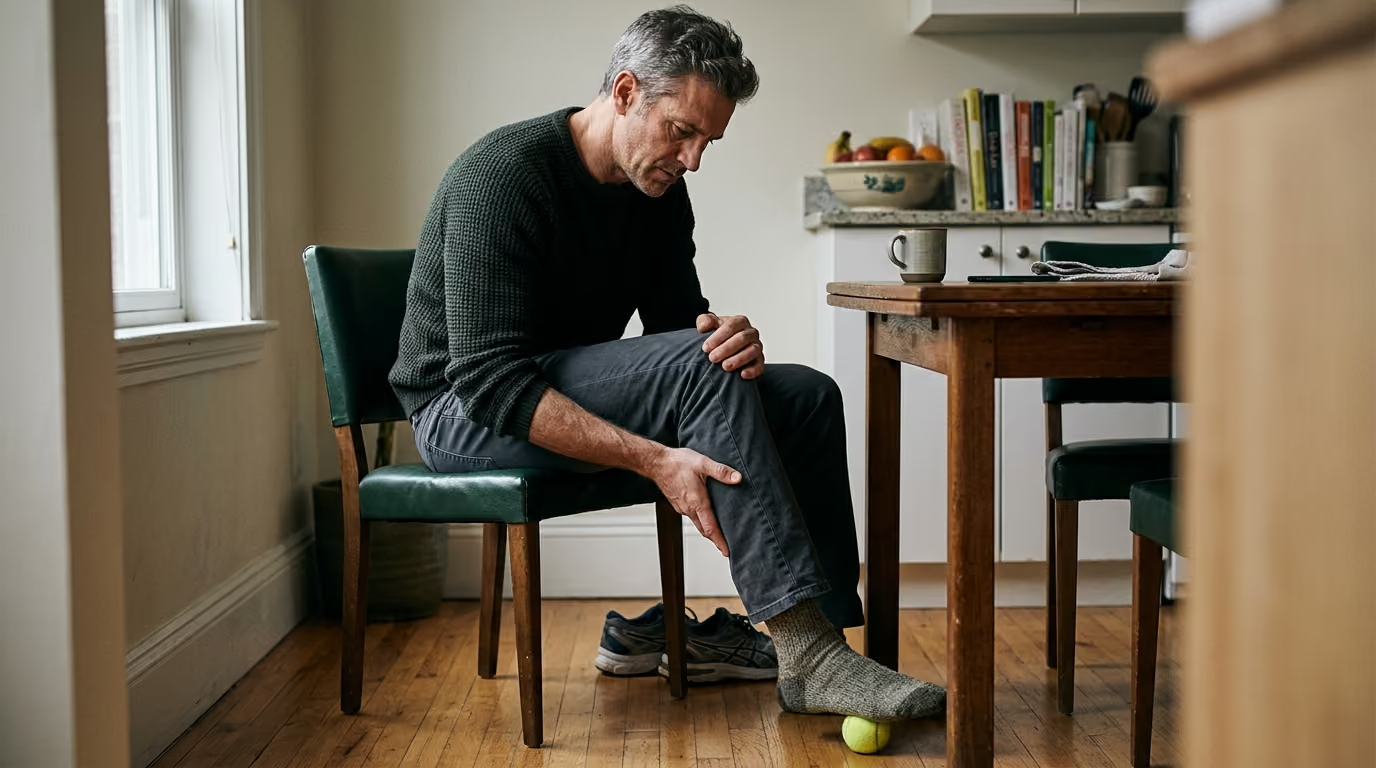

Peak cognitive performance relies on choosing genuine restorative methods like consolidated sleep and strategic light exposure instead of temporarily masking fatigue with caffeine.





An energy booster is not a substitute for biological rest. In popular culture, the term is applied to anything that makes a person feel temporarily awake, from a double espresso to a brisk walk or a blast of cold light. In human physiology, true recovery means clearing homeostatic sleep pressure, repairing cellular strain, and allowing the nervous system to reset. Most popular tactics do not restore lost capacity. They temporarily alter nervous system arousal or block the chemical signals that tell the brain it is tired.
Understanding this distinction is critical for adults navigating demanding careers, parenting, and midlife changes in sleep architecture. When you rely on stimulants or environmental tricks to force alertness, you are borrowing energy from your future physiological reserves. This guide provides an evidence-based comparison of common methods used to improve alertness, including bright light, physical movement, caffeine, naps, meal timing, breathing techniques, and workload modification. By examining the biological mechanisms, performance trade-offs, and practical boundaries of each tool, you can make informed decisions about how to support daily functioning without compromising long-term recovery.
Alertness is the biological capacity to sustain attention, process incoming information, and respond accurately to your surroundings. It is distinct from subjective motivation, emotional enthusiasm, or physical restlessness. True alertness depends heavily on two interacting systems: the homeostatic sleep drive, which accumulates adenosine in the brain during continuous wakefulness, and the circadian timing system, which coordinates biological rhythms over roughly twenty-four hours.
Fatigue is a multifaceted state that occurs when physiological demands exceed available resources. It can manifest as acute sleepiness, prolonged mental exhaustion, muscular weakness, or circadian misalignment. When you address fatigue with an intervention that restores underlying capacity, such as consolidated sleep or a planned nap, you actively reduce the physiological deficit. When you use an intervention that merely increases autonomic arousal, you leave the underlying biological debt untouched.
A significant danger of masking fatigue is the divergence between subjective sensation and objective capability. Research from the Centers for Disease Control and Prevention indicates that sleep loss severely impairs reaction time and cognitive stability, particularly during early morning hours. During the lowest point of the circadian cycle, average reaction times can slow substantially, with the slowest responses lagging by multiple seconds. A stimulated individual may feel confident and awake while still suffering from severe psychomotor lapses and micro-sleeps.
When evaluating any technique to improve alertness, you must ask whether the strategy reduces the biological need for rest or simply hides it. Relying on masking agents during high-risk tasks, such as driving or complex operational duties, creates a false sense of security. Learning how to read your energy accurately allows you to choose recovery when safety is on the line and reserve temporary countermeasures for situations with minimal risk.
To understand how different alertness interventions perform, we must assess them across consistent operational criteria. These criteria include their primary biological mechanism, how rapidly they take effect, how long their benefits persist, whether they improve objective performance or only subjective wakefulness, and their potential cost to subsequent sleep.
Consolidated sleep clears adenosine from the central nervous system, repairs cellular damage, and stabilizes endocrine function. It takes several hours to complete, but its restorative benefits sustain performance across an entire sixteen-hour waking day. Sleep restores both objective cognitive accuracy and subjective feelings of vigor. It carries no negative cost to future rest, serving as the foundational standard against which all other strategies are measured.
Napping provides a brief period of physiological sleep, temporarily reducing accumulated sleep pressure. A short nap begins working within ten to twenty minutes, though it requires a brief buffer period to clear post-wake grogginess. The resulting improvements in vigilance and reaction time can last between two and four hours. Naps restore objective psychomotor performance, but if they are taken too late in the afternoon, they can diminish nighttime sleep depth.
Caffeine acts as an antagonist at adenosine receptor sites, preventing the brain from detecting its accumulated sleep pressure. It takes effect within twenty to thirty minutes, reaching peak blood concentration in about forty-five to sixty minutes. The alerting effect typically lasts three to five hours, depending on individual metabolic rates. While caffeine improves reaction time and sustained attention, it does not repay biological sleep debt, and consuming it late in the day can disrupt subsequent sleep continuity.
Bright light suppresses pineal melatonin production and activates the locus coeruleus via the retinohypothalamic tract, promoting immediate daytime arousal. Its direct alerting effects occur within minutes and persist for the duration of exposure plus a short window afterward. Light improves both subjective wakefulness and objective performance during shift work and daytime slumps. However, exposure to intense light during the biological evening can delay your circadian rhythm and make nighttime sleep onset difficult.
Brief bouts of movement stimulate the sympathetic nervous system, increase heart rate, elevate blood flow, and break visual monotony. The stimulating effect is virtually instantaneous, but the benefits are transient, usually fading within twenty to forty-five minutes. Movement reliably improves subjective mood, feelings of vigor, and short-term focus during sedentary desk work. It does not reverse underlying sleep deprivation or fix deep neurobehavioral deficits.
Food intake influences blood glucose regulation, gastrointestinal hormone secretion, and autonomic balance. Consuming balanced, moderate meals prevents large glycemic spikes and the subsequent reactive fatigue that follows heavy eating. The stabilizing benefits develop over thirty to ninety minutes and last several hours. Proper nutrition supports baseline physical capacity, but eating cannot substitute for sleep when severe exhaustion is present.
Slow, paced breathing shifts the autonomic nervous system away from sympathetic overdrive toward parasympathetic equilibrium. Its calming effects occur within three to five minutes, helping to clear mental agitation and diffuse cognitive tension. Breathing practices improve subjective clarity and reduce stress-induced fatigue, but they do not increase physiological arousal when a person is genuinely sleep-deprived. In fact, relaxing breathing exercises may make an exhausted individual fall asleep faster.
Modifying your workload involves reducing cognitive demands, simplifying complex tasks, taking structured breaks, or postponing high-stakes decisions. This operational adjustment lowers the immediate burden placed on depleted mental reserves. The performance protection takes effect immediately and lasts as long as the workload remains manageable. By reducing error rates during periods of biological vulnerability, task modification protects safety without pretending that the worker is fully rested.
Light is the primary environmental cue that synchronizes the human circadian pacemaker. Beyond its role in long-term circadian timing, light acts as an acute biological stimulant. When photons strike intrinsically photosensitive retinal ganglion cells, signals travel directly to the master circadian clock and arousal centers in the brain. This pathway stimulates alertness, elevates core body temperature, and sharpens cognitive processing.
A systematic review published by the Centers for Disease Control and Prevention examined numerous workplace fatigue interventions. The findings confirmed substantial evidence that bright-light treatment improves objective alertness and cognitive performance, particularly among night-shift workers. Operational research conducted with aerospace flight controllers demonstrated that combining blue-enriched white light with scheduled breaks improved reported alertness, elevated mood, and strengthened objective reaction times during nocturnal shifts.
The physiological impact of bright light depends heavily on timing. Understanding how midlife shifts in your body clock alter light sensitivity is vital for managing daily energy. Using bright light strategically involves specific timing considerations:
Despite its clear alerting properties, bright light has distinct physiological limitations. Light cannot erase homeostatic sleep debt. It merely forces the brain into an activated state while the underlying biological need for cellular restoration continues to build. Furthermore, bright light applied at the wrong biological phase can disrupt your circadian rhythm, pushing your sleep window later and worsening chronic exhaustion over time.
Sedentary work environments create a specific type of tiredness characterized by physical lethargy, postural stiffness, and mental monotony. Prolonged sitting reduces peripheral circulation, lowers venous return to the heart, and diminishes sensory stimulation. In these circumstances, the sensation of low energy is often driven by under-activation rather than a total loss of cellular capacity.
A systematic review and meta-analysis published in PLOS One evaluated the effects of workplace micro-breaks on employee well-being. The researchers found that short micro-breaks consistently increased feelings of vigor and significantly reduced perceived fatigue. Another comprehensive review on active breaks found that brief bouts of light-intensity physical activity, lasting two to three minutes every half hour, improved subjective energy and sustained focus without harming overall work productivity.
Physical movement influences daytime function through several distinct mechanisms:
Movement breaks are particularly useful for managing the common post-lunch slump or staying engaged during repetitive administrative tasks. Walking during phone conversations, using stairs, or performing short mobility sequences can quickly restore daytime momentum.
However, physical activity cannot reverse the cognitive impairments caused by acute or chronic sleep restriction. A brisk walk may stimulate the nervous system enough to help you complete a spreadsheet, but it will not restore degraded psychomotor precision. If you are operating machinery, monitoring critical systems, or driving long distances, relying on movement to stay awake is dangerous. The temporary activation fades quickly, leaving severe underlying reaction-time deficits unresolved.
Caffeine is the most widely consumed neuroactive compound in the world. Its primary mechanism of action is competitive inhibition of adenosine receptors in the central nervous system. Throughout your waking hours, adenosine molecules bind to their receptors, progressively slowing neuronal activity and generating sleep pressure. Because caffeine possesses a molecular structure similar to adenosine, it binds to these same receptors without activating them, effectively hiding the neurochemical accumulation of tiredness.
A Cochrane systematic review evaluated the use of caffeine for preventing errors and injuries among shift workers. The evidence indicated that caffeine significantly improved cognitive performance, sustained attention, and reaction speed compared to placebos. However, the review also observed that the included trials were unable to prove whether caffeine reliably prevented workplace accidents or physical injuries. While caffeine makes workers faster and more responsive, it does not fully correct degraded judgment or executive function.
The fundamental trade-off of caffeine lies in its pharmacokinetic persistence. The elimination half-life of caffeine in healthy adults ranges from three to seven hours, with significant individual variation based on genetics, liver enzyme activity, and age. A comprehensive 2024 review on caffeine timing found that consuming high doses within twelve hours of bedtime substantially disturbed sleep architecture, reducing slow-wave sleep and increasing nighttime awakenings. Even a moderate dose of 100 milligrams taken four hours before sleep can alter sleep continuity in sensitive individuals.
Strategic caffeine usage requires discipline to avoid creating a self-reinforcing cycle of poor rest and escalating daytime stimulant dependence:
Caffeine is best used as a targeted bridge during specific operational demands, not as a permanent baseline to compensate for inadequate sleep. When used continuously to fight chronic fatigue, it masks the body's natural signals of physical exhaustion, eventually contributing to worsening sleep fragmentation and persistent burnout.
Unlike stimulants or environmental cues, a nap provides actual sleep. By entering non-rapid eye movement stages, the brain actively clears accumulated adenosine, restores neurotransmitter balance, and relieves homeostatic pressure. Fatigue management guidelines from NASA consistently identify planned naps as one of the most effective countermeasures for maintaining operational alertness and cognitive capability during extended operations.
Laboratory and field studies demonstrate that strategic naps produce substantial improvements in working memory, vigilance, and physical reaction time. In simulated night-shift environments, combining a planned nap with subsequent low-dose caffeine produced superior alertness compared to either strategy used in isolation. The nap partially clears the biological sleep debt, while the caffeine helps block remaining adenosine signals as work resumes.
The primary limitation of daytime napping is sleep inertia, the temporary grogginess, disorientation, and slowed cognitive processing that occurs immediately upon waking. An operational review by the European Aviation Safety Agency noted that naps extending beyond thirty minutes significantly increased the risk of awakening from deep slow-wave sleep, causing acute performance impairment in the initial post-nap window.
To maximize the benefits of a nap while minimizing operational disruption, use structured guidelines:
Naps should be integrated thoughtfully so they do not diminish the homeostatic pressure needed for nighttime sleep. If taking an afternoon nap makes it difficult to fall asleep at your usual bedtime, shorten the nap duration or shift it earlier in the day.
Nutrition and respiration are often promoted as rapid energy enhancers, but their actual influence on alertness is indirect. Food provides the metabolic substrate for physical cellular function, while breathing patterns modulate autonomic nervous system tone. Neither intervention acts as a direct substitute for sleep, but both strongly shape how efficiently your body manages its available energy reserves throughout the day.
The relationship between food intake and alertness is primarily about avoiding metabolic disruption. Consuming large, carbohydrate-dense meals triggers rapid postprandial changes, including elevated insulin levels, shifts in intestinal blood flow, and alterations in central neurotransmitters that induce post-meal sluggishness. Research into occupational performance emphasizes regular, moderate meals that stabilize blood glucose rather than emergency eating to counteract sleepiness.
Practical nutritional strategies for sustaining stable alertness include:
Regulated breathing practices alter your internal state by adjusting blood gas concentrations and heart rate variability. Slow, diaphragmatic breathing with prolonged exhalations activates the vagus nerve, reducing systemic blood pressure and calming mental hyperactivity. When fatigue is driven by sustained mental overload or nervous agitation, deliberate breathing can help restore calm focus.
However, breathing techniques cannot reverse homeostatic sleep pressure. If you are genuinely sleep-deprived, slow relaxation breathing will lower your physiological arousal further, making you feel distinctly sleepier. Conversely, rapid, hyperventilation-style breathing techniques temporarily elevate sympathetic tone and heart rate through mild hypocapnia. While this produces a brief jolt of wakefulness, it can also cause lightheadedness, tingling sensations, or anxiety in susceptible individuals. Breathing methods should be used to manage stress-induced tension, not to force alertness when sleep is required.
When individuals feel exhausted, their default response is often to seek external stimulants to maintain their current output. However, when fatigue stems from sustained cognitive strain, the most effective intervention is often modifying the work itself. Forcing a depleted brain to maintain high-stakes focus through artificial stimulation increases the likelihood of critical errors and operational oversights.
Research on cognitive ergonomics demonstrates that prolonged mental exertion depletes executive control networks in the prefrontal cortex. This state of mental fatigue reduces working memory capacity, impairs error detection, and encourages impulsive decision-making. Exploring how unmanaged cognitive strain depletes energy illustrates why external stimulation cannot compensate for continuous mental overutilization.
The impact of excessive workload is clearly documented in occupational studies. Research examining medical training environments revealed that residents working more than eighty hours per week were 50% more likely to make a significant medical error resulting in adverse patient outcomes compared to those working fewer hours. This finding highlights a fundamental truth: individual alertness tactics cannot overcome the risks created by excessive, unmanaged workload.
Implementing practical workload modifications helps protect performance without requiring unattainable levels of biological arousal:
Fatigue management must not be treated solely as a personal discipline problem. Organizations and individuals alike must recognize when work demands exceed safe human capacity, adjusting workloads rather than relying on stimulants to sustain unmanageable schedules.
Choosing the correct strategy requires identifying the primary driver of your fatigue. Applying the wrong tool often worsens the underlying problem, creating secondary sleep disruption or increased physiological strain.
Use this operational framework to determine the most effective response to your current state:
While the physiological mechanisms of sleep, circadian rhythms, and basic stimulants are well documented, significant gaps remain in the scientific literature regarding popular energy-boosting products and routines. Many widely promoted interventions rely on small, highly controlled laboratory trials that do not reflect complex, real-world living conditions.
One major limitation involves commercial consumer products, such as blue-light-blocking glasses, specialized daylight simulation lamps, and proprietary botanical supplements. A systematic review from the Centers for Disease Control and Prevention found insufficient high-quality evidence to support the claim that blue-blocking eyewear reliably improves workplace vigilance or daytime recovery. Many consumer lighting products lack the specific photon intensity or spectral composition used in clinical bright-light trials, making real-world results inconsistent.
Individual metabolic and genetic variability also limits the broad application of uniform guidance. Caffeine clearance rates differ by more than twofold across individuals due to polymorphisms in the CYP1A2 gene. What serves as a mild, helpful focus aid for one person may induce prolonged jitteriness, palpitations, and severe nighttime insomnia in another. Similarly, age-related changes in slow-wave sleep depth alter how effectively a middle-aged adult recovers from a daytime nap compared to a younger study participant.
Finally, long-term habituation weakens the efficacy of many temporary countermeasures. Regular caffeine consumption leads to upregulation of adenosine receptors, requiring ongoing intake simply to maintain baseline functioning. Most clinical trials evaluate single, acute doses rather than months of chronic reliance. When evaluating any new alertness strategy, remember that industry-sponsored claims often confuse a brief surge in autonomic arousal with genuine, long-term biological recovery.
It is completely normal to experience acute fatigue after an unusually demanding workweek, a night of interrupted sleep, or a period of intense personal stress. However, when exhaustion becomes chronic, unresponsive to adequate rest, or interferes with basic daily tasks, it ceases to be a simple lifestyle issue. Chronic fatigue is a recognized medical symptom that requires proper diagnostic evaluation rather than continued self-treatment with stimulants.
You should consider seeking an evaluation from a qualified healthcare professional if your fatigue exhibits any of the following characteristics:
A healthcare provider can perform essential blood panels to screen for anemia, thyroid dysfunction, metabolic imbalances, vitamin deficiencies, or chronic inflammatory markers. They can also arrange for diagnostic sleep studies to evaluate conditions like obstructive sleep apnea, which frequently goes unrecognized in adults over thirty-five. Resolving an underlying medical issue restores genuine vitality in ways that no temporary countermeasure can ever achieve.
Cold water exposure triggers a sudden activation of the sympathetic nervous system, causing peripheral vasoconstriction, an increased heart rate, and an acute release of adrenaline. This produces an immediate surge of subjective alertness and clears morning mental fog. However, a cold shower does not clear accumulated adenosine or resolve underlying sleep debt. The alerting effect is purely temporary, and your baseline cognitive fatigue will re-emerge once your autonomic nervous system returns to baseline.
Feeling heavy, confused, or groggy after a nap is known as sleep inertia. This occurs when you wake up from deep, slow-wave sleep rather than light stage-one or stage-two sleep. To prevent this, shorten your nap to ten or twenty minutes so you do not enter deeper sleep stages. Additionally, allow yourself ten to fifteen minutes after waking to wash your face, move around, and fully regain cognitive clarity before returning to demanding work.
Energy drinks contain caffeine as their primary active ingredient, just like coffee, but they often deliver it in larger, highly concentrated doses. They also frequently include added sugars, high doses of B vitamins, and compounds like taurine or glucuronolactone. While the high sugar content can cause a rapid glycemic spike followed by a reactive energy crash, the primary alerting mechanism remains caffeine. The main risks of energy drinks are rapid overconsumption, accidental intake of very high caffeine doses, and subsequent disruption of nighttime sleep.
When you are well-rested but have been sitting at a desk for hours, your fatigue is usually driven by physical under-stimulation and cognitive monotony rather than a biological sleep deficit. A brisk walk elevates your heart rate, increases blood flow and oxygen delivery to the brain, and interrupts continuous visual strain. This sensory and physical shift resets your attentional focus, relieving perceived mental fatigue without needing to address a sleep debt.
Temporary alertness boosters can help you navigate demanding moments, but they merely manipulate nervous system arousal while leaving underlying sleep debt completely untouched. True recovery requires protecting consistent, high-quality sleep, aligning your daily demands with your biology, and respecting the natural limits of human energy.
Stay connected for research and practical guidance on sleep, stress, circadian rhythm and recovery. Clear ideas for adults 35+ who want better rest, steadier energy and more resilient days.



Explore practical guidance on sleep, stress and recovery without chasing every new hack, device or promise.
explore the blog