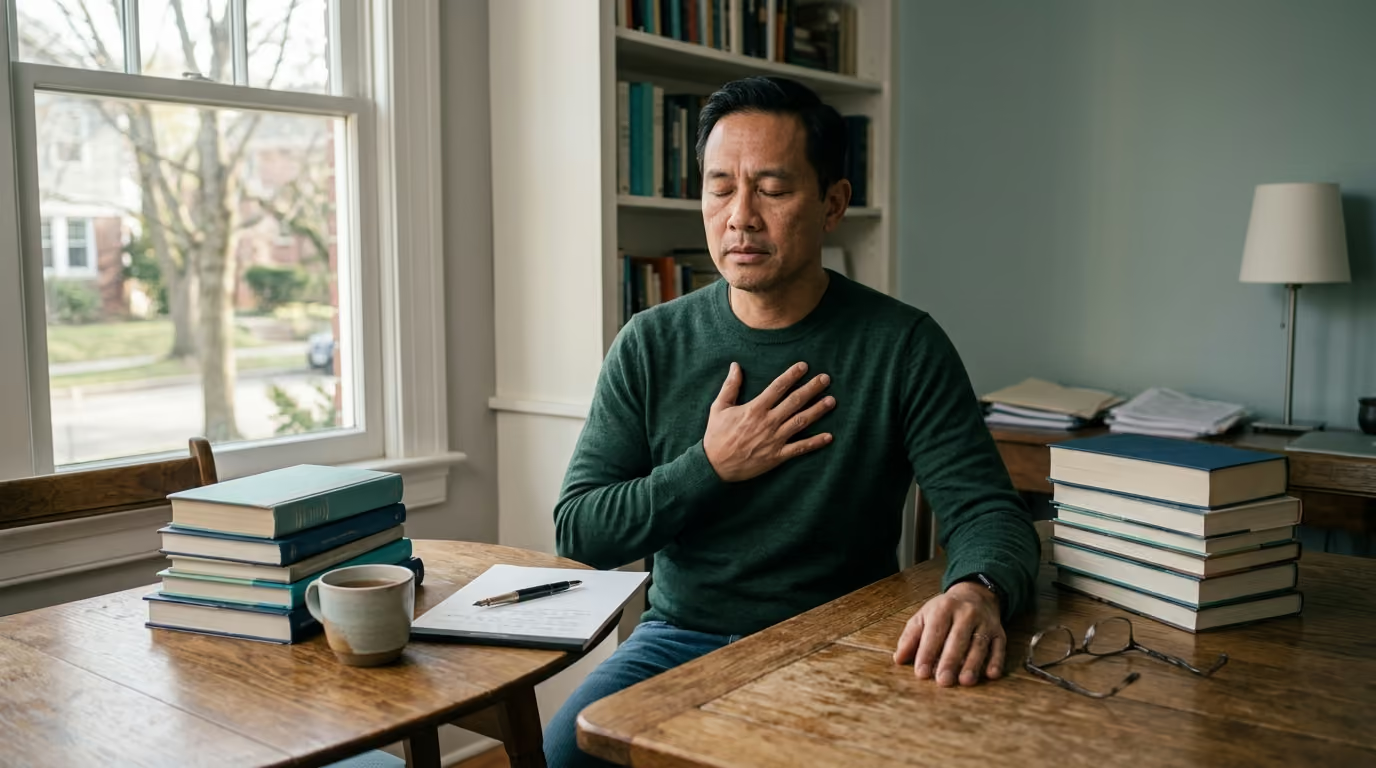

Five evidence-backed breathing patterns regulate the autonomic nervous system to improve stress recovery and help you build a sustainable daily routine.





Breathing for stress recovery is a structured practice of slowing, pacing, or directing respiration to shift the body away from sustained physiological arousal. It is not an instant cure for anxiety, nor is it a magical reset button for chronic exhaustion. Instead, deliberate breathing acts as a repeatable, low-cost method for moderating autonomic arousal, focusing attention, and establishing clear boundaries between periods of effort and periods of rest.
The current body of research shows that structured breathing produces measurable short-term changes in heart rate, blood pressure, and cardiovascular variability. Evidence from randomized controlled trials indicates that breathwork is associated with small to moderate reductions in self-reported stress, anxiety, and low mood. At the same time, the research is nuanced. Many emotional effects are modest, and studies comparing slow breathing to other paced rhythms show that attentional focus and regular practice may matter just as much as any single breathing frequency.
This guide examines what peer-reviewed research confirms about slow breathing, extended exhalations, and autonomic regulation. It details the underlying physiological mechanisms, breaks down effective breathing patterns, highlights common pitfalls, and outlines how to integrate gentle breathing into a broader routine for recovery and nervous system balance.
Stress recovery describes the process by which physiological and psychological activation declines after a challenge. When you encounter a physical or emotional demand, your body initiates an acute stress response. Heart rate climbs, ventilation quickens, blood pressure rises, and skeletal muscles tighten to prepare for action. This activation is normal and protective. Problems arise when activation remains sustained across days or weeks without adequate intervals for rest, causing how persistent stress alters everyday rest to become a chronic pattern.
Breathing is uniquely situated within the human nervous system because it is both automatic and voluntary. You breathe continuously without conscious thought, controlled by respiratory centers in the brainstem. Yet you can instantly take conscious control of your breath, altering its speed, depth, and rhythm. This dual control provides a direct pathway to influence autonomic signaling from the body up to the brain.
When you slow your breathing, you immediately change the mechanical dynamics of your chest cavity and cardiovascular system. During inhalation, your diaphragm descends, chest volume expands, and intrathoracic pressure drops. Blood flows more readily into the heart, leading to a temporary increase in heart rate. During exhalation, the diaphragm relaxes, intrathoracic pressure increases, and vagal nerve signaling slows the heart down.
This continuous oscillation of heart rate in response to breathing is known as respiratory sinus arrhythmia. Respiratory sinus arrhythmia is a normal physiological phenomenon that reflects healthy vagal regulation of cardiac tissue. In resting adults, respiratory sinus arrhythmia accounts for roughly 20 to 60 percent of short-term heart-rate variability. By extending the exhalation or slowing the overall respiratory cycle, you amplify this natural rhythm, sending calming interoceptive signals to the central nervous system.
Beyond these bottom-up bodily signals, deliberate breathing engages top-down cognitive processes. Following a rhythmic count or focusing on the movement of the lower ribs occupies working memory. This gentle focus interrupts circular worry, rumination, and threat-oriented monitoring. In this way, breathing serves as both a physiological lever and a cognitive anchor.
The scientific literature on breathing exercises has grown substantially, moving beyond observational traditions into controlled clinical trials. A 2023 meta-analysis of randomized controlled trials published in Scientific Reports analyzed the effect of breathwork interventions on mental health and stress. The researchers found that breathwork was associated with lower self-reported stress compared to control groups, producing a small-to-medium effect size of Hedges' g = -0.35.
The same meta-analysis identified similar small-to-medium improvements for anxiety symptoms, with an effect size of roughly g = -0.32, and depressive symptoms at g = -0.40. These findings show that breathwork can be a meaningful self-help tool. However, the authors noted significant variation across the included trials. Studies differed in their breathing speeds, session durations, instructor involvement, and whether they used active or passive control groups.
Another systematic review and meta-analysis of 31 studies involving 1,133 participants examined slow-paced breathing specifically. This review identified a marginal reduction in negative emotion, particularly perceived stress, with a standardized mean difference of -0.51. The confidence interval in this analysis crossed zero, ranging from -1.06 to 0.03 with a p-value of 0.06. This statistical uncertainty demonstrates that slow breathing is not a guaranteed fix for every individual, highlighting the need for realistic expectations.
Cardiovascular and autonomic measurements often show more consistent short-term changes than psychological questionnaires. A comprehensive systematic review on voluntary slow breathing reported consistent increases in vagally mediated heart-rate variability during the exercise and immediately afterward. When breathing slows to approximately six breaths per minute, respiration synchronizes with natural cardiovascular rhythms near 0.1 Hertz. This synchronization amplifies low-frequency heart-rate variability oscillations, reflecting coordinated action between respiration, arterial baroreceptors, and cardiac output.
Controlled trials also reveal that the exact pace of breathing may not be as rigid as popular trends suggest. In a blinded, structured trial involving 400 participants, coherent breathing at 5.5 breaths per minute was compared against a paced breathing control of 12 breaths per minute. Both groups experienced similar reductions in stress, anxiety, and low mood, with no significant advantage found for the slower frequency. A separate placebo-controlled trial likewise found that coherent breathing did not outperform a carefully designed breathwork placebo condition.
These findings suggest that structured time, intentional pacing, focused attention, and the behavioral decision to pause provide much of the benefit. Slow breathing clearly alters acute physiology, but its emotional power stems from a combination of biological signaling, mental focus, and structured recovery time.
The effect of any breathing practice depends heavily on individual physiology, environment, and baseline stress levels. Understanding these variables prevents frustration when an exercise feels different from one day to the next.
First, your resting baseline state determines the immediate impact of an exercise. If you are experiencing acute panic, forced slow breathing can sometimes trigger air hunger or heightened anxiety. When your sympathetic nervous system is highly activated, demanding that your body instantly adopt a six-breath-per-minute rhythm can feel restrictive. In such states, starting with gentler pacing or sensory focus is often far more productive.
Second, your physical posture shapes respiratory mechanics. Slouching in an office chair compresses the abdominal cavity, forcing the upper chest, neck, and shoulder muscles to lift the rib cage during inhalation. This accessory muscle breathing increases physical strain and can reinforce feelings of tension. Sitting upright with supported feet or lying flat allows the diaphragm to descend freely without mechanical resistance.
Third, baseline lung function and cardiovascular health influence how the body handles changes in ventilation. People with asthma, chronic obstructive pulmonary disease, or low blood pressure may experience distinct sensations during paced breathing. Pacing that feels effortless for a trained runner might cause mild dizziness or shortness of breath in someone with respiratory limitations. Adapting the rhythm to personal comfort is always more effective than following a rigid timer.
Fourth, your habitual carbon dioxide tolerance plays a role in how comfortable slow breathing feels. Breathing slower increases the concentration of arterial carbon dioxide slightly, which widens blood vessels and supports oxygen delivery to tissues. If you habitually over-breathe or breathe rapidly through the mouth, this normal carbon dioxide increase may initially trigger a false suffocation alert. Building tolerance gradually through gentle, comfortable sessions prevents this alarm response.
Finally, the surrounding environment dictates how deeply your nervous system can settle. Practicing a breathing exercise in a noisy, unpredictable room with incoming notifications produces different outcomes than practicing in a quiet space. Creating an intentional boundary around the exercise signals safety to the brain, amplifying the physiological shift toward restoration.
Research supports several straightforward breathing patterns that require no special equipment or intense effort. The goal of these exercises is to find a comfortable, sustainable rhythm that reduces strain.
Equal paced breathing balances the length of the inhalation and the exhalation without breath holds. It is an accessible starting point for anyone who feels anxious when holding their breath.
This pattern promotes cardiovascular synchronization and provides a steady cadence that occupies racing thoughts. It is particularly useful during midday work breaks or when transitioning between demanding tasks.
Extended-exhalation breathing uses an exhalation that is slightly longer than the inhalation. Because heart rate naturally slows during exhalation through vagal activation, this pattern supports a gentle downshift in arousal.
This pattern is well suited for evening wind-down routines or improving sleep quality. If you notice any feeling of breathlessness, immediately shorten the exhalation until the rhythm feels natural.
Diaphragmatic breathing focuses on engaging the main breathing muscle while keeping the neck, shoulders, and upper chest quiet. It helps correct the upper-chest breathing habits that often accompany sustained workplace stress.
The objective is not to push your stomach out with force or take the largest breath possible. The motion should remain subtle, quiet, and easy, emphasizing mechanical efficiency over volume.
Sensory-focused breathing prioritizes passive observation over numerical counting. It is ideal for individuals who find counting stressful or who feel performance pressure during structured breathwork.
This approach provides the attentional benefits of mindfulness without manipulating respiratory chemistry, making it exceptionally safe and calming for high-stress moments.
For individuals who struggle to sit still when stressed, pairing respiration with gentle movement can be highly regulating. Walking-paced breathing coordinates steps with the breath cycle.
This rhythmic pairing prevents the restlessness that sometimes occurs during seated exercises. It combines the autonomic benefits of gentle movement with structured respiratory pacing.
A successful breathing practice relies on consistency rather than extreme techniques or complicated schedules. For adults managing career and family responsibilities, the most effective routine is brief, comfortable, and easily repeated.
A practical implementation model uses a four-week progression to establish the habit gradually:
During the first week, focus purely on observation. Spend two minutes once a day simply noticing your breathing habits in different contexts. Notice if you hold your breath while reading emails, breathe rapidly when driving, or clench your jaw during meetings. This initial awareness builds the foundation for deliberate pacing.
During the second week, introduce structured practice in neutral, low-stress conditions. Practice comfortable equal breathing or mild extended exhalations for three minutes each morning or evening. Practicing when you are already calm trains your nervous system to associate the paced rhythm with comfort.
During the third week, attach the breathing exercise to predictable daily transitions. Use three minutes of diaphragmatic breathing immediately after closing your work laptop, before eating dinner, or while sitting in your parked car after a commute. These situational anchors turn breathing into a clear behavioral boundary between effort and recovery.
During the fourth week, begin applying short, thirty-second intervals of paced breathing during early stress escalation. When you notice early physical signals such as shoulder elevation or shallow breathing, use four or five gentle cycles to stabilize arousal before choosing your next action.
To gauge whether your routine is working, look at functional everyday indicators rather than checking wearable fitness metrics constantly. Track practical outcomes over several weeks:
If an exercise feels like a performance test, it defeats the purpose of recovery. The best routine is one that leaves you feeling steady, capable, and physically at ease.
A significant amount of wellness content promotes ideas about breathwork that are either physiologically inaccurate or counterproductive. Clearing up these misconceptions helps you avoid unnecessary discomfort.
The most widespread mistake in stress management is equating "deep breathing" with taking massive, forceful gulps of air. When people are told to take a deep breath, they often expand their chests fully and inhale as much air as possible.
Taking large, rapid breaths when your body is resting eliminates too much carbon dioxide from your bloodstream, leading to mild hypocapnia. This drop in carbon dioxide causes blood vessels in the brain to constrict slightly, producing light-headedness, tingling in the fingers, muscle twitching, and chest tightness. These physical symptoms mimic panic, paradoxically increasing stress. Deep breathing should refer to breathing low into the body using the diaphragm, maintaining a small, quiet, and gentle volume of air.
Popular trends often claim that exactly 5.5 or 6.0 breaths per minute is the only scientifically valid pace for healing the nervous system. While six breaths per minute aligns well with 0.1 Hertz cardiovascular resonance in laboratory settings, clinical trials show that other comfortable paced rates provide comparable psychological relief. Forcing a rigid rate that makes you feel air-hungry or strained produces tension rather than calm. A sustainable rhythm that feels natural to your body is always superior to a forced theoretical ideal.
Many modern smartwatches and fitness trackers display heart-rate variability metrics, leading people to use breathwork solely to drive their scores higher. Slow breathing does mechanically increase certain heart-rate variability parameters during the exercise. However, an acute increase during a five-minute session does not mean your chronic stress is cured or that your baseline resilience has fundamentally changed. Heart-rate variability is influenced by hydration, sleep quality, age, posture, and fitness. Treating heart-rate variability as a high-stakes test turns a relaxing habit into another source of performance anxiety.
High-ventilation breathwork involves rapid, forceful, or cyclical hyperventilation, often accompanied by long breath retentions. While these intense practices have distinct physiological effects that are studied in experimental psychology, they place acute stress on the cardiovascular and nervous systems.
Intense hyperventilation activates the sympathetic nervous system, raising adrenaline and causing sudden shifts in blood chemistry. These intense protocols should never be confused with gentle recovery practices, and they are generally inappropriate for individuals with panic disorder, cardiovascular vulnerabilities, or history of seizures. Gentle, slow-paced breathing remains the safest and most research-supported method for daily stress recovery.
Breathing exercises are valuable tools for managing acute physiological arousal, but they cannot compensate for an unsustainable lifestyle. If you are sleeping five hours a night, skipping meals, working in a toxic environment, or neglecting physical movement, five minutes of breathwork will not resolve your exhaustion. Breathing should support, not replace, fundamental health habits like adequate sleep, balanced nutrition, social connection, and boundary-setting. Addressing daily energy and daytime fatigue requires looking at your overall recovery ecosystem.
To see how evidence-based breathing operates in practice, it helps to examine realistic scenarios where individuals adapt techniques to specific demands without chasing wellness ideals.
A 42-year-old project manager regularly ended work feeling mentally drained with tense shoulders and racing thoughts about pending deadlines. Rather than immediately checking household chores or scrolling on a phone, they implemented a five-minute transition boundary. Sitting quietly in a parked car or a quiet room, they practiced equal four-second inhalations and four-second exhalations. This brief pause created a clear psychological separation between workplace demands and evening home life, reducing irritability without requiring hours of meditation.
A 38-year-old administrative lead began feeling sudden waves of light-headedness and chest tightness during high-pressure presentations. In an attempt to calm down, they had been taking massive, audible inhalations, which inadvertently caused mild hyperventilation and worsened their dizziness. After learning that quiet, low-volume breathing is more effective, they switched to gentle sensory focus and normal-sized breaths through the nose. Keeping the breath silent and subtle allowed their carbon dioxide levels to stabilize, stopping the escalation of physical distress.
A 50-year-old consultant struggled with nighttime awakenings and felt immense pressure to fall asleep quickly, often tracking their sleep stages obsessively. When they attempted breathing exercises in bed, they initially felt anxious whenever their mind drifted from the count. They shifted to sensory-focused breathing, resting one hand on the abdomen and feeling the gentle rise and fall without timing the breath. Removing the rigid counting turned the exercise from a sleep-inducing test into a restful resting state, aligning well with practical habits for persistent sleeplessness.
While the short-term physiological mechanisms of respiration are well mapped, scientific boundaries and uncertainties remain. Acknowledging where the evidence is limited prevents overstated claims and false certainty.
First, long-term randomized trials on breathwork remain relatively small and heterogeneous. Many studies evaluate the effects of breathing immediately after a single session or after an intervention lasting only a few weeks. We have limited robust data on whether practicing slow breathing for five minutes daily produces permanent structural changes in autonomic baseline function years down the road.
Second, the exact contribution of non-specific factors remains difficult to isolate. When people practice breathwork, they sit quietly, disengage from digital screens, expect to feel better, and dedicate time to self-care. Controlled studies comparing slow breathing to other paced rhythms or active placebos demonstrate that expectation, attention, and quiet resting account for a meaningful portion of the reported psychological benefits. Separating the pure chemical and neurological effects of a specific breath ratio from the broader experience of taking a mindful pause is an ongoing challenge in research.
Third, clinical populations show variable responses to breath manipulation. While many individuals with generalized anxiety benefit from slow breathing, some individuals with panic disorder or post-traumatic stress respond with heightened hypervigilance when asked to concentrate on internal bodily sensations. Research has not yet produced definitive guidelines for predicting exactly who will thrive with breathwork and who might require alternative somatic or psychological approaches.
Finally, commercial interests have outpaced clinical evidence. Breathwork apps, wearable breathing coaches, and specialized devices often market proprietary breathing frequencies as revolutionary health breakthroughs. The broader literature indicates that simple, unassisted, comfortable breathing yields the same fundamental cardiorespiratory benefits as expensive guided systems.
Breathing exercises are designed for self-regulation and everyday stress management. They are not medical treatments for clinical pathology or cardiovascular disease. Recognizing when physical or emotional symptoms require medical evaluation ensures safe and responsible care.
You should consult a physician or appropriate healthcare professional if you experience:
If you have underlying asthma, chronic obstructive pulmonary disease, cardiac arrhythmias, or low blood pressure, speak with your healthcare provider or a specialized respiratory physiotherapist before engaging in structured breathing routines. They can help tailor breathing parameters to your specific medical history, ensuring that your recovery practices remain safe, comfortable, and supportive.
Nasal breathing is generally preferred for everyday rest and slow breathing practices. The nasal passages filter, warm, and humidify incoming air while naturally increasing resistance, which encourages slower, diaphragmatic movement. However, if you have nasal congestion, anatomical deviations, or allergies that make nasal breathing difficult, forcing it can cause distress. Exhaling gently through softly parted lips is a completely acceptable alternative that maintains a calm, unforced rhythm.
Feeling anxious while focusing on the breath is a recognized response, particularly for individuals sensitive to internal bodily sensations. If this occurs, immediately stop trying to control or count the breath. Open your eyes, look around the room, and name five neutral objects you can see. Place your feet firmly on the floor and focus on external sensory details, such as the weight of your body in the chair or the feeling of your hands on your thighs. External grounding is often much more calming than internal focus during acute anxiety spikes.
Slow-paced breathing exercises consistently produce temporary reductions in blood pressure during the practice and immediately afterward by reducing sympathetic outflow and enhancing baroreflex sensitivity. Some clinical trials show modest improvements in resting blood pressure when slow breathing is practiced consistently for several weeks. However, breathing exercises should be viewed as a complementary lifestyle habit, not a replacement for prescribed antihypertensive medications, dietary modifications, or physician-guided care.
Clinical literature and practical guidance suggest that sessions lasting between two and five minutes are sufficient to produce measurable autonomic and psychological downshifts. You do not need to practice for thirty or sixty minutes to gain recovery benefits. Short, consistent, five-minute intervals practiced once or twice daily are generally more sustainable and effective for long-term habit formation than infrequent, extended sessions.
Breathing is not an instant cure for chronic strain, and evidence does not support one universally perfect rhythm. However, practicing gentle, comfortable, and consistent breathing provides an accessible way to steady cardiovascular rhythms, anchor attention, and support your body's natural transition into rest.
Stay connected for research and practical guidance on sleep, stress, circadian rhythm and recovery. Clear ideas for adults 35+ who want better rest, steadier energy and more resilient days.



Explore practical guidance on sleep, stress and recovery without chasing every new hack, device or promise.
explore the blog