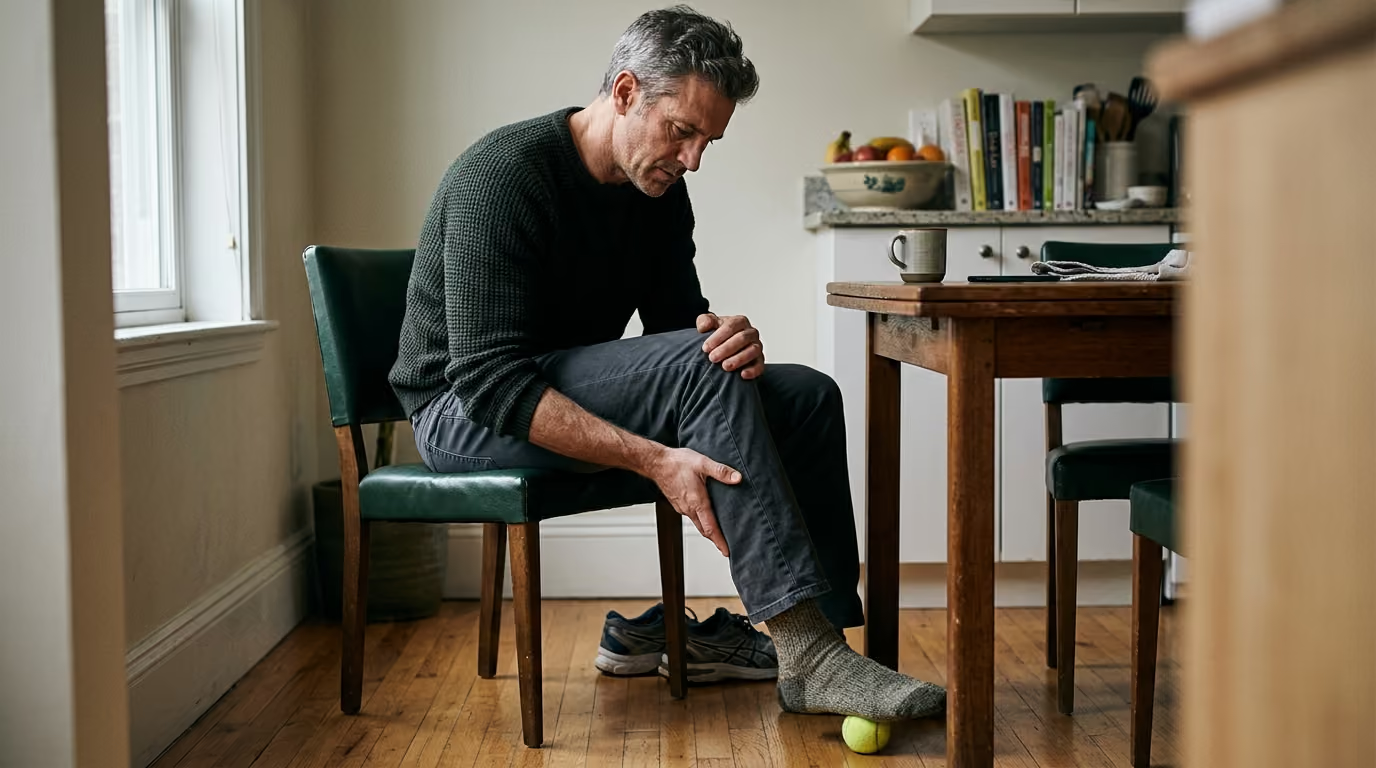

Rest is rarely a one-size-fits-all solution, so matching active, passive, and restorative habits to your specific daily strain delivers the best functional relief.





Recovery is neither a single universal action nor a passive state of total stillness. It is a dynamic process of closing the gap between current demands and your available physical, cognitive, emotional, and social capacity. It is not an optimization contest, a set of mandatory protocols, or a strict checklist to execute.
Understanding rest requires looking at what your nervous system and tissues need at any given moment. This guide examines the distinct roles of passive rest, gentle movement, and restorative leisure across different physiological and psychological states.
Scientific research shows that no single recovery method works best across all situations. The evidence supporting exercise recovery methods is mixed, nuanced, and highly context-dependent.
In exercise physiology, active recovery does not always outperform passive stillness. A systematic review on high-intensity interval exercise found that passive recovery produced better power, sprint speed, and distance covered than active recovery in several trials. Another systematic review examining repeated-sprint efforts found that passive recovery led to lower heart rates, reduced oxygen consumption, and less performance decline during running protocols compared to active recovery. When athletes rested completely between intense efforts, their bodies frequently maintained output better than when they kept moving.
At the same time, long-term exercise adaptations tell a different story. A systematic review of long-term interval training showed that both active and passive recovery regimes improve overall fitness and physiological markers. The specific mode of recovery between training intervals did not determine the ultimate long-term training adaptations.
When researchers evaluate post-exercise interventions across a broader window, the findings remain varied. Systematic reviews of active recovery protocols note small improvements in subjective muscle soreness, joint flexibility, and temporary inflammation markers. Yet evidence for clear, objective performance gains following post-exercise active recovery remains weak and inconsistent.
In psychological research, recovery is recognized as an active restoration of internal resources rather than mere physical inactivity. Observational and longitudinal studies demonstrate that leisure activities support well-being when they provide specific psychological experiences. These experiences include psychological detachment, relaxation, a sense of control, personal mastery, meaning, and social affiliation. Complete physical stillness while continuing to worry about work demands does not facilitate true psychological recovery.
Treating all rest as identical leads to chronic mismatches between daily fatigue and daily recovery habits. When you apply the wrong recovery strategy to a specific kind
of strain, fatigue accumulates across physical and psychological domains.
Physical exertion, emotional exhaustion, sensory overload, and cognitive depletion require different restorative inputs. If you sit on a sofa while ruminating over work emails, your muscles are motionless, but your cognitive and autonomic systems remain highly aroused. Conversely, walking through a quiet park demands physical energy while effectively lowering mental strain and sensory overload.
Recognizing these distinctions helps prevent recovery from becoming another demanding project. Adults navigating work, family, and physical changes after age 35 frequently turn rest into a rigid chore. They track metrics, force themselves through recovery workouts, and feel guilty when they cannot follow rigid wellness routines.
When recovery becomes another performance target, it introduces new stressors instead of removing existing loads. Understanding how different activities affect the body allows you to select restorative practices based on immediate needs. This approach protects your energy, supports your sleep timing, and prevents the buildup of unaddressed daytime fatigue.
Understanding the distinct categories of recovery allows you to choose actions that directly match your current strain. Each category serves a distinct biological and psychological function.
Passive rest involves a deliberate cessation or significant reduction of physical and mental demands. It is characterized by stillness, minimal sensory input, and the absence of task-oriented performance.
Examples of passive rest include:
Passive rest is primary when physical, metabolic, or systemic resources are exhausted. When your body is recovering from severe sleep loss, viral illness, or intense muscular strain, adding any secondary task increases physiological load. In these scenarios, doing nothing is a functional, deliberate choice.
Active recovery involves low-intensity, non-strenuous movement performed with the intention of promoting tissue comfort, mobility, circulation, and physical easing.
Typical forms of active recovery include:
Active recovery is not a disguised training session. It should not require high motivation, competitive effort, heavy sweating, or pain tolerance. Its primary objective is to leave the body feeling looser, more comfortable, and less stiff than when the movement began.
Restorative leisure encompasses chosen, intrinsically motivated activities that replenish cognitive, emotional, and social resources. These activities provide satisfaction, enjoyment, or personal meaning without external pressure to produce a measurable outcome.
Restorative leisure often includes:
Restorative leisure satisfies core psychological needs that physical inactivity alone cannot address. It allows the mind to disengage from professional identity and daily maintenance tasks. This process rebuilds mental energy through personal agency and genuine interest.
The success of any recovery practice depends on individual context, current physiological load, timing, and psychological state. An activity that restores one person may deplete another.
The specific nature of the preceding stressor dictates what form of restoration is required. If the primary load is physical exhaustion from heavy manual labor, passive rest and foundational sleep take precedence over additional movement.
If the primary strain is eight hours of sedentary screen work, the body is not physically exhausted, but the brain is cognitively saturated. In that situation, lying down while looking at a smartphone maintains mental stimulation without resolving physical stiffness. A brief walk or an absorbing hobby provides a much better match for cognitive strain combined with physical stillness.
The optimal recovery mode shifts depending on how soon you must perform again. When you face an immediate physical demand within minutes, evidence supports passive recovery to minimize oxygen demand and metabolic strain. Complete rest between short, explosive efforts protects output far better than continuous low-level movement.
When the next major demand is several days away, the choice between active and passive recovery becomes less critical. Research shows that long-term adaptations remain similar under either approach. In that setting, personal preference and joint comfort should guide the decision.
Recovery practices can sometimes trigger unwanted stress responses if they are poorly matched to your current nervous system state. Practices designed to force relaxation, such as rigid meditation or silent breath counts, can occasionally increase internal tension.
The National Center for Complementary and Integrative Health notes that while relaxation practices are generally safe, some individuals experience heightened anxiety or intrusive thoughts during forced stillness. If sitting quietly causes restlessness or internal agitation, active low-load movement or an absorbing, hands-on task often provides a gentler bridge toward mental calm.
Recovery can be organized into a five-tier taxonomy based on the primary function of each practice. This model helps you identify what your system requires without overcomplicating your routine.
The sole purpose of Tier 1 is to stop adding demands to an overloaded system. This tier is suited for acute physical exhaustion, systemic illness, profound sleep restriction, and moments of sensory overload.
Standard Tier 1 interventions include:
The central test for Tier 1 is simple: Does this choice remove immediate physical and cognitive friction? If an activity introduces any new performance expectations, it does not belong in this tier.
Tier 2 aims to restore tissue mobility and physical ease without producing cardiovascular or muscular fatigue. It is appropriate when your body feels stiff from sustained postures, prolonged sitting, or light muscular tension.
Standard Tier 2 interventions include:
A Tier 2 intervention is successful when you finish feeling physically lighter and less constricted. If you feel more tired or sore after the activity, the intensity was too high.
Tier 3 focuses on lowering mental arousal, clearing rumination, and helping the mind transition away from work demands. It addresses the lingering cognitive carryover that makes individuals feel when your brain will not switch off at the end of the day.
Standard Tier 3 interventions include:
Psychological detachment does not require physical stillness. It requires mental disengagement from the sources of your daily obligations.
Tier 4 replenishes emotional energy, personal identity, and motivation through intrinsically rewarding activities. This tier addresses emotional depletion, boredom, and feelings of routine monotony.
Psychological recovery frameworks highlight the DRAMMA model, which outlines six distinct recovery mechanisms:
Mastery experiences within Tier 4 involve effort, but they replenish energy rather than draining it. Learning an instrument, baking bread, or restoring an old piece of furniture engages cognitive capacity differently than professional work. This engagement restores agency and personal satisfaction.
Tier 5 restores a sense of belonging, interpersonal safety, and emotional support. It is best suited for individuals experiencing feelings of isolation, emotional strain, or excessive self-reliance.
Standard Tier 5 interventions include:
Social interactions are only restorative when they do not require impression management or emotional performance. If a social engagement feels obligatory, draining, or competitive, it acts as a stressor rather than a recovery practice.
Selecting the most effective recovery approach requires evaluating your primary strain and matching it with an appropriate intervention.
Use these pairings as a starting reference to match your current state with an effective recovery response:
To confirm whether a chosen activity is truly restorative, evaluate your physical and mental response using four simple questions:
A well-matched recovery practice leaves you feeling stable, comfortable, and unburdened. If an activity leads to escalating soreness, guilt over missed targets, or sleep disturbances, it is functioning as an added stressor. In that case, reclassify it as training or work and choose a gentler alternative.
No active recovery routine or leisure pursuit can compensate for chronic sleep loss. Sleep remains the biological cornerstone of all physiological and neural restoration.
Data from the Centers for Disease Control and Prevention indicates that more than one in three adults in the United States routinely sleep fewer than seven hours per night. This chronic shortfall is linked in population data to elevated risks for cardiovascular disease, metabolic dysfunction, and mood disturbances.
When you notice persistent fatigue, focus first on protecting your sleep window. Minimize late-evening screen light and allow adequate time for natural rest before adding complex daytime recovery habits. You can learn more about how everyday rest shapes function across our sleep and nervous system resources.
While exercise and psychological sciences have advanced, significant gaps remain in recovery research. Many popular recovery modalities rely on small studies, inconsistent definitions, or commercial marketing rather than robust clinical trials.
Much of the literature comparing active and passive recovery relies on small sample sizes of trained male athletes. These protocols often use laboratory-based exercise bouts that do not mirror the varied physical demands of daily adult life.
Furthermore, studies frequently measure different endpoints, making broad comparisons difficult. One study might measure blood lactate clearance, another measures subjective muscle soreness, and a third measures maximal isometric strength. A modality like light cycling or massage may temporarily reduce perceived soreness without accelerating the actual recovery of muscular strength. Reduced pain should not be mistaken for complete structural tissue repair.
Commercial recovery technologies, such as pneumatic compression boots, percussive massage guns, and localized cryotherapy, frequently market themselves as essential tools for daily wellness. Narrative reviews note that while these tools are generally safe and may feel pleasant, high-quality evidence demonstrating superior long-term performance or health outcomes compared to simple rest remains limited.
Psychological models like DRAMMA provide useful conceptual lenses, but individual responses to leisure vary widely. An activity that offers mastery and relaxation to one individual might cause frustration or pressure for someone else.
Much of the data on work detachment and leisure satisfaction comes from self-reported surveys. These surveys establish correlations between meaningful leisure and daily well-being, but they do not prove that a single leisure habit will resolve chronic workplace burnout or systemic fatigue. Structural work demands, financial strain, and caregiving responsibilities place hard boundaries on how much recovery a person can achieve independently.
Everyday fatigue that responds predictably to rest, light movement, sound sleep, and weekend breaks is a normal part of human physiology. However, when exhaustion remains constant regardless of rest, it ceases to be a simple recovery issue.
You should consider consulting a qualified healthcare professional if you experience:
These symptoms may point to underlying medical or psychological conditions, such as endocrine imbalances, nutritional deficiencies, sleep disorders, or clinical depression. Attempting to manage severe or chronic symptoms solely through self-directed recovery habits can delay necessary medical evaluation and effective treatment.
No. Active recovery can temporarily ease muscle stiffness by increasing local blood flow and joint mobility. However, systematic reviews show that it does not consistently speed up the structural repair of muscle fibers or restore peak strength faster than complete rest. If you are systemically exhausted, passive rest is often the more restorative choice.
It depends on how it makes you feel during and afterward. Passive viewing can provide genuine relaxation and mental detachment if it is chosen intentionally for enjoyment. If viewing becomes mindless, leaves you feeling guilty, keeps you up past your intended bedtime, or exposes you to overstimulating content, it ceases to be restorative.
Guilt during rest often arises when productivity is tied directly to self-worth. If stillness triggers anxiety, consider starting with gentle Tier 2 movement or an engaging Tier 4 hobby rather than forcing silent immobility. Gradually expanding your tolerance for quiet downtime helps train your nervous system to view rest as necessary maintenance rather than lost time.
A recovery session is too intense if you finish feeling more drained, sore, or physically depleted than when you started. Active recovery should feel effortless, require no mental grit to complete, and leave you with substantial energy in reserve. If your heart rate rises significantly or your muscles burn, you have crossed from recovery into active training.
Midday dips in alertness are a natural expression of human circadian physiology rather than a failure of recovery habits. Taking a quiet break, walking outdoors in natural daylight, or resting passively for twenty minutes can help you navigate these daily energy shifts without requiring high caffeine intake or strenuous exercise.
The most effective recovery practice is the one that directly addresses the specific strain you carry today without introducing new demands. By treating rest as a flexible menu rather than a rigid performance target, you create the physical and mental space necessary for your baseline capacity to return naturally.
Stay connected for research and practical guidance on sleep, stress, circadian rhythm and recovery. Clear ideas for adults 35+ who want better rest, steadier energy and more resilient days.



Explore practical guidance on sleep, stress and recovery without chasing every new hack, device or promise.
explore the blog