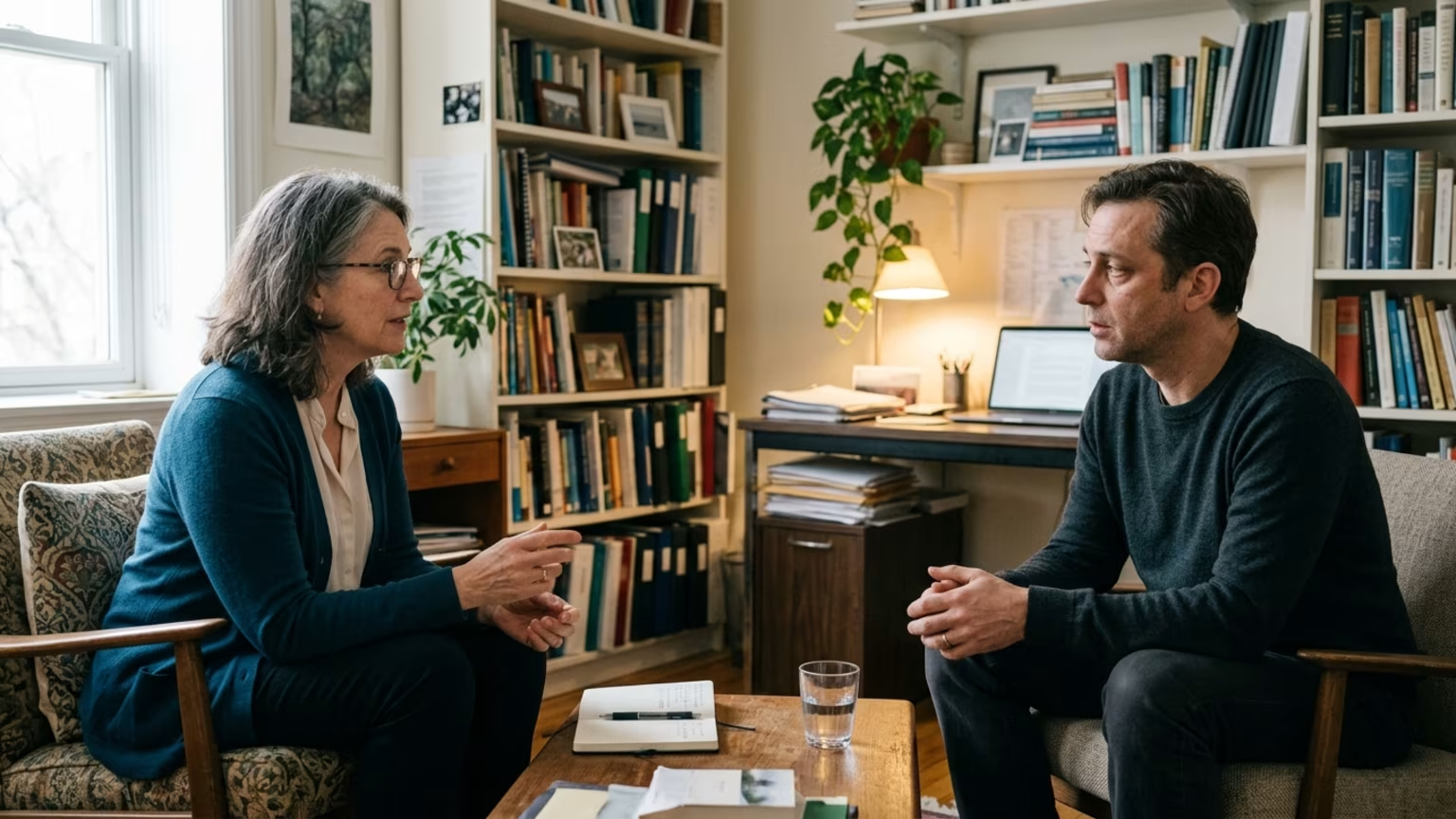

A psychiatrist explains stress and work-related burnout, with practical suggestions for midlife recovery and guidance on when to seek assessment.





On October 10, 2026, News9Live published an interview with Dr Paramjeet Singh about the difference between stress and burnout for World Mental Health Day. Singh is a consultant psychiatrist at PSRI Hospital in New Delhi.
Singh's central distinction concerns both the source of pressure and what happens when that pressure changes. Stress may ease when a demanding situation becomes less demanding. Burnout, in his explanation, involves prolonged workplace stress alongside exhaustion, detachment from work and reduced professional effectiveness.
That distinction matters when tiredness becomes difficult to interpret. A difficult work period and an ongoing sense of disconnection from the job deserve more precise descriptions than a single label. Singh's explanation puts the circumstances around the exhaustion at the center of the conversation.
Singh describes stress as a response to pressures such as deadlines or financial concerns. Family responsibilities and a demanding period at work can also be sources of strain. When the immediate challenge resolves or the pressure eases, he says a person may begin to feel better and motivation may return.
The useful point is the possibility of change. Feeling under pressure during a difficult period does not automatically mean someone has developed burnout. Equally, continuing to feel depleted deserves attention rather than an assumption that the pressure must still be ordinary.
For a midlife adult balancing employment with family responsibilities, this offers a practical way to describe the experience: what is demanding right now, and does feeling better track any change in that demand?
In Singh's account, burnout involves chronic workplace stress that has not been successfully managed. He identifies three dimensions:
The combination is more specific than being tired after a difficult day. It includes the person's relationship with work and their sense of effectiveness there. That is why the workplace context belongs in the explanation rather than being treated as a minor detail.
This also leaves room to describe non-work strain accurately. Singh names family responsibilities and financial concerns as possible sources of stress. Those pressures deserve attention in their own right rather than automatically being placed under a work-specific label.
For related context, Relaxopia's coverage of different sources of workplace pressure considers work demands beyond a simple count of tasks.
Singh cautions that disturbed sleep and difficulty concentrating can overlap with other mental-health or medical conditions. His examples also include headaches, irritability and reduced motivation. Depression, anxiety and sleep disorders are among the possible overlapping explanations he names.
His distinction should therefore not become a home diagnostic checklist. Nor does the interview establish a fixed duration that separates stress from burnout. The idea is not that stress always passes quickly or that burnout is permanent.
There is also a clear evidence boundary around the advice. News9Live's article is an expert interview rather than a new clinical study, and it provides no prevalence estimates or measured treatment outcomes. Its suggestions about breaks and daily habits are practical guidance, not trial-proven cures.
Taken together, these limits point toward a useful approach: describe the pattern clearly and use it to guide the next conversation. The goal is not to select the most convincing label before asking for help.
For adults in midlife, a manageable daily habit is to notice whether rest or an easing of a specific pressure changes how they feel. This is consistent with Singh's explanation and does not require a demanding tracking routine. It keeps attention on both daily demands and the experience of recovery.
Singh's other suggestions include meaningful breaks and clearer workload boundaries. He also recommends regular sleep, physical activity and discussing unrealistic workloads with supervisors where possible. The practical value lies in keeping these suggestions connected to the source of strain.
A brief daily reflection can begin with the pressure itself. Is the main concern a work deadline, a financial issue or a family responsibility? Has anything about that demand changed?
The next observation is whether energy or motivation changes alongside it. Singh says people experiencing stress may start to feel better when its source eases. Paying attention to that relationship gives a more useful account of the situation than simply describing every difficult day as burnout.
There is no requirement to turn this into a score. An ordinary description of what has been demanding and what has changed can keep the focus on lived experience. Relaxopia's discussion of persistent pressure and everyday rest offers related reading on this wider recovery question.
Meaningful breaks are among Singh's suggestions for work-related stress. In this context, the word meaningful matters more than creating an elaborate recovery routine. The suggestion is a place to start, not another standard someone must meet perfectly.
A break also belongs alongside the workload discussion rather than replacing it. Singh includes both in his advice. That pairing keeps the response from narrowing to what a tired person can do outside work while leaving unrealistic demands out of the conversation.
For someone already carrying a heavy mental load, the practical question is straightforward: is the response addressing the demand itself, or only asking the person to recover from it repeatedly?
Singh recommends clearer workload boundaries and a conversation with a supervisor about unrealistic demands where possible. This is a significant part of his guidance because it extends beyond individual habits. Work-related strain calls for attention to work-related conditions too.
The phrase where possible also matters. His advice leaves room for differences in how much influence someone has over their workload. A useful boundary discussion is not evidence that every employee can change the conditions they face.
For readers whose work concerns continue into personal time, the topic connects with the strain of remaining available after hours. The relevant focus remains the demands of the role rather than a judgment about someone's commitment to recovery.
Regular sleep and physical activity are also part of Singh's practical guidance. They belong in the discussion of daily recovery, but they should sit beside attention to workload rather than carry the whole response.
For an adult balancing work with caregiving or family responsibilities, that framing is useful. It avoids turning the interview into a rigid schedule or a performance target. The aim is to identify manageable adjustments that fit ordinary life while keeping the source of pressure visible.
The interview offers no reason to make recovery more complicated. Its suggestions are familiar daily considerations, not a requirement to adopt new technology or build an intensive routine.
Singh recommends professional assessment for persistent exhaustion or low mood. Loss of interest, anxiety and ongoing sleep problems are also reasons he gives for seeking help. Symptoms that interfere with daily functioning deserve assessment too.
The practical implication is not to wait until the terminology feels settled. Someone can describe what has changed in sleep, mood or functioning without deciding in advance that burnout is the explanation. Questions about the cause and appropriate care belong with a qualified professional.
The longer-term value of Singh's explanation is a more precise recovery conversation. It separates a response to pressure from a work-related pattern that also involves detachment and reduced effectiveness. It also keeps daily habits and workplace demands in the same discussion.
For adults in midlife, that offers a direction without turning rest into another project. Attention can go toward the demands that may need changing and the support that may be appropriate.
Could a clearer distinction between ongoing stress and occupational burnout shift long-term midlife recovery toward more realistic demands and timely support, rather than simply asking depleted people to become better at resting?
Confusing persistent pressure with occupational burnout can make recovery advice harder to interpret, so Relaxopia separates supported findings from broader claims. For adults 35+ whose mental load follows them into downtime, its coverage connects stress with sleep and fatigue to help readers understand everyday rest without turning it into another performance target.
Stay connected for research-led guidance on sleep quality, stress, circadian rhythm, recovery, fatigue and everyday energy. Clear ideas for adults 35+ who want to sleep better, recover more fully and feel more capable through the day.





Explore practical guidance on sleep, stress and recovery without chasing every new hack, device or promise.
explore the blog