

USA Today reported a survey showing high performers prioritize consistent sleep schedules over longer hours in bed, highlighting practical habits over technology.





On October 1, 2026, USA Today reported on an Eachnight-commissioned survey of 795 employed U.S. adults that compared the sleep habits of self-described high performers with the general workforce.
The central observation from the survey is that consistency matters more than raw hours. The survey found that 60% of respondents classified as high performers reported getting at least seven hours of sleep nightly. This result was nearly identical to the general workforce. In that broader group, 58% of respondents reported getting at least seven hours of sleep. The gap in reported sleep duration between the two groups was remarkably small.
The two groups viewed their rest differently, even with similar time spent in bed. USA Today reported that 60% of the high-performer group rated their sleep as good or excellent. Meanwhile, only 43% of the general workforce described their sleep in those terms. The high performers reported more consistent sleep schedules than the general workforce. The article cautions that these findings are self-reported and show only associations. The data does not establish that schedule consistency caused their better self-rated sleep.
The data also highlights shared baseline behaviors regarding bedtime. Both groups shared a median bedtime of 11 p.m. However, the median wake time was 6 a.m. for high performers and 6:45 a.m. for the general workforce. This suggests that the high performers might maintain a slightly tighter window of rest. The survey does not prove that a specific wake time directly produces better performance or better rest.
The survey also highlighted differences in consumer behavior and bedroom technology. According to the report, 34% of high performers said they spent at least $500 on sleep improvements. This compares with 23% of the general workforce who reported similar spending. Additionally, 31% of the high performers reported keeping a smart speaker in the bedroom. Only 13% of the general workforce reported having one in their sleeping space.
The survey was commissioned by a company that sells sleep-related products. Furthermore, the USA Today article includes shopping content. Readers should treat these findings and product suggestions as attributed survey results. They are not neutral proof that particular purchases improve sleep. Spending money on sleep improvements does not guarantee better rest.
Dr. Jordan Burns, a licensed chiropractor and sleep health expert at Eachnight, serves as the quoted expert for the article. Burns recommends a bedroom temperature of 65°F to 68°F. He notes that an overly warm room can make it harder to fall or stay asleep. Burns also suggests using breathable bedding and sleepwear if the room feels too warm. This temperature range is practitioner advice reported in the article, rather than an independently demonstrated ideal for every single sleeper.
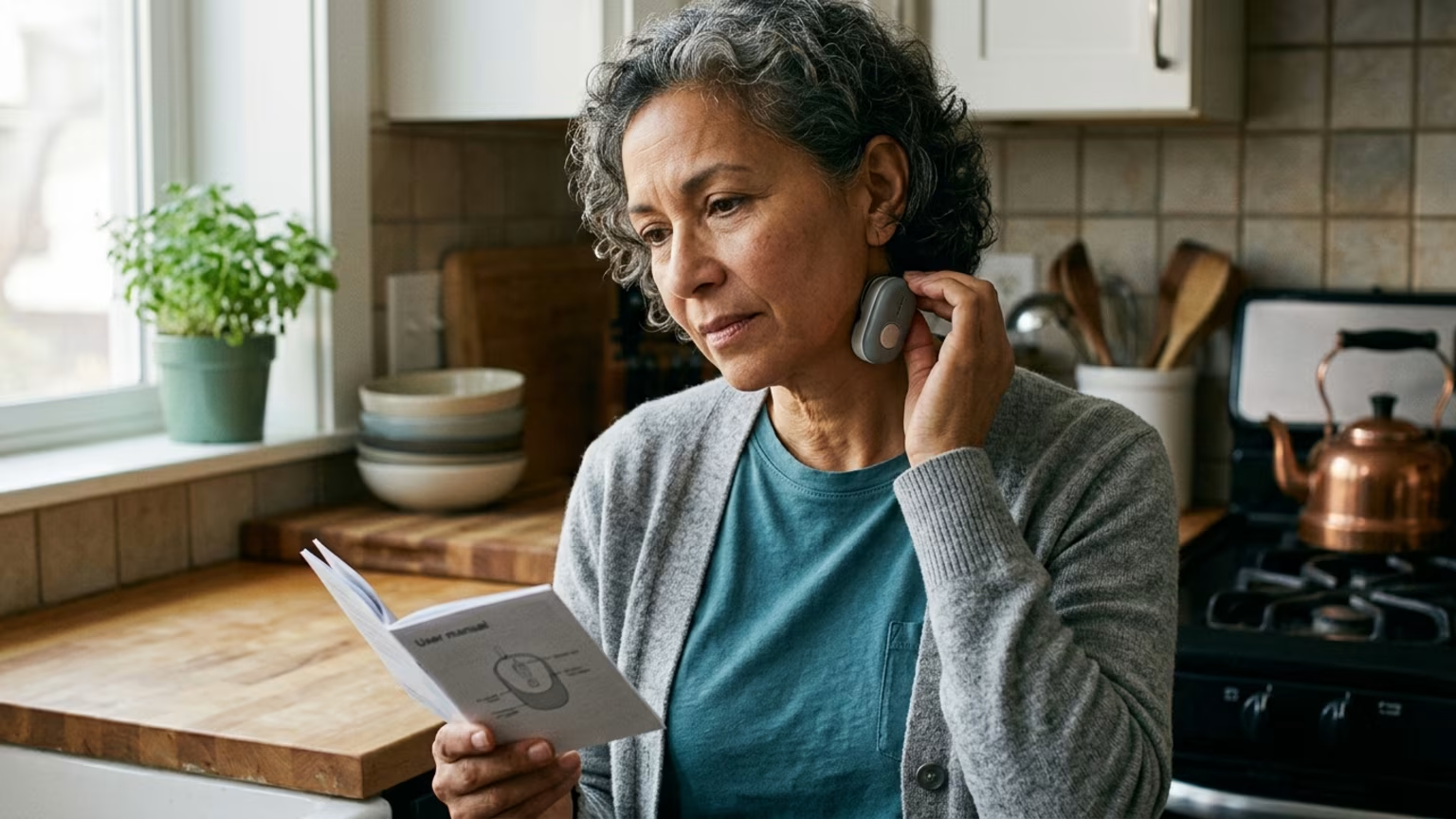
Burns also addressed the growing use of wearable technology in the bedroom. He advises people to treat a tracker score as a general guide rather than a score to optimize. For individuals who become anxious about their results, Burns suggests taking a break from the device. Users can also try checking their data weekly rather than daily. This measured approach helps users maintain perspective when reviewing their personal metrics.
This caution aligns with broader clinical observations about sleep technology. The BBC reported that sleep specialists have seen tracker-related anxiety in some patients. These specialists cautioned that consumer sleep scores are not recognized clinical measures. Treating a consumer device as a medical authority can create unnecessary stress.
In a related observation, the University of Utah Health discusses “orthosomnia.” Researchers introduced this term for a preoccupation with sleeping correctly. This fixation can worsen sleep-related anxiety over time. The university page frames the concern as a perfectionistic pattern, not an inevitable effect of using a tracker. Together, these sources support a measured point. Sleep technology may be useful to some people as a broad self-observation tool, but the reported score should not be mistaken for a clinical diagnosis.
For an adult balancing professional demands and family life, the practical takeaway is to focus on routine regularity and physical comfort. Treating schedule regularity as a low-complexity habit is a reasonable starting point that requires no financial investment. The survey shows that high performers described more consistent schedules, even if their total sleep time matched the general workforce. You can experiment with consistency by setting a stable morning alarm. Building sustainable sleep habits over the long term often yields better results than attempting sudden changes to your routine.
Establishing a dependable evening wind-down routine signals to your body that the workday is complete. You do not need a complicated ritual to achieve this transition. Simple actions like dimming overhead lights or reading a book can serve as effective cues. The objective is to lower your heart rate and reduce cognitive stimulation before getting into bed.
If your bedroom feels uncomfortably warm, try adjusting the environment to support natural cooling. You might test Burns’ recommendation of 65°F to 68°F, or simply switch to lighter bedding. The goal is to find what feels restful to you, rather than assuming a precise temperature target is mandatory. Modifying your sleep environment and technology setup can address physical discomfort without adding mental strain. Small adjustments often make a noticeable difference in how quickly you fall asleep.
If you use a sleep tracker, pay attention to how the daily data makes you feel. If a tracker’s score conflicts with your own perception of your rest, consider checking it less often. Pausing the tracker entirely is a valid choice if the daily grade causes tension. This advice is consistent with Burns’ recommendations and the BBC’s reporting on tracker-related anxiety. Persistent poor sleep or substantial daytime effects warrant attention beyond consumer-device scores. Avoid self-diagnosing from wearable data, as these devices do not replace professional medical evaluation.
When dealing with sleep metrics, remember that human biology is not a machine that performs identically every day. Variations in your sleep architecture are normal responses to daily stress, physical exertion, and environmental changes. A wearable device might flag a night of lighter sleep as a low score. Your body might simply be processing a demanding week. Learning to interpret your own physical tiredness is more valuable than checking a digital dashboard.
Avoid spending heavily on gadgets based purely on survey trends. The data shows that the high-performer group reported more sleep-related spending. It does not show that spending money actually improved their sleep. True recovery relies on consistent behaviors and a calm mental state. A $500 bedroom upgrade cannot replace the biological benefits of a regular schedule. By focusing on simple adjustments, you can work on protecting sleep from mental overload without turning rest into another demanding task. Taking the pressure off your sleep routine might be the most effective change you can make. When you learn to recover from a poor night's rest calmly, you build true biological resilience.
As wearable devices provide increasingly detailed daily metrics, how will adults learn to separate useful biological feedback from the perfectionistic pattern of chasing an ideal sleep score?
Moving past an obsession with sleep scores requires building trust in your own biological signals, and Relaxopia provides the clinical context to guide that transition safely. By analyzing the actual data behind these routines, Relaxopia helps you address conflicting advice about caffeine, exercise, naps, routines and sleep environment so you can rest without pressure.
Stay connected for research-led guidance on sleep quality, stress, circadian rhythm, recovery, fatigue and everyday energy. Clear ideas for adults 35+ who want to sleep better, recover more fully and feel more capable through the day.




Explore practical guidance on sleep, stress and recovery without chasing every new hack, device or promise.
explore the blog