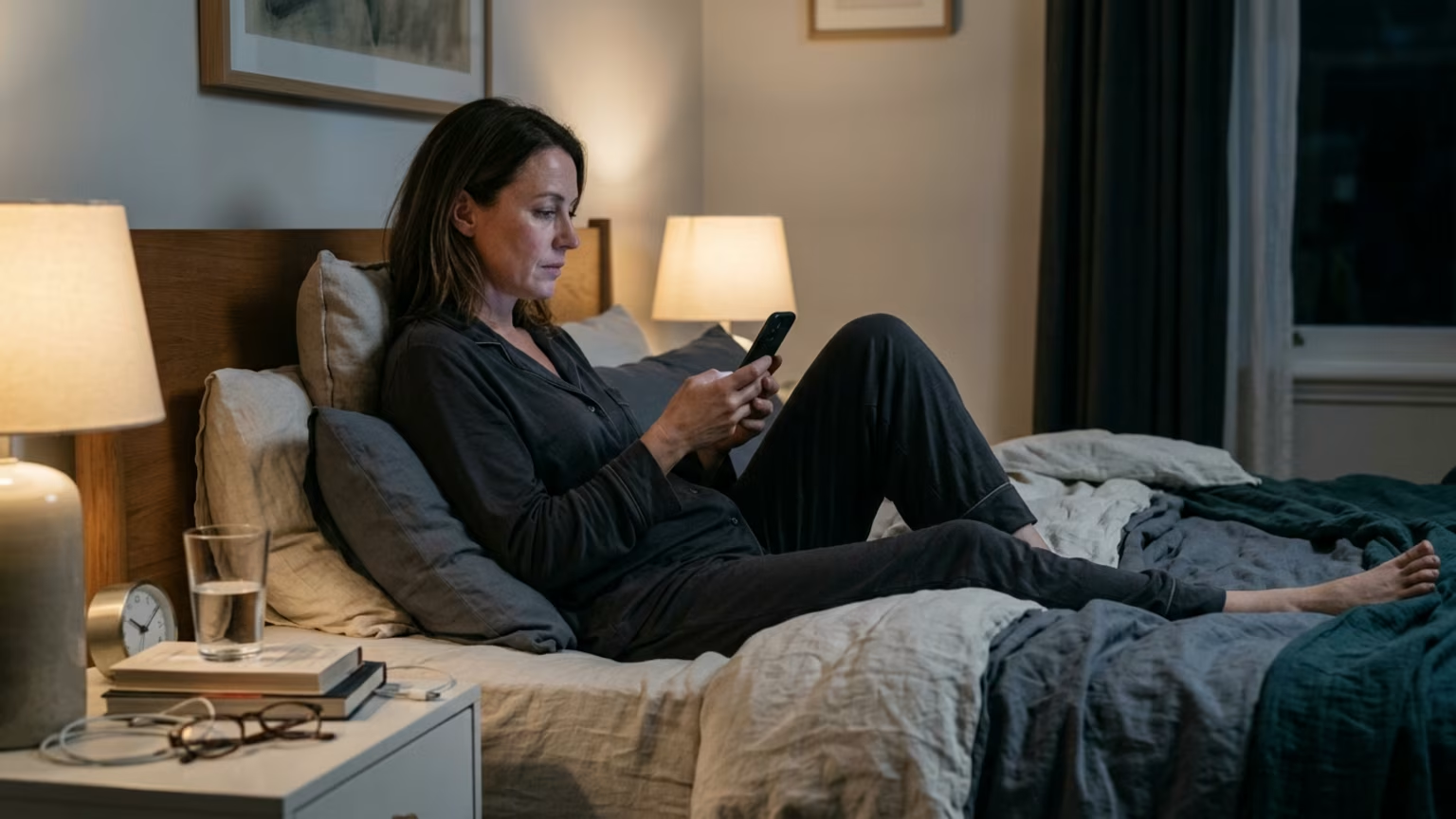

A recent health report links late-night scrolling with light, mental engagement and bedtime delay. Review the evidence and practical routine adjustments.





On October 8, 2026, The Week published health guidance by Dr Rajmadhangi D on how late-night scrolling may interfere with sleep through screen light, mental stimulation and postponed bedtime. The author is identified as an internal medicine specialist at Apollo Spectra Hospital in Chennai.
The article's central message is that nighttime phone use can affect a sleep routine in more than one way. The screen supplies light. The content may hold attention or keep emotions active. Continuing to scroll can also move bedtime later.
These are distinct pressures on the transition into sleep. That distinction gives readers a more useful question than whether phones are simply good or bad for rest: which part of the habit is getting in the way?
Dr Rajmadhangi D writes that screen light may inhibit or delay melatonin release. This is the part of the article concerned with the relationship between evening light exposure and sleep timing.
Within that explanation, light is one possible contributor rather than the entire story. An evening habit also involves what someone is reading and how long they continue. Keeping those factors separate helps prevent a discussion about screen settings from replacing a discussion about the bedtime routine itself.
The Week article also describes how emotionally intense or continuously changing content can sustain attention and arousal. This concerns the experience of scrolling rather than the light coming from the device.
For a reader assessing an evening routine, the practical distinction is between stopping an activity and feeling ready to leave it behind. If the content still feels mentally demanding after the phone is put down, that is a useful observation to record. It keeps the focus on the actual experience rather than blaming the device alone.
The third pathway is bedtime delay. The article links extended scrolling with later bedtimes and less opportunity to sleep. It describes fatigue or reduced next-day alertness as possible consequences.
This part of the guidance is especially concrete: did phone use continue beyond the point when the evening was meant to end? That question is separate from whether the content felt upsetting or the screen seemed bright. It directs attention toward the time available for sleep rather than only the type of technology being used.
Separate reporting on a controlled e-reader-versus-print comparison describes differences in sleep onset and melatonin. It also reports differences in circadian timing and next-morning alertness. That comparison provides research context for the article's discussion of evening device light.
The boundaries of the evidence belong together:
With those limits stated, the report still offers a straightforward basis for reviewing a routine: look at light, engagement and bedtime separately. Relaxopia's coverage of light exposure and sleep timing provides related context for the first part of that discussion.
For an adult aged 35 to 65, the useful implication is a manageable adjustment rather than a complete technology overhaul. The Week recommends a social-media cutoff, keeping devices out of the bedroom and substituting activities that require little engagement.
Those suggestions can be treated as habits to try. The practical task is to choose an approach that fits actual responsibilities and then observe bedtime, sleep continuity and next-day alertness. There is no need to turn every evening into a detailed recovery project.
A realistic cutoff needs to describe what is ending. In the article, the recommendation concerns social media. That is more specific than a broad rule against any phone use after a certain point in the evening.
A workable version might mark the end of browsing feeds while leaving necessary communication available. The distinction matters when a phone is also used for caregiving, work or safety needs. It keeps the boundary focused on optional scrolling rather than treating every use of the device as equivalent.
The daily adjustment is to decide where scrolling belongs in the evening before it starts extending bedtime. If the boundary is regularly difficult to follow, review whether it fits the routine. A demanding rule is not automatically a more useful one.
The Week recommends keeping devices out of the bedroom. The research packet's practical interpretation is to charge the phone elsewhere when that is feasible.
For someone who needs the device available overnight, the suggested adaptation is different: silence optional alerts and keep the phone accessible but away from the bed. This preserves access while setting a boundary around browsing. It does not require ignoring caregiving or safety responsibilities.
The choice is therefore not limited to unrestricted bedside use or removing the phone completely. The relevant question is which arrangement separates necessary availability from optional scrolling. That makes the adjustment more realistic for adults whose evenings and nights include responsibilities that cannot simply be switched off.
The article recommends substituting an activity that requires little engagement. That gives the cutoff a next step rather than leaving the evening with an empty space that is easy to fill with more browsing.
Printed reading is one possible option if the material itself does not feel mentally demanding. The useful feature here is the lower level of engagement, not a requirement to complete a particular activity. A replacement does not need to become another task with a target or score.
When choosing it, keep the article's distinction in view. Removing a screen addresses device use, while choosing less demanding content addresses the attention side of the routine. Those are related adjustments with different purposes.
In an NPR report published on October 7, 2026, a guest advises avoiding scrolling before bed, upon waking and during nighttime awakenings.
This advice brings another part of the routine into view. A boundary can address both the first transition into sleep and what happens if someone wakes later. It can also distinguish checking a necessary message from opening a feed and continuing to browse.
For adults with overnight responsibilities, that distinction keeps the plan practical. Necessary phone access can remain available while optional scrolling stays outside the intended sleep period. The focus is on the browsing habit rather than on treating any overnight contact as a mistake.
The Week also recommends consistent sleep and wake times. That connects the scrolling advice to the wider routine rather than making the phone the only factor worth reviewing.
A screen boundary is easier to define when there is a clear idea of when the evening is meant to end. Consistency can be the aim without turning each night into a test of perfect compliance. Relaxopia's related guidance on making routines workable rather than rigid addresses that practical balance.
The adjustment should remain proportionate: review where scrolling fits within the schedule instead of adding an elaborate series of rules around it.
The practical experiment described in the research packet is to track whether the adjustment affects bedtime, sleep continuity or next-day alertness. A brief note can keep attention on those outcomes without requiring a new device or a sleep score.
Useful questions include:
The first question checks whether the habit changed. The others address the outcomes that matter for everyday rest. Keeping them separate avoids treating successful phone avoidance as the only measure of a useful adjustment.
If sleep difficulty or daytime fatigue remains a concern, a qualified clinician can help assess the personal situation. A phone boundary should not become a reason to overlook continuing problems or blame yourself for them.
The useful contribution of this report is its separation of light exposure, mental engagement and delayed bedtime. That framing keeps the discussion closer to what happens during an evening rather than reducing every screen habit to a single explanation.
For adults balancing work and care, the practical priority is a routine that protects time for rest while allowing necessary availability. A cutoff and a change in phone location are possible parts of that routine. Their value should be judged through the everyday outcomes described above rather than through how strict the rules appear.
Future research could help clarify which kinds of evening phone use deserve different advice and how that advice fits midlife responsibilities. Could long-term approaches to midlife recovery become more useful by addressing light, attention and protected sleep time together rather than treating every evening screen habit as the same problem?
Treating late-night scrolling only as a screen-light problem can leave content and bedtime delay out of the discussion, a gap Relaxopia addresses through research-led coverage of everyday rest. For adults 35+ who are uncertain about circadian timing and evening routines, Relaxopia translates credible evidence into practical guidance that separates supported findings from broader advice without adding unnecessary complexity.
Stay connected for research-led guidance on sleep quality, stress, circadian rhythm, recovery, fatigue and everyday energy. Clear ideas for adults 35+ who want to sleep better, recover more fully and feel more capable through the day.





Explore practical guidance on sleep, stress and recovery without chasing every new hack, device or promise.
explore the blog