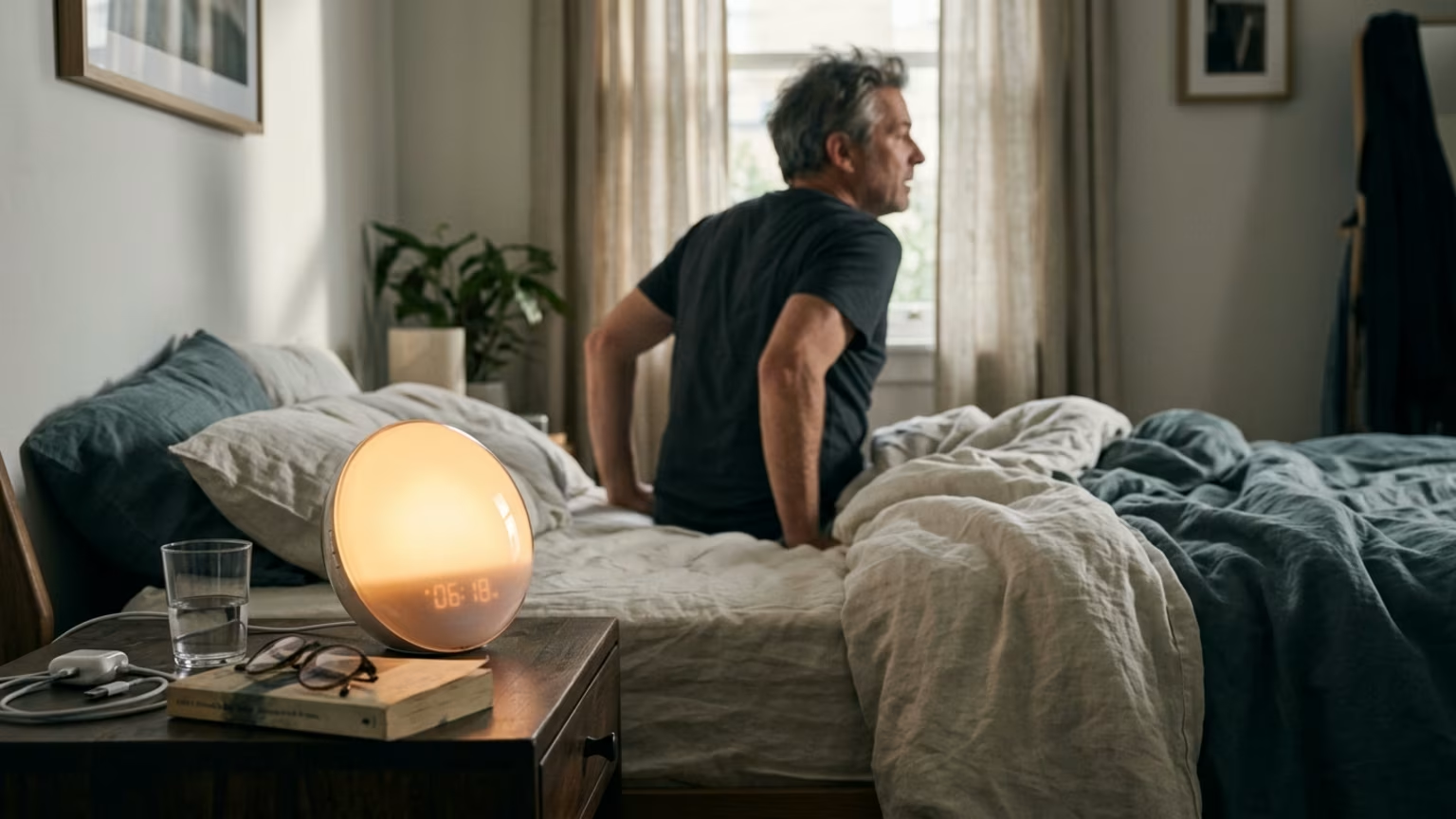

A closer look at the Hatch Sleep Clock’s sunrise alarm, evening routines and bedside sleep estimates, with practical guidance for adults 35+.





On September 30, 2026, The Independent published a hands-on review of the Hatch Sleep Clock, a sunrise alarm clock that estimates sleep from the nightstand. The review described evening light and audio routines alongside contactless tracking for people who prefer not to wear a device overnight.
The review’s central practical message is about routine support rather than collecting the most detailed sleep data. The clock combines a scheduled evening wind-down with sounds during sleep and a simulated sunrise alarm. Its bedside tracking adds estimates of what happened overnight without requiring a wearable.
That gives the product two distinct roles. One is providing cues for starting and ending the night. The other is offering information that a user might consult when looking for patterns in their routine. Those roles deserve separate attention when deciding whether the device fits a real need.
According to The Independent, the app displays estimated time in bed and time awake alongside core, REM and deep sleep categories. It does not provide a sleep score. The reviewer describes the tracking as a light-touch option rather than a tool for someone seeking extensive metrics.
For an adult who mainly wants a recognizable evening cue, the light and audio features may be the more relevant part of that combination. Someone whose priority is detailed tracking would be evaluating a different aspect of the same product. The useful starting question is which job matters most.
The Independent describes a scheduled wind-down that pairs calming light with audio. Sounds can continue during sleep. In the morning, the device offers a simulated sunrise alarm with an option from its sound library. These are distinct features arranged around the evening and wake-up routine.
The tracking happens from the nightstand. According to the review, the clock detects micro-movements and breathing patterns. Setup includes positioning the device according to Hatch’s instructions and answering app questions about matters such as bed size and whether the bed is shared.
The bedside format removes the need to wear a tracker overnight. It does not remove the app from the setup or feedback process. The review says that after seven nights, the app offers sleep-related actions. One example is a recommendation to stop using a phone at least an hour before bed.
That recommendation is part of the product experience described in the review. It is useful to distinguish the clock’s scheduled cues from the app’s suggested actions: one provides a routine feature while the other supplies advice based on the consumer tracking experience.
The Independent reviewer tested the clock for over a month. They reported that the wake-up light was bright enough to wake them and that the bedtime routine helped with accountability. They also found white noise useful for masking sirens outside their apartment. These are one person’s observations rather than evidence of the effects other users should expect.
Hatch says its tracking is 97% accurate, according to The Independent. The review does not provide the validation method or reference standard behind that claim. It also does not establish that the figure applies to the app’s sleep-stage estimates. The percentage therefore remains a manufacturer assertion rather than independent clinical validation presented in the review.
The reviewer’s app showed about 25 minutes awake on nights with a bedtime playlist versus about 35 minutes on other nights. That comparison comes from their app data rather than a controlled test. It cannot establish that the playlist caused less wakefulness or predict a typical user outcome.
The practical boundary is straightforward: treat the displayed stages and awake time as consumer estimates rather than a clinical verdict. The app’s suggested actions are not reported as clinically validated recommendations for an individual user. Personal decisions about persistent sleep problems belong with a qualified clinician rather than an app report.
Price comparisons need care because the Sleep Clock and Restore 3 are separate products. The Independent says the reviewed Sleep Clock costs $80 more than the Restore 3. It does not state the Sleep Clock’s exact price, so the comparison should remain a premium rather than an inferred total.
On its official Restore 3 page, Hatch lists that product at $169.99 with a 30-night bedside trial and a one-year warranty. Hatch describes the Restore 3 as a smart sleep clock intended to support gentle, phone-free routines. Those price and policy details belong to the Restore 3 rather than the separately reviewed Sleep Clock.
For a reader weighing the extra cost, the relevant decision is whether bedside tracking matters alongside the routine features. Wanting an evening cue is not the same as wanting estimates of sleep stages. Separating those preferences gives the price comparison a clearer purpose than treating a larger feature list as automatically more useful.
For an adult aged 35 to 65, a reasonable daily adjustment drawn from the review is to choose a recognizable cue for beginning the evening wind-down. That could mean using a scheduled light or audio routine if it makes the transition easier to follow. The focus is on a workable habit rather than a target in the app.
The reviewer’s account offers an example of this approach: the bedtime routine helped with accountability. Translating that observation into everyday life means asking whether a cue fits the evening you actually have. Work and caring responsibilities can be part of that decision without turning the routine into another performance standard.
A scheduled cue also raises a separate question about timing. Do you want help starting a routine or are you trying to decide when that routine belongs? For the latter question, Relaxopia’s discussion of finding a bedtime that fits your body clock provides related reading.
The review does not supply a personalized schedule. Its practical contribution is narrower: it shows how one person used light and audio as recurring cues. The daily habit worth evaluating is returning to a manageable routine rather than trying to reproduce the reviewer’s experience exactly.
If you try a bedside tracker, give the feedback a specific role. The research supports using it as a possible way to notice routine patterns while paying attention to how you feel and whether the routine is workable. That is a different task from making every morning’s estimate into a judgment about the night.
Useful questions can stay close to everyday experience:
These questions keep the evaluation centered on the product’s practical role. They do not require a particular sleep-stage result or an invented target for time awake. For related guidance, Relaxopia discusses keeping sleep tracking in proportion.
It is also reasonable to value only part of the device. A reader might be interested in the sunrise alarm but indifferent to the stage categories. Another might prefer the evening audio routine. Choosing which feedback deserves attention is part of deciding whether the technology fits daily life.
The clearest buying decision starts with a need rather than a tracking claim. The Independent’s review supplies several concrete features to assess: scheduled evening light and audio, sounds during sleep and a gradual morning alarm. The contactless estimates add another function to that package.
Ask which of those functions you would actually use. If your priority is avoiding a wearable overnight, the bedside format directly addresses that preference. If your priority is a cue for winding down, pay attention to the routine experience rather than letting the accuracy percentage lead the decision.
The bedroom itself can remain part of that thinking. A device is one possible addition to the setting in which a routine happens. Relaxopia’s guide to making the bedroom a clearer signal for rest offers a related perspective without making a purchase the starting point.
A useful next step for research would be to examine the routine features separately from the tracking features. That would help answer whether the value people report comes from the scheduled cues or from reviewing information afterward. Longer-term evidence could also examine how these tools fit into ordinary adult routines beyond an individual hands-on review.
For midlife recovery, the question is broader than whether a nightstand can produce another chart. Could future research clarify the long-term value of consistent bedside cues and show where consumer tracking belongs in approaches to everyday rest?
Deciding whether bedside light fits an evening routine comes before choosing a tracker, and Relaxopia brings research-led context to that decision. Its sleep and circadian coverage helps adults 35+ make sense of light exposure and sleep timing without turning daily rest into a complicated project.
Stay connected for research-led guidance on sleep quality, stress, circadian rhythm, recovery, fatigue and everyday energy. Clear ideas for adults 35+ who want to sleep better, recover more fully and feel more capable through the day.





Explore practical guidance on sleep, stress and recovery without chasing every new hack, device or promise.
explore the blog