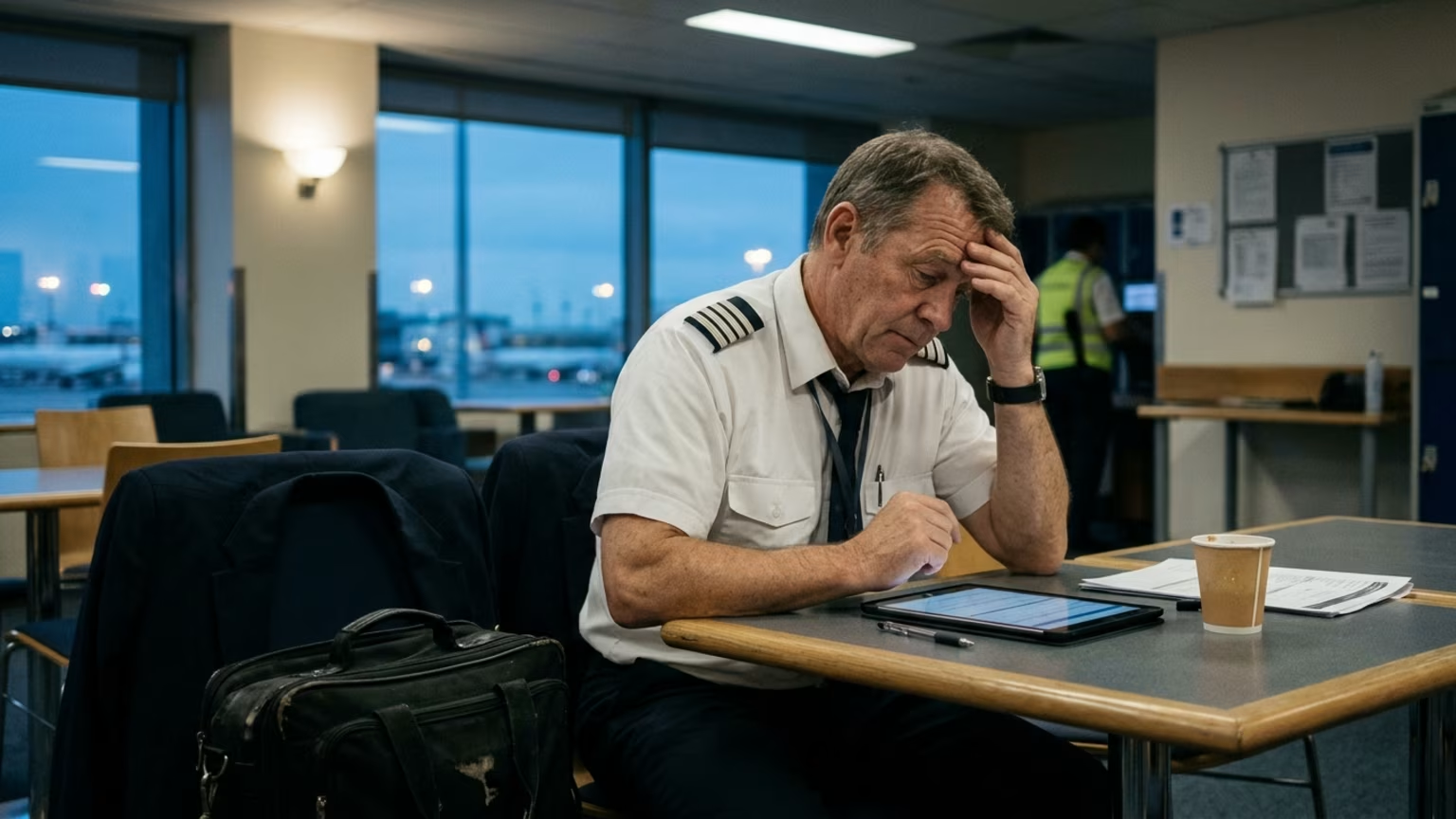

A European pilot fatigue survey raises questions about rest and reporting. Learn what the findings mean for everyday recovery without adding another target.





On October 27, 2026, The Portugal News reported findings from a fatigue survey commissioned by the European Cockpit Association (ECA) and conducted by aviation safety consultancy Baines Simmons. The survey drew 7,198 usable responses from pilots in 32 countries.
The central finding is that respondents described problems with both recovery between duties and speaking up about fatigue. The findings put workplace expectations alongside individual alertness in the discussion about managing tiredness.
According to The Portugal News, 38.8% of respondents said they usually or always lacked enough rest to prevent fatigue from building up between duties. That question concerned recovery across duties rather than a single difficult flight. Its wording matters because the concern was cumulative fatigue: arriving at another duty without feeling sufficiently restored from previous demands.
A separate finding concerned decisions about fitness to fly. According to PEOPLE’s coverage, 52% said they had flown at least once in the previous three months when they later felt they should have declared themselves unfit because of fatigue.
That retrospective judgment is different from simply reporting a tiring day. Respondents were looking back at an occasion when they believed fatigue should have changed their decision about working. Taken together, the findings raise a practical question: how much room did these pilots feel they had to acknowledge inadequate recovery before continuing with their duties?
For readers outside aviation, that question is more useful than treating the survey as a test of personal endurance. Completing a task and feeling adequately recovered for it are different judgments.
Additional reporting on the survey described substantial concern about the response to fatigue reports. It reported that 38.2% of respondents feared punishment or retaliation, while 46.9% feared a negative reaction from management.
Confidence in the reporting process was also low. The Irish Examiner reported that only 11.9% of respondents said they trusted their airline’s fatigue-reporting system.
These findings bring a second question into view. A workplace may have a reporting process, but do workers feel able to use it? The distinction matters when interpreting a survey that asks about both fatigue experiences and concerns about disclosure.
The recovery issue is therefore broader than whether someone recognizes tiredness. It also includes what that person expects will happen after acknowledging it. In this survey, concerns about management reactions and professional consequences formed part of the picture alongside reports of insufficient rest.
For an adult balancing work and other responsibilities, this is a useful change in perspective. Fatigue need not be discussed only as a private failure to manage a bedtime routine.
EASA told PEOPLE that it takes the findings seriously and is discussing them with ECA, national authorities and industry representatives. It described flight-time rules as a safety baseline. Its response also stressed the need for active fatigue-risk management through reporting and operational measures, supported by a culture where crew can raise concerns without fearing negative consequences.
The association’s position also focused on reporting protections. According to coverage of ECA’s response, ECA called for genuinely non-punitive fatigue reporting. It also called for commanders to be able to refuse duty extensions without fearing professional repercussions.
The distinction between a rule and a workable reporting system is central to these responses. A formal limit addresses one part of the working environment. The ability to raise a concern addresses another.
This is also why the story should not be reduced to advice for individual pilots to try harder at recovery. The institutional responses address how work is organized and how fatigue concerns are received.
The evidence has several boundaries that belong together. The Portugal News notes that the results reflect pilots who chose to participate. The percentages therefore describe respondents rather than a proven prevalence rate among all European pilots.
The findings are self-reported experiences. They are not objective sleep measurements or recorded cockpit events, and they do not establish that fatigue caused a particular accident. They also do not quantify the sector-wide accident risk.
Reports of microsleeps require particular care. A microsleep is a brief involuntary episode of sleep. A report of one does not establish that both pilots were asleep simultaneously or that an aircraft was left without an alert pilot.
The survey also does not measure sleep problems across the adult population or test personal sleep interventions. Any comparison with other workplaces is an analogy rather than evidence that their reporting practices or outcomes are identical. ECA’s proposed protections are the association’s policy position, not demonstrated proof that a particular change would reduce fatigue.
Within those boundaries, the findings remain useful. They document respondents’ accounts of insufficient recovery and concerns about acknowledging fatigue in a safety-critical occupation. That is a reason for attention without turning the results into a broader claim about adult health or aviation accidents.
For an adult between 35 and 65, the practical adjustment is modest: make alertness and recovery part of an ordinary review of the day. The aim is to notice recurring difficulties rather than grade how well someone rests.
A brief note can stay close to the experiences highlighted by the survey:
These questions keep the focus on functioning and context. They do not require a perfect routine or a new recovery target. The useful information is whether the same difficulty keeps appearing and what demands surround it.
For example, a note about feeling unrestored is more informative when it also records whether there was a realistic opportunity to rest between demands. The purpose is description, not assigning blame. A demanding period can be documented without turning every difficult day into evidence that someone has failed at self-care.
Language also matters in a workplace conversation. A discussion can center on difficulty staying alert during a task, the workload involved and the available opportunities for rest. That is more specific than reducing the issue to being bad at managing energy.
The reporting theme suggests another question worth asking: what is the process for raising a fatigue concern, and what response should someone expect? This keeps attention on the working conditions around the concern rather than requiring the individual to solve everything privately.
Readers interested in that wider context can find related discussion in Relaxopia’s coverage of work demands and recovery time. The relevant issue is how rest fits around responsibilities, not how to turn an already full life into a tightly managed recovery project.
If difficulty staying alert or feeling insufficiently recovered keeps recurring, those observations are worth discussing with a qualified healthcare professional. Personal assessment belongs with qualified care. Clear descriptions of what happens during the day can support that conversation without requiring a reader to arrive with a diagnosis.
Relaxopia’s broader coverage of everyday tiredness and functioning offers another place to frame those observations. The immediate habit remains simple: notice the pattern and the circumstances around it, rather than making assumptions from a headline.
A useful follow-up to this survey would examine how reported recovery and confidence in fatigue reporting change over time. It would also be valuable to examine whether changes in workplace practices are accompanied by changes in those experiences. Those are questions for further research rather than outcomes established here.
For midlife readers, the lasting issue is the balance between personal habits and the conditions in which recovery has to happen. Sleep advice often reaches the individual first. This survey directs attention toward the opportunity to recover and the ability to acknowledge when recovery has been inadequate.
Could a longer-term approach to midlife recovery give as much attention to workable rest opportunities and honest fatigue reporting as it gives to personal routines?
Fatigue deserves attention without turning rest into a performance test, a balance reflected in Relaxopia’s measured coverage of recovery. For adults 35+ facing pressure to perfect their sleep, the publication explains evidence about fatigue and everyday habits in clear language, helping readers understand the subject without adding rigid protocols or another target to meet.
Stay connected for research-led guidance on sleep quality, stress, circadian rhythm, recovery, fatigue and everyday energy. Clear ideas for adults 35+ who want to sleep better, recover more fully and feel more capable through the day.





Explore practical guidance on sleep, stress and recovery without chasing every new hack, device or promise.
explore the blog