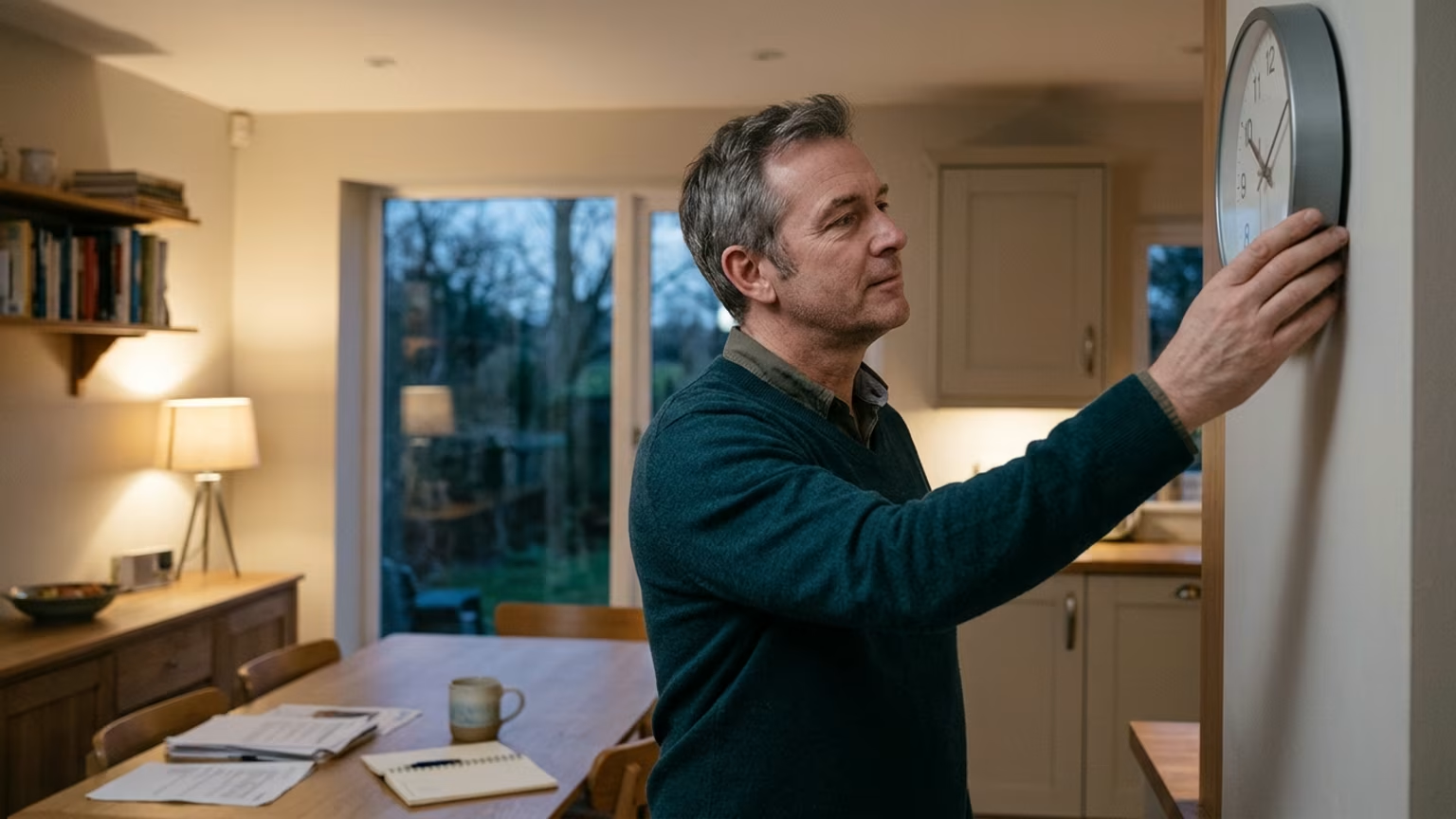

Why an earlier bedtime may not help with early waking after the fall clock change, plus context on light timing and gradual adjustment.





On November 2, 2026, Yahoo Health published a Men’s Journal report on early waking after the fall clock change. Sleep experts explained why an earlier bedtime may not help people whose biological timing still follows their previous schedule.
The U.S. returned to standard time on November 1, 2026, when clocks moved back at 2 a.m. across most of the country. According to the report, the clock can change immediately while biological timing continues to reflect the old schedule.
Houston Methodist sleep expert Ahmed Sam Beydoun describes that temporary mismatch. The body may still be ready to wake according to its previous timing, even when the clock shows something different. The report illustrates this with a usual 6 a.m. wake-up that may feel like 5 a.m. after the change.
That changes how an earlier bedtime should be interpreted. For someone already waking too early, going to bed an hour earlier may preserve that early biological wake time rather than extend sleep. Moving the start of the night does not necessarily move the body's expected end of the night.
Sharp HealthCare’s guidance, included in the report, advises against moving bedtime earlier simply because sleepiness arrives earlier after the switch. The point is not that an early bedtime is always wrong. It is that thinking about bedtime and biological timing means looking beyond the hour shown on the clock.
The same distinction helps explain why the experts in the article offer different advice about light. University of Colorado Anschutz sleep neurologist Jean Tsai discusses people whose specific problem is waking too early. Her approach is intended to shift an overly early body clock later.
For that group, Tsai recommends evening bright light and limiting early-morning light during the first few days. The report also includes Vanderbilt Sleep Disorders Center medical director Raghu Upender’s general preference for morning light. These recommendations address different aims rather than presenting competing rules for the same situation.
The useful question is not which expert has identified the single best time for light. It is what direction the advice is intended to move sleep timing. In Tsai’s account, the goal is a later schedule for someone waking earlier than they want.
That context matters when reading a short recommendation about morning or evening light. Removing the sleep pattern from the explanation also removes the reason for choosing that timing. The article’s central lesson is about matching the response to the problem being described.
This is reported expert guidance rather than a new clinical trial testing bedtime changes. The article focuses on the fall transition and early waking. It does not establish that adults 35+ respond differently from other age groups or quantify how common this early-waking pattern is.
The light advice should not automatically be applied to difficulty falling asleep or another sleep concern. Nor does the report supply a universal adjustment deadline. Beydoun says many people recover within days, while Tsai allows one to two weeks.
Those estimates leave room for different experiences. They do not provide a timetable against which readers need to grade their recovery. For a midlife reader, the evidence supports a narrow takeaway: understand whether early waking is the problem before applying advice intended to move an early schedule later.
The report also does not provide a basis for selecting a personal bright-light treatment. Decisions about a structured light routine belong with a qualified clinician who can assess the individual sleep concern.
For an adult aged 35 to 65, the most useful daily adjustment is to pause before automatically bringing bedtime forward. Notice whether the change involves waking earlier than wanted, feeling sleepy earlier in the evening or both. That keeps the decision connected to the reported problem rather than treating every tired evening as a request for an earlier night.
A simple question can guide that pause: is the unwanted change happening at the beginning of the night or at the end? The article’s explanation concerns the end of the night, when biological timing may still be following the previous schedule.
An earlier bedtime can seem like the obvious response to tiredness. In the early-waking situation described by the experts, however, the question is whether the whole schedule needs to move later. The aim is a clear description of what changed, not another sleep score or a demanding recovery project.
This is also a useful distinction to retain when discussing the problem with a clinician. “I am waking earlier than I want” describes a different concern from “I cannot fall asleep.” Keeping those descriptions separate preserves the context behind the reported advice.
Tsai’s reported approach involves moving bedtime and wake time 10 to 15 minutes later each day during the first few days. She pairs that gradual later shift with evening bright light and less early-morning light.
The direction is the key detail. Her recommendation is not to respond to early waking by immediately moving bedtime earlier. It is to move the schedule later in small increments when an overly early body clock is the issue being addressed.
For readers sorting through light and routines around clock changes, this makes the reasoning easier to follow. Bedtime and wake time are being discussed together. The approach is about the placement of the sleep period rather than simply adding more time at its beginning.
Tsai also mentions a walk after work as part of her advice. That example places the evening-light discussion within an ordinary day rather than presenting recovery as a separate optimization routine.
The practical lesson is to keep the purpose attached to the suggestion. In this report, evening light belongs to an explanation about moving early timing later. Upender’s morning-light preference belongs to the article’s more general guidance.
Before borrowing either recommendation, retain that distinction. A headline or a single sentence about light is less useful than the full explanation of the sleep pattern it is meant to address. The timing question comes before choosing a routine.
The report flags a separate concern: earlier evening darkness may leave some people feeling more fatigued during the commute home. It advises taking drowsiness seriously. Alertness deserves attention alongside any discussion of bedtime or gradual schedule changes.
This is a useful reminder that recovery is not only about when someone gets into bed. In the situation described by the article, how sleepy a person feels while travelling home is also relevant to the practical impact of the transition.
If daytime sleepiness is troublesome or sleep problems persist, the report passes along Sharp HealthCare’s recommendation to talk with a doctor. A useful description for that conversation is whether the main change involves early waking, earlier evening sleepiness or reduced daytime alertness.
The individual timing question sits within a broader policy discussion. The American Academy of Sleep Medicine (AASM) advocates permanent standard time, which it says more closely aligns with internal circadian rhythms.
That position concerns the time system people live with. The immediate bedtime question concerns how a person responds when their biological timing and the new clock time do not yet match. Keeping those levels separate helps make the discussion clearer: a policy preference and an individual sleep decision are not the same task.
For midlife recovery, the useful longer-term idea is that tiredness does not always point toward the same scheduling response. The report offers a specific example in which the direction of a shift matters more than the assumption that earlier must be better.
How might future research change long-term approaches to midlife recovery by making biological timing, rather than an earlier bedtime alone, a more useful starting point?
Choosing between an earlier bedtime and a later schedule shift is a question of direction; Relaxopia translates the relevant circadian evidence. For readers in midlife puzzled by light exposure and sleep timing, its editorial coverage connects those issues with everyday fatigue and rest while keeping practical guidance free of complicated optimization routines.
Stay connected for research-led guidance on sleep quality, stress, circadian rhythm, recovery, fatigue and everyday energy. Clear ideas for adults 35+ who want to sleep better, recover more fully and feel more capable through the day.






Explore practical guidance on sleep, stress and recovery without chasing every new hack, device or promise.
explore the blog