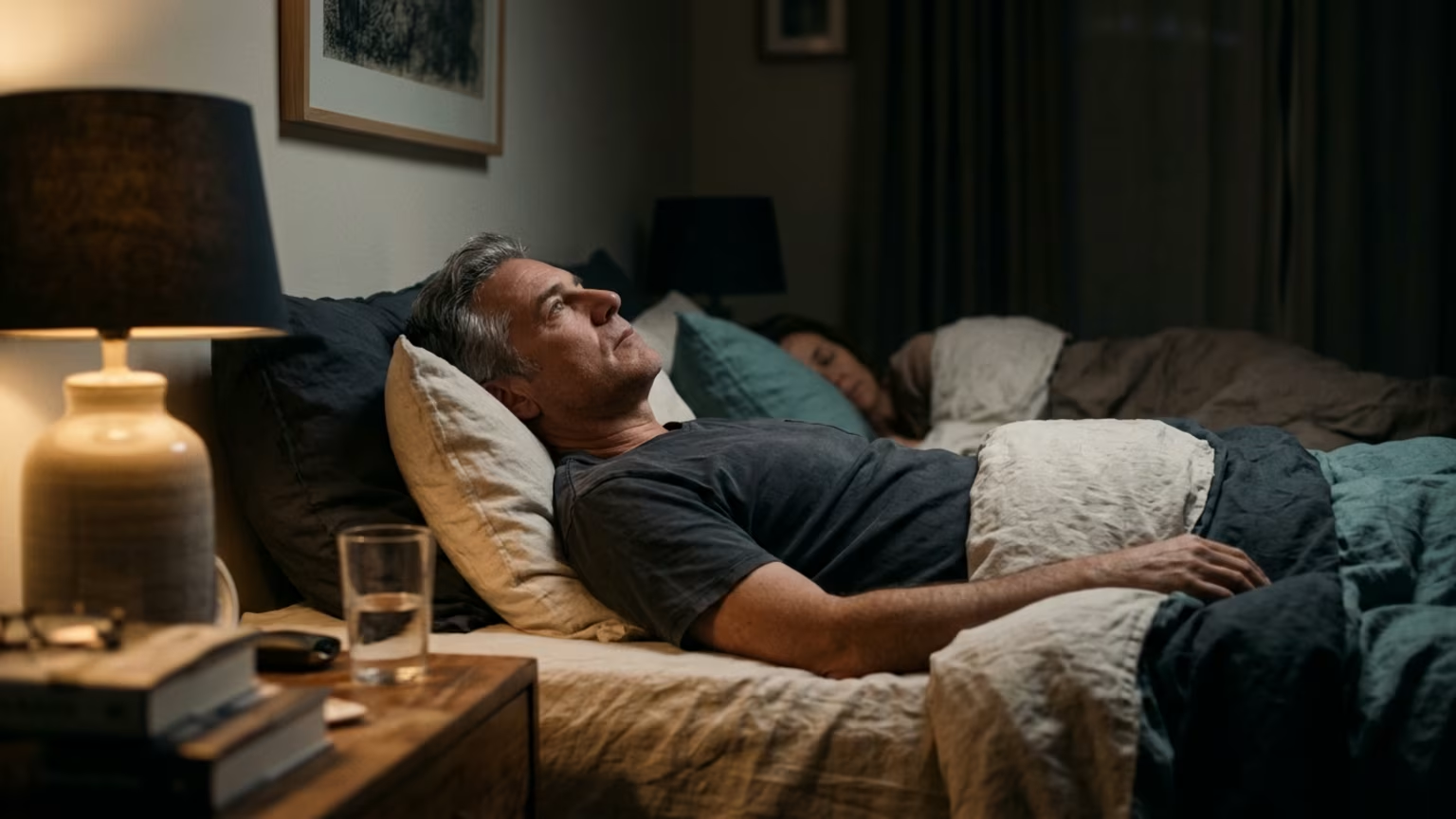

A small pilot links pre-sleep rumination with brain connectivity. Read the findings, evidence limits and practical context for adults 35+.





On October 21, 2026, SLEEP Advances published an original article examining brain connectivity, pre-sleep rumination and sleep timing in adults reporting insomnia symptoms.
The study authors reported that pre-sleep rumination was associated with connectivity between the BNST and specific regions of the default mode network. Those regions included the precuneus and left frontal pole.
Pre-sleep rumination is the bedtime mental activity at the center of this study. For a reader, the useful distinction is between the experience of repetitive thoughts and the brain connections researchers examined alongside it. The paper brings these questions together rather than treating bedtime thinking as something separate from brain-network research.
The default mode network is abbreviated DMN in the research. The study investigated connectivity between DMN regions and an extended-amygdala pathway. Its focus was a relationship between measured brain connectivity and a reported experience, not simply the presence of thoughts at bedtime.
In the 20-person pilot trial, researchers compared active DMN-targeted stimulation with sham in adults reporting insomnia symptoms. The paper studied a form of theta-burst stimulation while examining connectivity and pre-sleep rumination.
The baseline finding and the stimulation comparison answer different questions. The baseline association describes how rumination and connectivity were related at the start. The stimulation component asks what happens when researchers target a network involved in that relationship.
That distinction helps explain the paper's purpose. One question concerns whether rumination and connectivity vary together. Another concerns whether targeted neuromodulation may affect their relationship. Neither question is the same as asking which bedtime habit fits a person with a busy household or a demanding job.
The authors suggest that targeted DMN neuromodulation may affect the relationship between connectivity and rumination. In plain language, they are investigating whether targeting a brain-network node can change how the measured connections relate to bedtime thoughts.
This makes the paper a mechanistic investigation: it asks about a possible process behind an experience. The everyday question for a person lying awake is different. That person wants to know what would help them sleep and feel more restored.
Those questions deserve to remain connected without being treated as interchangeable. A laboratory finding may shape a future research question before it changes anything about everyday care. Reading a study this way leaves room for scientific progress without treating a biological explanation as an immediate instruction.
Several limits belong together. This was a small pilot involving participants who reported insomnia symptoms. The abstract does not establish a clinical insomnia diagnosis, and the relatively young sample limits direct application to adults 35 and older.
The reported relationships are associations and predictions within this study. They do not show that rumination alone delays sleep or that a connectivity pattern causes insomnia. The abstract provides no correlation coefficients or effect sizes. It also gives no confidence intervals or p-values and no numerical changes in sleep or rumination scores.
Without those details, readers cannot judge the size or precision of the findings from the abstract. The paper also does not establish lasting benefit or effectiveness in a larger clinical population. Its tentative treatment implication is not an established insomnia treatment or a practical treatment recommendation.
Finally, the trial did not test everyday strategies for managing bedtime thoughts. It supplies neither an at-home procedure nor evidence for a specific habit. These limits define where the study belongs: early-stage scientific context rather than a new care standard.
For an adult between 35 and 65, the defensible daily adjustment is in interpretation rather than technique. Noticing a busy mind at bedtime can remain a description of an experience. It need not become a conclusion about the state of a brain network.
This is an adjustment in how to read sleep information, not an exercise intended to make sleep happen. A more detailed biological explanation does not automatically create a more useful evening task. The aim is to keep the research in proportion while making room for an ordinary account of a difficult night.
That distinction can matter when rest already feels like another responsibility. Adults balancing paid work with parenting or caregiving do not need a new performance target built from brain terminology. The finding is context for understanding the research conversation, not a standard against which to judge a personal ability to switch off.
The result is best read without a moral judgment about bedtime thinking. A person does not need to interpret mental activity as evidence that they have failed at rest. Recovery advice should make the choices easier to understand rather than make every thought another target to manage.
If bedtime mental activity is a concern, a conversation with a qualified clinician can start with the experience itself. Taking a long time to fall asleep, repeated thinking before bed and feeling unrefreshed are descriptions a person might want to discuss. Individual history and care decisions belong in that conversation rather than in an interpretation of a research abstract.
A discussion about ongoing trouble sleeping can begin with the lived difficulty rather than a claim about connectivity. The goal is not to arrive with a proposed explanation involving the BNST. It is to explain what feels difficult and ask what kind of assessment or support is appropriate.
For someone sorting through conflicting advice, a useful reading habit is to ask what an article actually tested before changing an evening routine. Here, the tested question concerned targeted stimulation and brain connectivity. That is a different kind of question from which daily habit belongs in a busy adult's routine.
The same separation applies to commercial claims. A paper about connectivity should not become support for a product or a supplement that the research never examined. Keeping the claim attached to its evidence leaves fewer unnecessary decisions for the reader.
There is value in leaving the evening simple while a scientific question remains open. The practical priority is an understandable next step when help is needed, not mastery of the study's terminology. Personal care decisions are a place for qualified guidance rather than matching oneself to a network description online.
A useful future advance would connect this network-level question with outcomes that matter in ordinary life. Feeling properly restored is a different goal from explaining how two research measurements relate.
That larger question belongs alongside the timing of sleep and daily recovery rather than in a separate story about one brain region. The pilot offers a focused starting point for research, while the reader's lived experience remains the reason that work matters.
Could a clearer understanding of pre-sleep rumination eventually change how clinicians support long-term recovery in midlife without turning rest into another demanding routine?
Brain-network research can attract attention without settling what belongs in an evening routine, so Relaxopia keeps practical relevance tied to the evidence. Its research-led coverage helps adults 35+ sort competing claims about habits and recovery through clear explanations that connect sleep quality with everyday rest without adding unnecessary complexity.
Stay connected for research-led guidance on sleep quality, stress, circadian rhythm, recovery, fatigue and everyday energy. Clear ideas for adults 35+ who want to sleep better, recover more fully and feel more capable through the day.





Explore practical guidance on sleep, stress and recovery without chasing every new hack, device or promise.
explore the blog