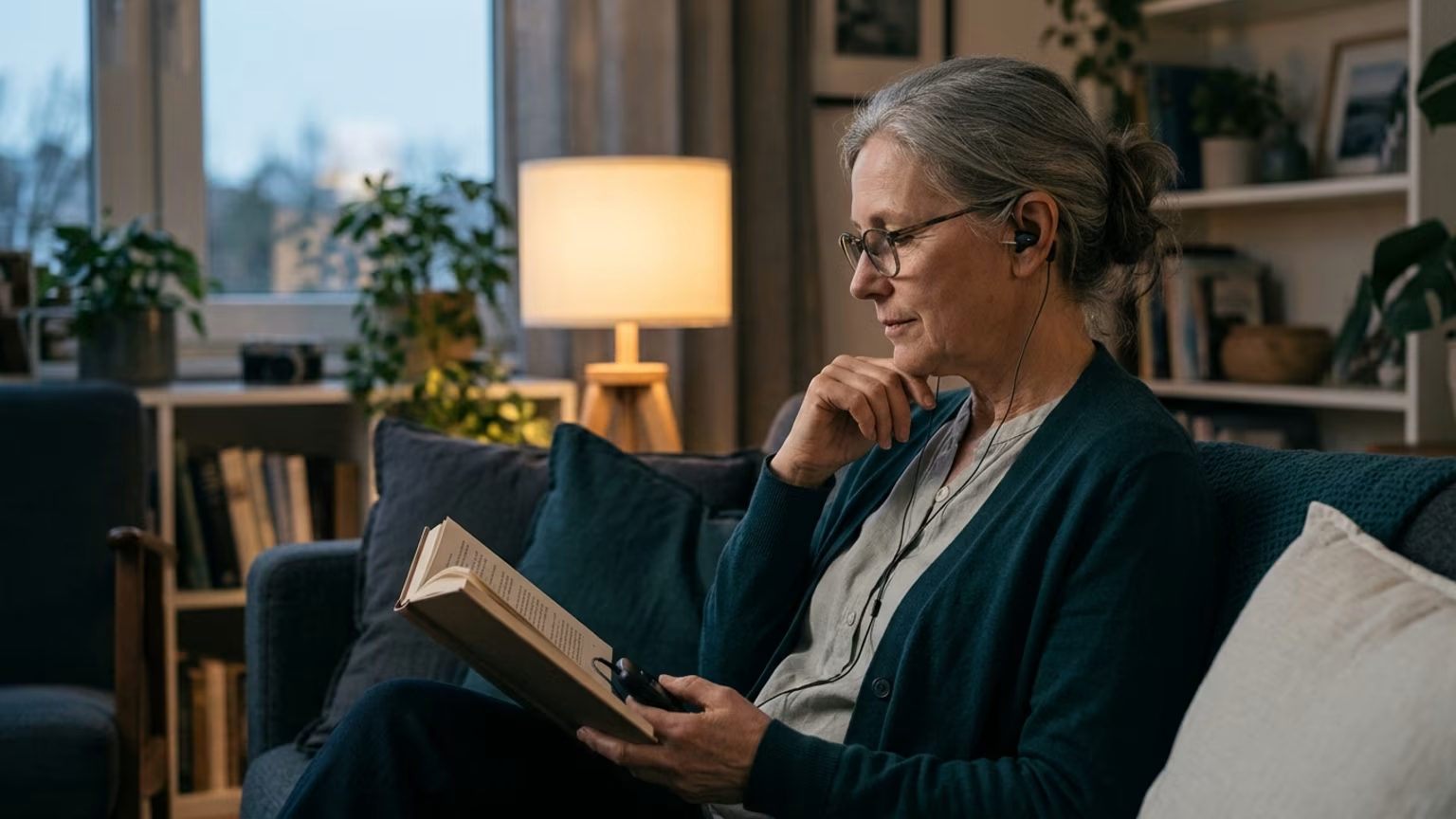

Auricular vagus stimulation trials report better insomnia scores. See why evidence certainty matters and how the findings fit established care.





On October 4, 2026, ClinicalGate published a research update reviewing transcutaneous auricular vagus nerve stimulation (taVNS) for insomnia. The article brought together two sham-controlled trials and a 2025 systematic review within a wider discussion of autonomic nervous system research.
The main positive finding was better patient-reported sleep quality and lower insomnia severity with active stimulation than with sham stimulation. These results concern non-invasive stimulation at the ear in people with chronic insomnia. They give researchers a reason to keep studying the approach.
The update described two trials with different study schedules. Looking at them separately helps keep the findings attached to the conditions under which they were reported.
ClinicalGate reports that a 2024 randomized clinical trial included 72 patients with chronic insomnia. Participants received active or sham taVNS over eight weeks.
According to the report, the active group had greater improvements in patient-reported sleep quality and insomnia severity. The article also describes clinically meaningful differences in Pittsburgh Sleep Quality Index scores, usually shortened to PSQI.
That finding is more specific than saying participants felt better after trying something new. The reported improvement was greater in the active group than in the sham comparison group. The comparison is the relevant finding, rather than improvement within the active group alone.
A second trial published in 2025 involved 40 participants with chronic insomnia. ClinicalGate reports that active and sham stimulation were compared over six weeks.
The active group showed greater improvements on both the PSQI and the Insomnia Severity Index, or ISI. These are the sleep-quality and insomnia-severity measures highlighted in the update.
Together, the trials point in a favorable direction for reported sleep outcomes. For a reader trying to understand the headline, that is the central result: active stimulation performed better than sham stimulation on the measures described in these studies.
The strongest reason for caution comes from the evidence review itself. ClinicalGate reports that a 2025 systematic review and meta-analysis included six studies and 336 patients. Its pooled results favored taVNS, but evidence certainty was rated low for PSQI outcomes and very low for ISI outcomes.
A pooled result describes the direction of the combined findings. A certainty rating addresses how much confidence to place in that result. Reading the favorable finding without its certainty rating would make this research sound more settled than the review judged it to be.
The small trial samples are another limitation identified in the update. The participants also had chronic insomnia, so the findings apply most directly to that studied population rather than to every adult who occasionally sleeps poorly.
ClinicalGate describes substantial variation between taVNS protocols. Differences include electrode location and stimulation frequency. Pulse width, intensity, session duration and treatment schedule also vary.
The review notes differences in comparison conditions and participant populations too. A protocol is therefore more than the label “vagus nerve stimulation.” It is the particular combination of how stimulation was delivered and who received it.
For that reason, the review cautions against applying the results from one protocol to every commercial device. It also distinguishes non-invasive auricular stimulation from implanted vagus nerve stimulation. Evidence from implanted systems cannot simply be transferred to consumer ear-stimulation products.
For readers assessing a product, the useful question is whether the evidence concerns that particular approach and its intended use. Relaxopia’s discussion of evaluating recovery-device claims provides related context for separating a research finding from a broader sales claim.
A separate taVNS research protocol indexed in PubMed describes planned research rather than completed effectiveness results. Its presence signals a research question being investigated, not an additional positive trial result.
When examining an evidence list, checking that distinction is a useful first step. A study plan and a completed trial serve different purposes. They should not be counted as interchangeable support for a treatment claim.
For an adult aged 35 to 65 balancing work and family responsibilities, the practical adjustment is not to copy a stimulation schedule. It is to describe sleep in context rather than treating “vagus nerve” as an explanation for a difficult night.
ClinicalGate says an insomnia assessment should examine sleep timing and frequency alongside daytime effects. It should also consider sleep opportunity, medicines and substances, circadian schedule and relevant health conditions.
A simple habit consistent with that assessment is to make a brief plain-language note when sleep problems affect the day. This is preparation for a care discussion, not a treatment or a scoring exercise. Useful details include:
The point is to bring a more useful description than “my recovery is poor.” An account of what happens at night and how it affects the following day gives the clinical conversation a clearer starting point.
Sleep timing belongs in that picture without becoming the automatic explanation. Readers sorting through that question can also review how a sleep schedule fits body-clock timing. The relevant issue here is whether timing deserves attention during assessment, not whether everyone needs an earlier bedtime.
This approach also keeps technology in proportion. A device question can be part of the discussion while the broader sleep problem remains the focus. Recording the concern does not require buying equipment or turning each night into a performance target.
ClinicalGate identifies cognitive behavioral therapy for insomnia, or CBT-I, as established care. It reports that the 2025 VA/DoD guideline strongly recommends CBT-I for chronic insomnia and suggests it over pharmacotherapy as first-line treatment.
The article also says the guideline advises against relying on sleep-hygiene education alone. That distinction matters when persistent insomnia has been reduced to a familiar list of bedtime tips. There is a difference between general sleep advice and an established approach to insomnia care.
The current taVNS findings do not establish the approach as a replacement for CBT-I or clinical assessment. For readers weighing those options, understanding the role of structured insomnia care is a more useful starting point than comparing device promises alone.
Persistent sleep problems with daytime consequences warrant discussion with a qualified clinician about possible causes and treatment options. ClinicalGate notes that sleep complaints may involve obstructive sleep apnea or restless legs syndrome. Circadian disorders and pain may also be relevant.
Medicines, substance use and mood disorders belong in the assessment too. These are possibilities for qualified review, not labels to assign from a device advertisement or a difficult week of sleep.
For someone managing midlife responsibilities, that broader assessment keeps the goal clear. The aim is to understand the recurring problem and identify appropriate care, rather than prove that one proposed mechanism explains everything. Personal decisions about treatment or stimulation devices belong in that clinical conversation.
The next useful research question is not simply whether another study produces a favorable sleep score. It is whether stronger evidence can identify a clearly defined approach that has a dependable place in insomnia care.
Future research could also ask how any sleep improvements relate to the daytime concerns that bring adults to care. Feeling more capable at work or less burdened by fatigue may matter greatly to a person whose nights have become difficult. Those are useful questions for future studies, rather than outcomes to assume from the present report.
For now, this update offers a reason to follow the research while keeping everyday decisions grounded in assessment and established care. That is a practical middle position between dismissing a developing treatment idea and treating it as ready-made advice.
If stronger research establishes a useful role for auricular stimulation, how might it change long-term approaches to midlife recovery alongside attention to sleep timing and established insomnia care?
After reading about auricular stimulation, the next task is sorting sleep-timing questions from technology claims, a distinction Relaxopia addresses through its coverage of circadian rhythm and recovery. For adults 35+ facing confusion about body-clock timing, its research-led explanations help clarify relevant everyday factors without adding rigid routines or medical promises.
Stay connected for research-led guidance on sleep quality, stress, circadian rhythm, recovery, fatigue and everyday energy. Clear ideas for adults 35+ who want to sleep better, recover more fully and feel more capable through the day.





Explore practical guidance on sleep, stress and recovery without chasing every new hack, device or promise.
explore the blog